10 new projects to drive progress in MS research
Could a headband help people with MS sleep? Or routine MRI scans predict how MS will progress? Or memory tests help identify who's at risk of MS? These are just some of the questions researchers will explore thanks to new MS Society funding.
Each year we invite researchers to tell us about their potential projects. Some submit new ideas which haven’t been explored before. Others might be building on previous research. Researchers and people with MS help us decide which ones to fund.
We’ve committed to raise £2 million to support 10 new projects across 7 different cities in the UK.
These projects span our three research strategy priorities: managing the impact of MS, stopping it from getting worse, and preventing it before it starts.
Stop: Can we better understand progression?
Dr Megi Clarke is from the University of Nottingham. Her previous research has already helped change how MS is diagnosed. She was part of the team who showed a type of MRI scan can replace the need for lumbar punctures in some people.
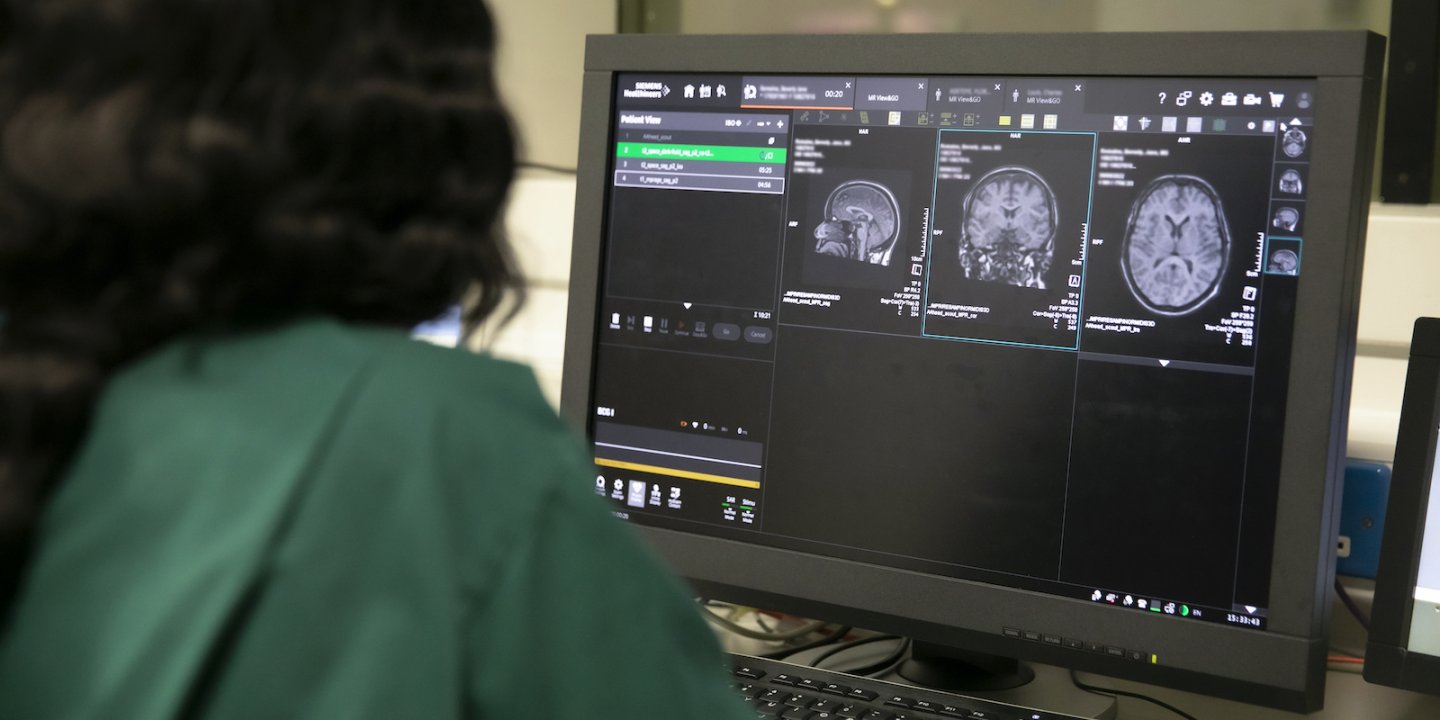
Now she’s asking a new question: does a sign on MRI scans, called T1-dark rings, identify hidden inflammation and predict progression of MS?
Megi will study these dark rings that show around some MS lesions in brain tissue and on MRI scans. They’re visible on standard scans that are already used in routine clinical care. So she hopes these could be a simple, widely accessible sign used to identify early progression.
Manage: Can we help people with MS sleep better?
For the first time, we’re funding research into sleep in MS. Dr Claire Rice from the University of Bristol will be testing a headband to help people with MS experiencing sleep problems. It delivers soft sounds timed with your brain activity. It’s already been shown to improve deep sleep in people with Parkinson’s disease.
Prevent: Can we identify people at risk of MS early by looking at how they think?
In previous research Dr Annalaura Lerede from Imperial College London developed a cognitive screening tool for MS called Cognitron-MS. It’s based on the Great British Intelligence Test and involves tests of memory, attention and other thinking skills.
She tested it using our UK MS Register, so thousands of people with MS made it happen. And the tool has already uncovered new insights to cognition and MS.
In her new project, Annalaura will explore whether people with MS who have relatives with MS have more cognitive difficulties than people with MS who don’t have relatives with MS. She’ll be using Cognitron-MS to find out.
If the answer is yes, she hopes Cognitron-MS could be used to identify people at particularly high risk of developing MS. If cognitive difficulties can run in families, it might also offer an opportunity to understand more about MS risk factors. And how we can reduce risk.
It doesn’t stop there
These are just some of the projects. Our researchers will also be exploring questions including how we can personalise rehabilitation using virtual reality, support people with their medication, understand the relationship between mental distress and MS, and develop better ways to understand progression.
Read about all of the research projects we've committed to fund
It’s very inspiring to be involved in reviewing grant applications. It’s wonderful to see the innovative ideas to investigate the underlying causes of MS, measuring how it affects different people in different ways and exploring all types of treatments.
I particularly like seeing how young researchers who start their MS career doing PhDs move on to become established MS researchers. It provides hope for the MS community in the future.
You may also be interested in


Join the Research Network
Our Research Network make sure all the research we fund reflects the needs and interests of people living with MS. And they help us talk about it in a way that’s accessible to everyone.
Anyone who lives with MS or cares for someone who does can get involved. It doesn't matter where in the UK you live or how much research experience you have.
