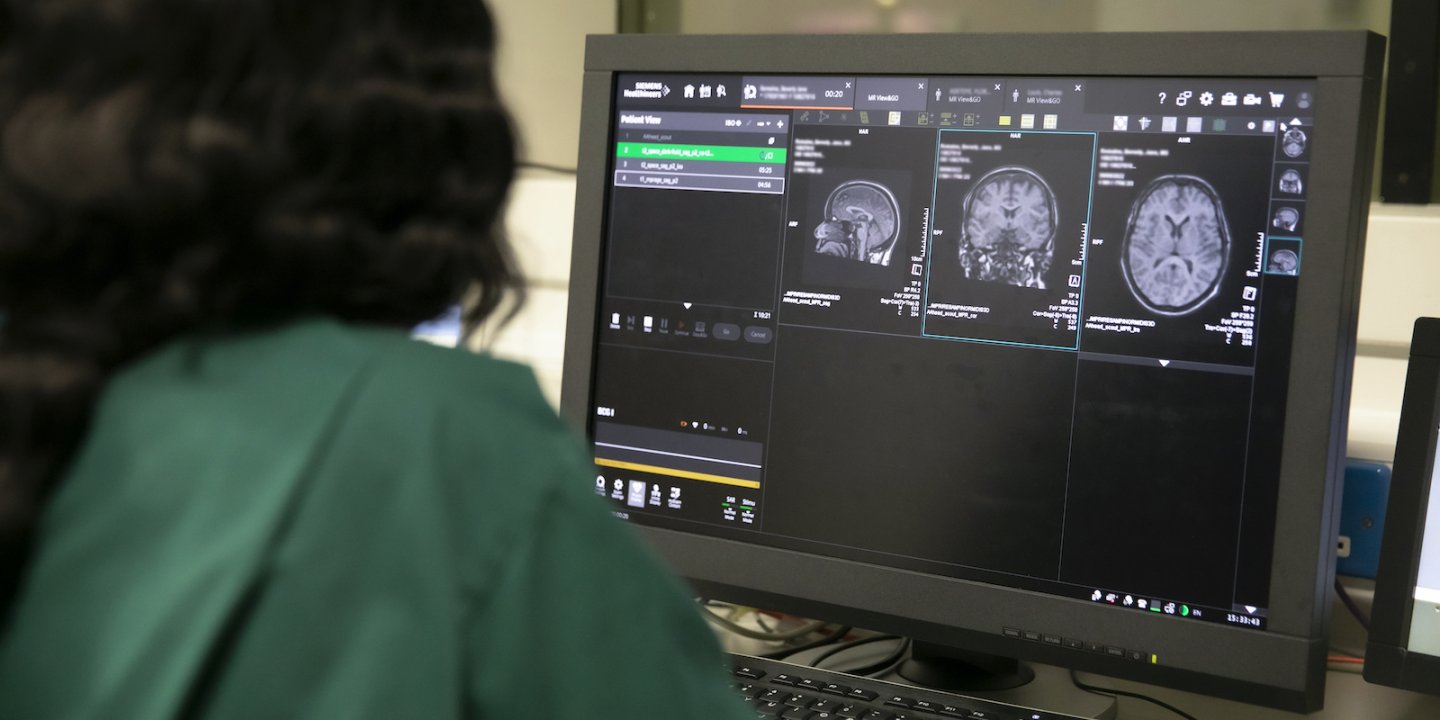
A simple MRI marker to detect hidden inflammation and predict progression in MS
Current disease modifying therapies (DMTs) are effective at reducing relapses and preventing new lesions. But many people continue to experience gradual worsening of disability.
Researchers think this may be driven by ongoing, low-level inflammation at the edge of existing lesions. These lesions are sometimes referred to as chronic active or smouldering lesions.
At the moment, doctors can’t identify which lesions are still causing ongoing damage. But recently, Dr Margareta Clarke and her colleagues discovered that some lesions have dark rings around them, which may indicate ongoing inflammation.
Importantly, you can see these rings on MRI scans that many people with MS during their routine clinical care. Researchers refer to them as a ‘T1-dark rims’.
But we don’t yet know exactly what T1-dark rims represent, whether they reliably predict relapses or disability progression, or whether they can be consistently detected across different MRI scanners.
About the project
In this project, Megi aims to determine whether T1-dark rims can become a simple, widely accessible tool to identify ongoing damage early.
The project will:
- Examine MS brain tissue donated by people with MS to understand what T1-dark rims are
- Study MRI scans from over 3,000 people with MS to test whether T1-dark rims predict relapses, new lesions, or long-term disability progression. And do advanced MRI scanning with 10 participants who have T1-dark rims to study the lesion changes in more detail.
- Assess whether T1-dark rims can be reliably detected across different scanners in different hospitals. This will include portable MRI systems (small scanners that are not as powerful) that are increasingly used countries with less healthcare resources or access to standard MRIs
- Develop automated software to help radiologists detect T1-dark rims quickly and consistently
This is the first large, multi-centre study to study T1-dark rims over time and answer key unanswered questions about them.
How will it help people with MS?
There are lots of potential benefits of a tool that could identify this type of ongoing MS activity that isn’t captured by current tools, including:
- Better prediction of future relapses or disability progression
- More personalised treatment decisions based on individual risk. For example, based on how many T1-dark rims can be seen on MRI
- T1-dark rims may prove to be a target in clinical trials of potential new MS treatments. For example, seeing them disappear might suggest a drug is working.
T1-dark rims are visible on standard scans that are already used in routine clinical care. Other existing imaging markers that aim to do the same thing need specialised MRIs that aren’t performed at most NHS centres. Or several years of repeat scans.
So if the team can show they’re useful, they could be implemented widely, including in centres without advanced MRI technology. This is important for making sure everyone with MS, wherever they live, has access to better monitoring.
You may be interested in


Join the Research Network
Our Research Network make sure all the research we fund reflects the needs and interests of people living with MS. And they help us talk about it in a way that’s accessible to everyone.
Anyone who lives with MS or cares for someone who does can get involved. It doesn't matter where in the UK you live or how much research experience you have.
