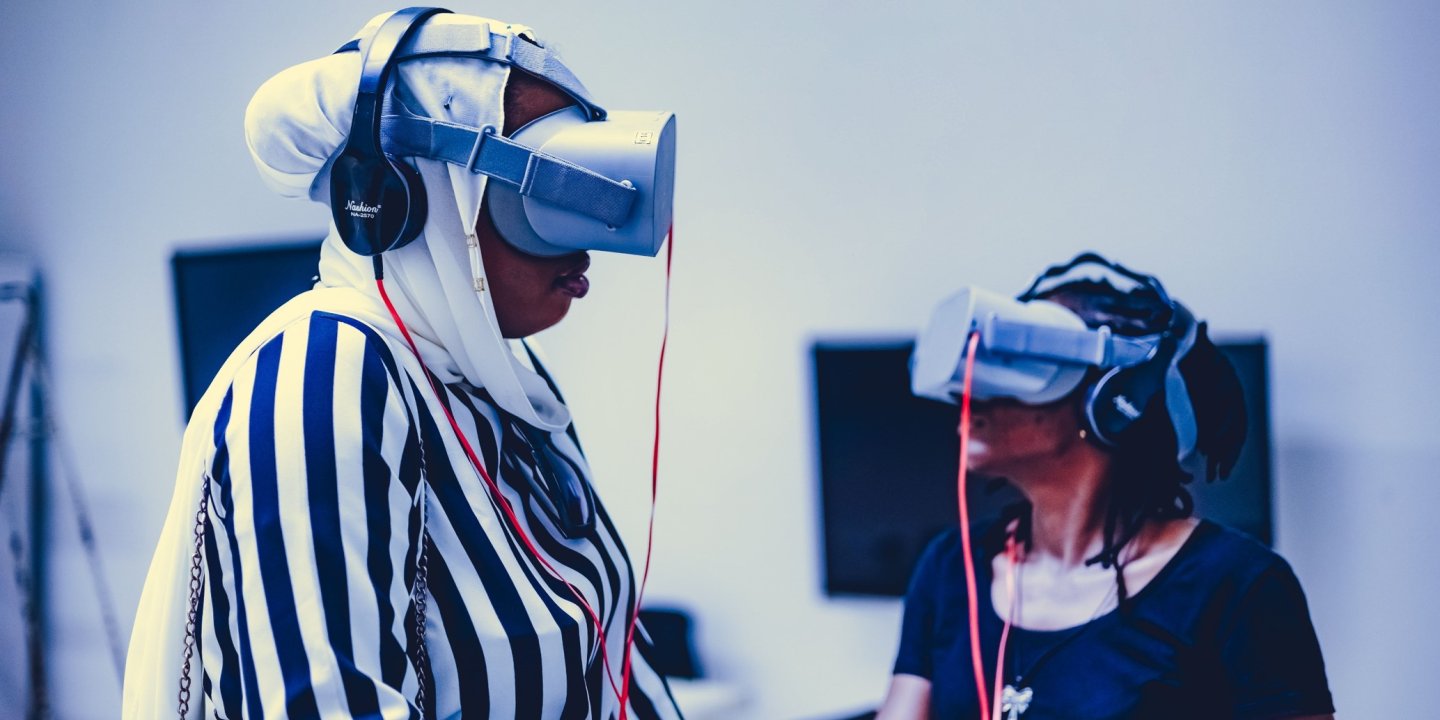
Personalising virtual reality rehabilitation for people with MS
Problems with hands and arms can negatively impact activities of daily living and reduce quality of life of people with MS. But rehabilitation for the upper limbs is often neglected compared to that for the legs and walking. It can also be difficult to remain motivated to do this rehabilitation and find ways to exercise the upper limb in particular.
This is where virtual reality (VR) comes in. Previous research has shown that VR exercise games are a fun way to exercise and have the potential to improve upper limb function for people with MS. But more research is needed to better understand how we can effectively use VR rehabilitation.
About the project
Working closely with people affected by MS, the researchers aim to develop personalised immersive virtual reality rehabilitation for arm and hand function in people with MS.
Their goal is to:
- Design VR games that adapt to different levels of upper limb ability and day-to-day changes in performance.
- Review existing VR personalisation approaches used in other neurological conditions and test if their could work for people with MS.
- Identify what preferences and needs people with MS have for VR rehabilitation.
- Compare personalised VR rehabilitation with traditional exercise.
- Explore strategies for implementing, delivering, and commercialising personalised VR rehabilitation for people with MS.
How will it help people with MS?
This project aims to help people with MS maintain or improve the use of their arms and hands, which are essential for everyday activities and independence. By developing personalised VR rehabilitation that is engaging, adaptable, and easier to access, the research could help more people stay motivated with therapy and benefit from it over the long term.
The project will also explore how this technology could be made available to more people with MS in the future.
You might also be interested in


Join the Research Network
Our Research Network make sure all the research we fund reflects the needs and interests of people living with MS. And they help us talk about it in a way that’s accessible to everyone.
Anyone who lives with MS or cares for someone who does can get involved. It doesn't matter where in the UK you live or how much research experience you have.
