New research: making virtual reality exercise a reality?
New research shows virtual reality exercises for arm and hand rehabilitation is fun, safe and feasible for people with MS.
We know staying or becoming more active has a range of benefits, including helping to manage MS symptoms such as fatigue. It also helps with mental health.
Up to three quarters of people with MS experience problems with their arms or hands. It’s important to keep using your hands and arms to help keep them strong. Regular rehabilitation exercises can help with this. But it can be hard for people to stay motivated when they’re in rehabilitation programmes.
That’s why Dr Amy Webster researched how virtual reality games can help people with MS rehabilitate their upper limbs. Amy has now been awarded her PhD and published a paper about what she learned in a scientific journal.
Amy says: "It was really rewarding to see the journey of these games. I had developed them with and for people with MS. A highlight for me was seeing people with MS benefit from and enjoy rehabilitation with these games. This is what makes VR promising: high enjoyment, motivation, distraction and more fun than conventional rehabilitation."
What did the researchers do?
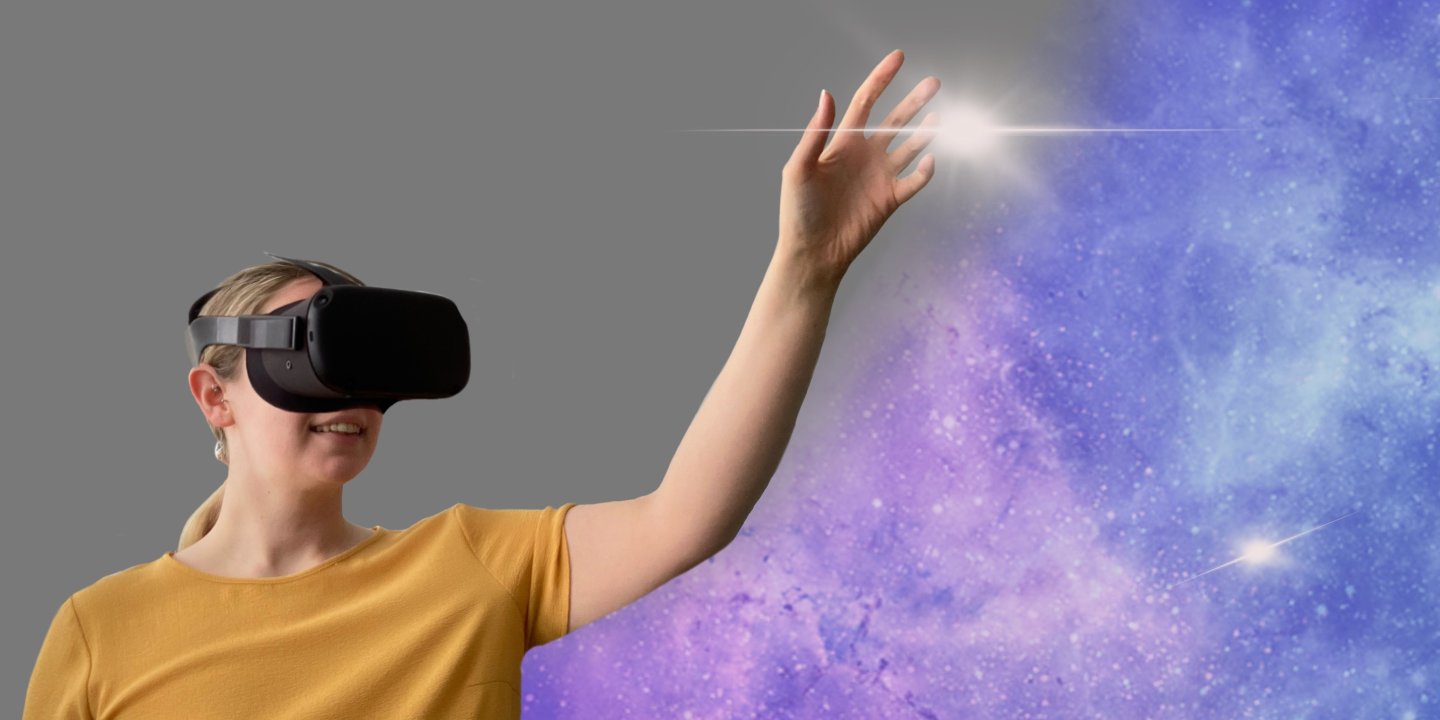
People who take part use headsets to enter virtual realities where scenes and objects appear to be real. For example, it can make it look like you’re floating in space.
The games Amy developed for her study included playing a virtual piano, whack-a-mole and catch-a-falling-star. They were designed to be fun and engaging.
It was a very small study: 19 people took part to test whether the approach was safe and feasible for people with MS. Eleven people did virtual reality sessions twice a week for eight weeks. The other group continued with their usual care.
What did they find?
The findings suggest the intervention is feasible, safe and acceptable for people with MS, with participants commenting positively on its usability, atmosphere, fun and enjoyment, as well as the distracting and immersive environments. Overall, this suggests VR provided a more positive experience than traditional forms of rehabilitation. And participants reported benefits from taking part. More research is needed to better understand if it helps people with their arms and hands.
When I was diagnosed with MS in 2021, I spent six months in hospital. I was completely paralysed on my left side and couldn’t get out of bed. Taking part in research helped me take back some of that control. It’s a way of taking back agency. Before taking part in this trial, I’d never used virtual reality. But it was so much fun and really engaging.
What does this mean?
The findings show virtual reality is a safe and feasible option for upper limb rehabilitation. Participants also consistently reported that it was fun. But a larger trial is needed to see whether it really helps improve movement in the hands and arms.
PhD candidate Hannah Milner is now building on Amy’s work. She’s exploring how virtual reality could be delivered at home for people with moderate to severe MS. This could help people complete their rehabilitation exercises from the comfort of their own home.
I hope this research can make virtual reality rehabilitation more accessible to people with MS. Rehabilitation is a long, repetitive process, but home-based virtual reality has the potential to make it fun, give people feedback on their progress, and provide the flexibility to engage with it from their own home.
Interested in getting more active?
However MS affects you, exercise can help you stay as healthy as possible. Exercising can also improve your mood and help with some MS symptoms. All kinds of movement can be good for you. The important thing is to find exercises that suit you.
Virtual reality rehabilitation is not yet widely available. But you can find more information about staying active on our website. You can also get in touch with your local MS group to see if they offer any adapted exercise classes.
You may also be interested in


Join the Research Network
Our Research Network make sure all the research we fund reflects the needs and interests of people living with MS. And they help us talk about it in a way that’s accessible to everyone.
Anyone who lives with MS or cares for someone who does can get involved. It doesn't matter where in the UK you live or how much research experience you have.
