MS, menopause and me
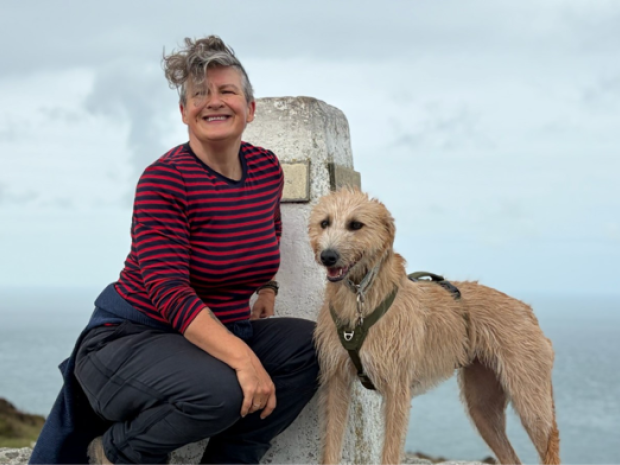
Danielle lives with MS and works as our Governance Senior Manager. For Menopause Awareness Month, she shares her experience as a 50-something woman dealing with both MS and the menopause.
I don’t know about you, but I think MS is enough to deal with. But just when you think you’ve got the hang of living with one unpredictable condition, along comes another one - menopause.
Before we get into it, a disclaimer. I’m not a clinician or an expert in either condition. I’m a 50-something woman dealing with both. And I feel very strongly that we need to be the last generation who didn’t know what to expect from this time of life.
Knowledge helps me manage my health
Working here at the MS Society, I’m used to having quality information at my fingertips. And I get to see first-hand just how powerful people with MS can be when we advocate for ourselves. I don’t underestimate how much this knowledge and experience helps me to manage my own health.
I haven’t yet reached menopause, which is the date one year after your last period. I’m in perimenopause, which is the time before then when our levels of hormones like oestrogen and progesterone start fluctuating. This is when the symptoms we associate with the menopause arrive if they’re going to.
My experience of MS symptoms and treatments
I was diagnosed with relapsing MS in my late twenties, but I’d had my first unexplained symptoms when I was only fourteen. For all those years, the strange sensations I reported were disregarded. My legs must be wobbly because I didn’t wear sensible shoes. I must be tired all the time because I was stressed about exams. The pins and needles that raced up my arms must be a reaction to a new skin cream.
I was finally referred for tests and diagnosed with MS after waking up one morning unable to feel anything down my left side. I was so relieved that there was a reason for all the strange symptoms I’d been experiencing.
A few years later, the first MS disease modifying therapies (DMTs) were licensed and I was prescribed Copaxone (glatiramer acetate). I didn’t mind the daily injections, but I was still glad to switch when the new tablet DMTs came out.
Unfortunately, I had ongoing gastric side effects with Tecfidera (dimethyl fumarate). So I changed to Aubagio (teriflunomide), which kept my MS stable for several years. And I now take monthly Kesimpta (ofatumumab) injections. I feel like I’m doing really well on that treatment.
Then a whole new batch of symptoms arrived...
Around five years ago, I developed a completely different batch of strange symptoms. My heart would race for no reason. Both of my knees were suddenly painful, and I would wake up soaked in sweat. My confidence plummeted and I just didn’t feel like myself.
At 48 years old, I was definitely a candidate for perimenopause. But it wasn’t even on my radar. It was only when my mum suggested it that I made an appointment to see my GP. And it didn’t seem to be on their radar either. Instead of investigating my hormone levels, I was told it was probably ‘just’ my MS.
MS and menopause have lots of symptoms in common
It didn’t feel like MS to me, but I can understand why my GP started there. After all, MS and menopause do have lots of symptoms in common. For example, they both cause fatigue, brain fog, insomnia, and impaired bladder function. And some DMTs can cause hot flushes as a side effect, which is probably the symptom most people think of when menopause is mentioned.
It took several appointments before my GP agreed that I was perimenopausal. I felt the same relief I’d had all those years ago when I was finally diagnosed with MS. That I wasn’t losing my mind and there was a reason I was feeling this way.
Using HRT for my menopause symptoms
I recognise that Hormone Replacement Therapy (HRT) isn’t for everyone, but I was keen to try. This is when I realised there are specific ways that MS and menopause interact. It turned out that the (off-license) medication I’m prescribed to manage MS fatigue can affect how well the HRT works. For a while, it looked like I was going to have to choose which symptoms to manage.
But eventually, with my neurologist’s support, we started trying different HRT combinations. And I’m pleased to say we found one that’s keeping my menopause symptoms under control.
We need more recognition of MS and menopause
There are lots of other ways that MS and menopause interact too. For example, over 60% of people with MS report that their symptoms get worse when they’re hot. And we know that menopause causes those legendary hot flushes, so is this making our MS harder to manage? We also know that menopause causes insomnia. What impact might this be having when we’re already dealing with MS fatigue?
I was grateful to have my neurologist’s support as we explored HRT options. But I think there’s a lot more that could be done to recognise and manage the many interactions between MS and menopause. Wouldn’t it be brilliant if they were treated holistically?
Until then, we need to arm ourselves with quality information and be prepared to advocate for what we need. And who could be better equipped for this than a vintage MSer? After all, we’re used to explaining strange sensations and fighting to have them taken seriously. We’re not fazed by switching treatments when things change. And we’re experts at coping with symptoms like fatigue and brain fog.
There aren’t many advantages to MS, but the skills and resilience we develop as we navigate it? I wouldn’t want to be without them now.


