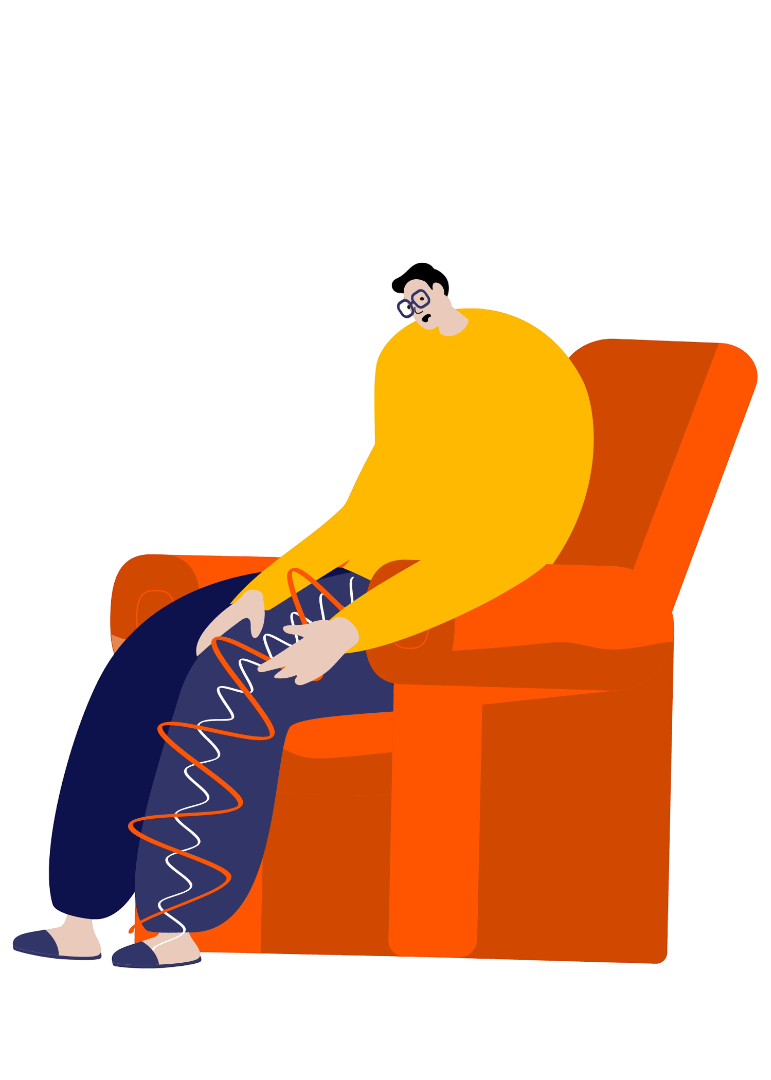
Treating MS pain
It’s not always obvious straight away how best to treat pain. You might try a number of therapies and drugs to find one that’s effective for you. It can be a frustrating process, but people do manage to control and live well with pain.
- Pain treatment and management options for MS
- Drug treatments for MS pain
- Non-drug treatments for MS pain
- Managing pain that remains
Pain treatment and management options for MS
There are a lot of options for managing MS pain, including drug and non-drug treatments. Medications for MS pain might be used for other conditions too, and some will only be prescribed by expert pain doctors.
Your circumstances and mood can affect the way you deal with pain. Part of the process to treat pain is finding out exactly how your pain affects you, and adjusting things to find what works best. A diary can help with that. So can regular check ups with your doctor, MS team or pain clinic.
A diary to record pain or unpleasant sensations
Keeping a pain diary can be very helpful. You try to write down exactly how a sensation feels in your body on a particular day. You can also score and record each day your levels of pain, fatigue and anxiety. This all helps get an accurate picture of what’s happening.
The benefits of a pain diary
Keeping a pain diary has lots of benefits:
- It lets your share details with your doctor so they can suggest the right treatments
- It gives you a record you can refer to in appointments
- It can help you manage your MS yourself, by highlighting what changes and what helps
What to put in a pain diary
There’s a strange – but helpful - abbreviation to remember what goes in pain diary: ‘OLD CARTS’:
Onset – When did your pain start?
Location – Where in your body do you feel the pain?
Duration – How long does it last?
Characteristics - How would you describe your pain? For example, is it a sharp, dull, aching or a tingling sensation?
Aggravating factors - Does anything make your pain worse? Examples could be hot or cold weather, stress or doing too much or too little.
Relieving factors - Does anything make the pain better? Examples could be resting, or changing how you stand or sit
Treatments - What are you doing or taking to relieve your pain?
Severity - How would you rate your level of pain on a scale of 0 to 10? 0 = no pain and 10 = the worst pain you can imagine. It might help to score your pain at the same time twice each day. You could also score your fatigue level (how tired you feel) and your mood in the same way. You’ll then understand how these two things relate to your pain levels.
Also, include how much the pain interferes with things like:
- sleeping
- washing
- getting dressed
- work
- moving around
- enjoying your hobbies
Planning pain treatment with your doctor
Your treatment plan should take into account what you expect from the treatment, and any concerns you’ve got.
Your doctor should with you about things like:
- how serious your pain is
- its impact on your life
- the reason behind the pain
- why you’re being offered a particular drug
- its benefits and possible side effects
- ways of coping and other non-drug treatment options for managing your pain
Your GP or neurologist might refer you to a pain clinic. Pain clinics have doctors and other healthcare professionals who specialise in treating and managing pain.
Regular reviews with your doctor
You should have regular reviews with your doctor to check:
- if your pain is being controlled well enough
- how you are generally (your physical and emotional wellbeing)
- if side effects are troubling you
- whether you need to keep taking the drug or other treatment
Drug treatments for MS pain
Drug treatments are often an effective part of managing pain. You might wonder what pain medication is good for MS pain. But that depends on what kind of pain you have, and what treatment suits you.
Drugs on their own aren’t usually the solution. This is because the usefulness of drugs always has to balance against possible side effects. And they often don’t give complete pain relief.
Drugs for neuropathic (nerve) pain
Some treatments for nerve pain can be prescribed by your GP or neurologist. But others are more likely to be through a specialist pain clinic.
Anticonvulsants
Some of the most commonly used anticonvulsants for MS nerve pain are:
- carbamazepine
- gabapentin
- pregabalin
These help some people control the facial pain of trigeminal neuralgia and other acute neuropathic pains. Some may also give some relief from 'burning', 'throbbing', or 'pins-and-needles' pains. Possible side effects vary between the different drugs. They can include a skin rash, dizziness, blurred vision and drowsiness.
Antidepressants
Amitriptyline is a widely used antidepressant for nerve pain. It doesn’t mean your doctor thinks you're depressed. It belongs to a group of drugs called 'tricyclic antidepressants'. You might be prescribed other similar antidepressants from this group, or other kinds of antidepressants such as duloxetine.
They can be useful for treating certain types of long-lasting pain. For example, if your skin is painfully sensitive to even the lightest touch. Possible side effects include dry mouth, constipation and blurred vision.
Muscle relaxants for spasms
If muscle spasms and stiffness are the cause of pain, one of the options might be muscle relaxants. Alongside physiotherapy, your doctor might prescribe, for example:
- baclofen (Lioresal, Lyflex)
- tizanidine (Zanaflex)
Read more about managing muscle spasms and stiffness
Steroids
You might be offered treatment with steroids to speed up recovery from a relapse. So although not a treatment for pain in particular, it could help if you have pain with a relapse.
Read more about steroids for MS relapses
Opioids
Opioids such as tramadol, buprenorphine patches or tapentadol are occasionally used for acute nerve pain. They should only be taken short term. For example, so you can manage your pain to do a course of physiotherapy.
Capsaicin cream
People sometimes try capsaicin cream for areas of neuropathic pain if they don’t want to – or can’t – swallow medicines. It’s a cream that you apply directly to a painful area of the skin. It’s more often used for the kind of nerve pain caused by shingles or diabetes. That’s where ‘peripheral’ nerves in the skin are damaged. MS nerve pain is more often caused by damage to nerves in the central nervous system (the spinal cord and brain).
Sativex
Sativex is a cannabis-based drug licensed in the UK to treat muscle spasms and stiffness caused by MS (known as spasticity). It isn’t routinely given to people to treat other pain.
Read more about Sativex and other cannabis-based therapies
Managing the side effects of pain medication
Once your body gets used to a treatment, side effects can get better. Or there could be ways to make them less of a problem. For example, if a drug makes you drowsy, your doctor might suggest changing the time you take it.
If side effects last a long time, bring this up with your doctor. It might be possible to change to another treatment that suits you better, change the dose, or the time you take it.
If you’re finding it hard to swallow tablets, there might be alternatives too. For example, for some kinds of pain there might be liquid medication or pain patches that deliver a dose of pain relief through the skin. Or treatments you put on your skin where you feel the pain.
Drugs for musculoskeletal pain
Drug treatments for musculoskeletal pain are sometimes ones you can buy over the counter at a pharmacy, like:
- paracetamol
- aspirin
- ibuprofen
- codeine
Occasionally a doctor will prescribe stronger painkillers, like the opioid tramadol for short-term (acute) pain.
Non-drug treatments for MS pain
There are lots of non-drug treatments for MS pain, to use on their own or alongside drug treatments. That could include physiotherapy, TENS machines, occupational therapy, complementary therapies and sometimes surgery.
Physiotherapy
Your doctor or MS nurse might refer you to a physiotherapist to help manage musculoskeletal pain. Physiotherapy covers a range of treatments:
- exercise plans tailored to you
- gentle stretching
- massage
- manipulation
- water-based exercises (hydrotherapy)
Transcutaneous Electrical Nerve Stimulation (TENS)
Transcutaneous Electrical Nerve Stimulation (TENS) is a way of easing pain that involves a small, battery-operated machine. Sticky pads (electrodes) are placed on your skin. A low electrical current stimulates your nerves in the painful area. You feel a mild tingling sensation passing through your skin. The type and strength of the electrical impulses can be changed so that they stimulate different nerves for different pains.
TENS works by blocking out pain signals with more pleasant tingling feelings instead. The idea is that stimulation of the nerves can disrupt pain signals going to your brain and spinal cord. It can relax your muscles as well. TENS might help with nerve pain and musculoskeletal pain.
The benefits often wear off quickly after using the TENS machine. And it doesn’t suit everyone. Some people find it irritates their skin. Special pads are available if you have skin allergies.
TENS is generally safe, with no side effects. But don’t use it if you have a pacemaker. And check first with your doctor if you have:
- epilepsy
- a heart condition
- you’re in the early stages of pregnancy
If TENS gives you effective short term pain relief, you might want to buy your own machine. Get medical advice first. Make sure its settings are correctly adjusted for your needs.
Occupational therapy
An occupational therapist (OT) can help you manage nerve and musculoskeletal pain. OTs assess where you live and work. They make sure things work for your in as easy a way as possible. They can check pain isn’t being made worse by how you stand and sit and the way you do things.
At home, an occupational therapist might recommend, for example:
- breaking down a demanding household chore into a few short stages with rest intervals. This stops you getting tired, aching muscles
- changes to the layout of your kitchen or bathroom to save you from bending or twisting
- different furniture, like a reclining chair or a firmer bed mattress
If you work, changes to help you manage your pain might include:
- more flexible hours
- changes to your workspace
By law, most employers must make ‘reasonable adjustments’ to allow you to keep working.
If you’re studying, schools and colleges also have a similar duty to make adjustments.
Complementary therapies for pain
There are lots of complementary therapies which people with MS pain can find helpful. For example, t’ai chi, yoga, acupuncture, meditation, relaxation or hypnosis. The research evidence for these varies, but many are considered safe for most people. And they might bring some pain relief. Healthcare professionals might suggest some of these therapies.
It’s good to check with your GP, MS team or pain clinic before trying something new.
Read more about complementary therapies
Surgery for pain
Some causes of pain might be helped by surgery. For example, it can sometimes help with nerve pain around the face called trigeminal neuralgia. Or to release a trapped nerve, with carpal tunnel surgery. Surgery is usually only used when other approaches haven’t proved effective.
Managing pain that remains
Pain treatments often don’t bring complete relief. A holistic approach can find ways to manage and control any pain that remains. Research has helped identify different ways of coping.
To help with this, you might be referred to a pain clinic. They, or other health professionals might suggest some of the approaches we cover here.
Pain is more than a physical feeling - it’s your emotional reaction to it, too. Relaxation techniques, talking therapies and self-help can all make it easier to manage.
Living with pain can be draining. At times, you might feel anger, fear, stress, frustration, hopelessness or isolation. The difficult emotions of living with pain should be looked at as part of your treatment.
Your pain is very real, and the way that you deal with the stress it causes can affect your physical and emotional health. None of this means you’re imagining or exaggerating your pain.
Sharing your thoughts and feelings
Pain is a hidden symptom of MS. Others, even close family and friends, might not realise how much it's affecting you. So you might sometimes feel isolated.
One of the first steps in feeling better is to reach out to others and share how you’re thinking and feeling. How you cope with pain is individual to you. But it’s important to speak to your doctor if you feel low or unhappy.
Relaxation and controlled breathing
Relaxation and controlled breathing can help manage pain. Pain and stress can make your muscles tense up for a long time. This is likely to cause you more discomfort. For example, you may get headaches, other aches and pains, or feelings of tightness in your chest or throat. An ongoing cycle of pain can soon develop.
By practising relaxation (even just for a short time each day), you can calm your mind and body. This can control how pain affects you. Pain clinics sometimes use this approach. Several complementary therapies include relaxation. There are lots of relaxation methods you could try by yourself or with help.
Find time to unwind
Even if you have ongoing pain, make time to unwind every day. Do things you particularly enjoy and that give you a break, like:
- exercise, such as gentle walking, swimming or stretching
- reading
- listening to soothing music
- stroking a pet
- a creative activity, like music or arts and crafts
- meeting up with a friend
The calming technique
- Sit down in a comfortable chair or lie on a bed
- Put one hand on your stomach and the other hand on your chest
- Breathe in deeply through your nose. Count to four. Make the hand on your stomach rise as you count
- Briefly hold your breath and count to two
- Breathe out through your mouth with your lips slightly parted and count to six
- Pause briefly before taking another breath
When you start practising the calming technique, you might find it easier to use a 3-in, 1-hold and 4-out breathing pattern at first. Imagine you’re breathing in a calming colour, like blue, and breathing out a colour you link with stress and tension, like red. Aim to practise the calming technique at least three times a day and take at least 10 full breaths every time.
Shifting your focus
Pain can make it hard to think about anything else. You can become overwhelmed by the discomfort. You could benefit by training your mind to shift the focus of its attention. Some people find relief for a while when they’re completely involved in something they enjoy doing.
Here are other ways of taking your mind off the pain:
- Place your hand on your stomach. Focus on the gentle movement of your breath in and out of your body. Think of your stomach as a balloon, slowly inflating and deflating as you breathe in and out
- Take time to notice and appreciate the sights sounds, smells and any physical sensations in your surroundings
- Think of a pleasant and peaceful place, like a beach, the countryside or a garden
Try visualisation and guided imagery exercises at moodcafe.co.uk
Self-hypnosis and hypnotherapy
Self-hypnosis is a way of using the power of your imagination to make you feel better. You can learn self-hypnosis from a few training sessions with a professional, or from audio recordings.
You remain in control of yourself during self-hypnosis. You get into a deeply relaxed state of mind. Then you’re more open to suggestions about how to think about and manage your pain, stress and anxiety.
There are many approaches. Creative imagery is one you could use to change your experience of pain into something more bearable. Here are some examples:
- Imagine yourself as an injured marathon runner, who’s determined to keep going in spite of the pain and reach the finish line
- Try to think about or describe your pain using different words (for instance, ‘sharp’ rather than ‘painful’ and ‘vibrating’ rather than ‘hurting’)
- If you think of your pain as ‘stabbing’, imagine it being cushioned. If you think of your pain as ‘burning’, imagine it being cooled
- Repeat calm, reassuring words to yourself. For example: ‘I’ve often had this much pain before. I know I’ll feel better in time’
- Pretend you’re a detached observer. Compare the painful sensations in one part of your body with the comfortable sensations in another part of your body
- Imagine a small amount of your pain escaping from your body and drifting away every time that you breathe out
- Imagine diving into cool, soothing waters with your pain gradually floating away
- Think of pain as a colour (such as bright red). Imagine this colour fading into softer, gentler shades (pale pink at first and eventually a calming blue)
Self-hypnosis doesn’t suit everyone. But there’s been some research and that does suggest it can benefit people with MS who have chronic pain.
Hypnotherapy involves the same principles, but a professional hypnotherapist guides the whole process. They lead you into the deeply relaxed or ‘hypnotised’ state (sometimes called a trance). Then they suggest how you can improve how you feel when you come out of it. You stay in full control of yourself during hypnotherapy. You can bring yourself out of the trance whenever you want.
You can’t normally get hypnotherapy on the NHS. Find qualified, insured hypnotherapists who are registered with a professional body at hypnotherapy-directory.org.uk
Cognitive Behavioural Therapy (CBT)
Cognitive Behavioural Therapy (CBT) is a popular talking therapy available on the NHS (although access varies across the UK). You can get it on a one-to-one basis with a professional therapist or in a group. You can also get it online or even over the phone. CBT is used more and more to manage ongoing pain and fatigue.
Pain affects four areas of your life:
- thoughts
- feelings
- behaviours
- physical reactions
CBT is based on the idea that these are all closely connected and influence each another. Here’s an example of how it could help.
An example of how CBT can help manage MS pain
Anne’s had backache all day and goes to bed. Her thoughts, feelings, behaviours and physical reactions affect each other and prevent her from getting a good night’s sleep.
Anne’s unhelpful pain-related thoughts directly influence her behaviours. That leads to distressing feelings and even more uncomfortable physical reactions. Anne finds herself trapped in an ongoing cycle.
This makes her experience of pain worse because she has a sleepless night and feels exhausted the next morning.
CBT can help you make practical changes to how you think (‘cognitive’) and behave (‘behavioural’). This will make you feel better, both emotionally and physically. Anne could break out of the cycle by learning how to challenge her unhelpful thoughts and replace them with more balanced alternatives.
She’d feel calmer if she thought to herself: “My backache has bothered me today, but no point in worrying about whether I’ll sleep. I’ll just close my eyes and try to get as much rest as possible, so that I don’t feel too bad tomorrow.”
Another way Anne would feel better is by changing her unhelpful behaviours. Instead of watching the clock anxiously, she could shift her attention to the rhythmic movement of her breath in and out of her body.
She could practise the calming technique for a few minutes and visualise a pleasant place in her mind.
CBT would also encourage Anne to plan some things that would do her good. This could be gentle exercise. She might’ve avoided this due to her backache. As a result she’s had even more muscle stiffness. She could have had a bubble bath before bedtime. This would relax her tense muscles and make it easier to fall asleep.
Mindfulness
Mindfulness is when you bring your full attention to whatever’s happening in the present moment. It’s a valuable skill that you can learn through meditation. There’s been some research into mindfulness to help with MS pain and it suggests it can be helpful.
There’s a special eight-week programme called ‘mindfulness based stress reduction’ for people with pain. It’s taught by instructors in hospitals. There’s a free online version (with audio meditation tracks that you can follow) at palousemindfulness.com.
Last full review: 1 October 2025
Next review date: 1 October 2028
We also update when we know about important changes.
You may also be interested in


Speak to someone who knows MS
Our free MS Help services are here for everyone affected by MS.
We can provide trusted information so you can understand and manage MS. Personalised support and guidance for everyday living so you can live well. And help you connect with others by finding, growing and maintaining your MS community, in person and online.
You can talk to us in confidence by phone or our new webchat facility from 9am to 5pm Monday to Friday (except bank holidays) and email us any time. Explore our services or start a conversation by visiting our MS Help Hub.

This information carries the PiF Tick stamp of approval
The PiF Tick shows our information is accurate, reliable and easy to use.
