Ocrelizumab (Ocrevus)
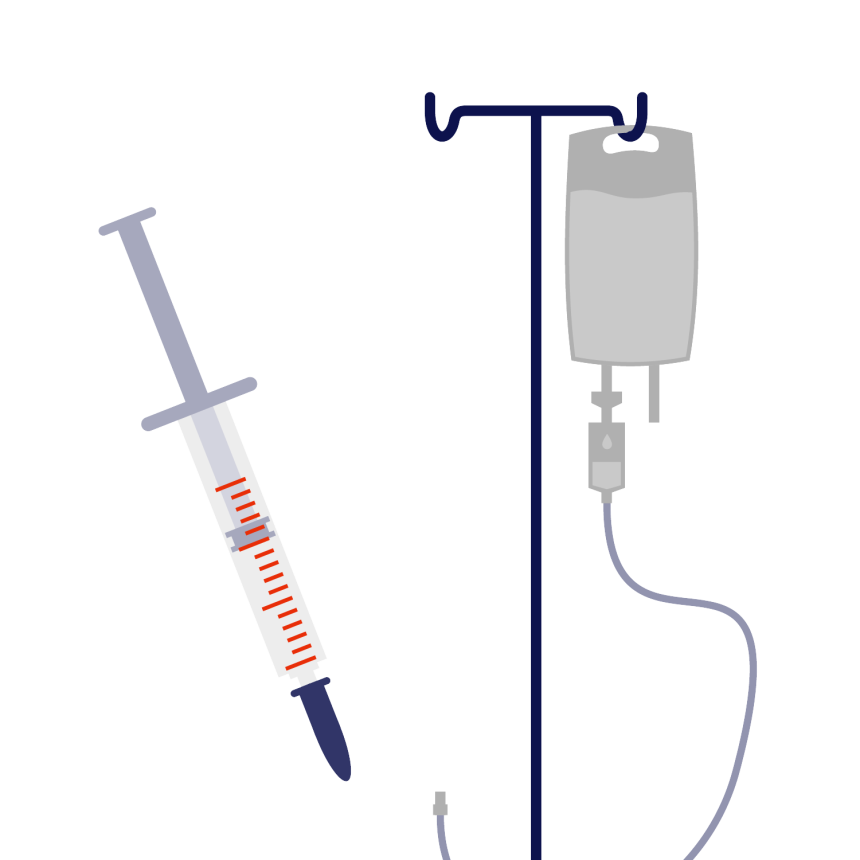
Ocrelizumab is a disease modifying therapy (DMT) for active relapsing MS. It’s also used to treat early active primary progressive MS. Its brand name is Ocrevus. You can have it as an infusion (a ‘drip’) in hospital. It’s also available as an injection. A nurse usually gives you the injection in a hospital or clinic.
You say these names: OKK-ra-LIZ-zuh-mab and OKK-ra-vuss.
- Who can take ocrelizumab (Ocrevus)
- How do you take ocrelizumab (Ocrevus)?
- How does ocrelizumab (Ocrevus) work?
- How well does ocrelizumab (Ocrevus) work?
- Ocrelizumab (Ocrevus) side effects
- What tests do you need with ocrelizumab (Ocrevus)?
- Stopping ocrelizumab (Ocrevus)
- Ocrelizumab (Ocrevus) and pregnancy, breastfeeding and contraception
Who can take ocrelizumab (Ocrevus)
Ocrelizumab (Ocrevus) is used to treat ‘active’ relapsing MS. It’s also used to treat early primary progressive MS.
Relapsing MS
You can take ocrelizumab (Ocrevus) if:
- You have ‘active relapsing MS’. This means you get relapses or MRI scans show new, active or growing lesions
Primary progressive MS
You can have ocrelizumab (Ocrevus) if you have early active primary progressive MS. For that, all these must be true:
- your MRI scans show signs of inflammation (new, active or growing lesions) within the last three years
- your score on the Expanded Disability Status Scale (EDSS) is between 3.0 and 6.5.
- your MS symptoms started within the last 10 to 15 years
You’re unlikely to get ocrelizumab if you have MS and you’ve been using a wheelchair for over six months. Earlier drug trials seemed to show DMTs make no real difference if MS has affected people’s legs this much. The latest research shows ocrelizumab can also help people with primary progressive MS that’s advanced, including those who use wheelchairs. Read more under ‘other benefits’.
What is ‘early’ primary progressive MS?
Your neurologist decides if your primary progressive MS is ‘early’ based on two things:
- how long you’ve had MS symptoms
- how much disability you have
Disability is measured by EDSS scores. For early primary progressive your EDSS score needs to be:
- 5 or under and your symptoms began within the last 10 years
- over 5 and your MS symptoms began within the last 15 years
A score of 5 means disability gets in the way of your day-to-day activities. But you can walk 200 metres without resting or needing help (like a stick or walking frame).
If you meet all the conditions above, people of any age can have ocrelizumab.
How do you take ocrelizumab (Ocrevus)?
There are two ways of having ocrelizumab (Ocrevus). Both happen in hospital or clinic but without an overnight stay. You can have it as an infusion (a ‘drip’) or an injection. Injections work just as well as infusions.
Infusion
With the infusion, you start with two infusions two weeks apart. After that you have an infusion every six months.
Infusions can take up to four hours. There’s an hour before the infusion starts when you get drugs to reduce infusion side effects. The infusion itself lasts two hours. Then you’re monitored for an hour after the infusion ends.
If you have a reaction to the infusion, it can be slowed down or stopped until these symptoms go away.
Injection
Since 2024 it’s possible to have ocrelizumab (Ocrevus) by injection. Every six months a nurse uses a special syringe pump to inject you under the skin in your belly. This happens in a hospital or clinic. It takes 10 minutes in, so cuts time in hospital by 90%. But in some areas a nurse might give you the injection at home.
Your MS team will tell you if your local health services offer injections.
How does ocrelizumab (Ocrevus) work?
Your immune system has special types of cells (T and B cells) that kill viruses and bacteria. But in MS these cells attack and damage myelin. That’s the protective covering around nerves in your brain and spinal cord.
Ocrelizumab (Ocrevus) is a monoclonal antibody drug. These artificial antibodies are made in a laboratory. With this drug they stick to the surface of B cells and help kill them. Fewer of them then get into your brain and spinal cord. That means they can’t cause damage to nerves there. So you get relapses much less often.
How well does ocrelizumab (Ocrevus) work?
The effectiveness of ocrelizumab (Ocrevus) is classed as 'high' for relapsing MS. For early primary progressive MS it’s classed as ‘moderate’. Each DMT can be rated as ‘moderate’, ‘good’ or ‘high’ based on two things. One is how much it reduces relapses. The other is how much it slows down disability getting worse.
Monoclonal antibody drugs like ocrelizumab (Ocrevus) are some of the DMTs with the best results against MS.
Relapsing MS
Two trials called Opera I and II compared ocrelizumab (Ocrevus) to beta interferon, a drug already used to treat MS.
Ocrelizumab (Ocrevus) was a lot better than beta interferon at reducing relapses. It was also much better at cutting the number of lesions seen on MRI scans.
In those trials…
Relapses dropped by:
46-47% compared to beta interferons
This means that in the two Opera trials, on average, people saw relapses drop by almost half over two years. They fell by 46% in one trial, and by 47% in the other. This was compared to people who took beta interferon.
In these two trials over 80% of people on ocrelizumab stayed fee of relapses for two years. Around 70% of people on beta interferon stayed free of relapses.
Disability getting worse was slowed down by:
40% compared to beta interferons
In the two OPERA trials, on average people on ocrelizumab saw a 40% drop in the risk of their disability getting worse. This was compared to people who took beta interferon. The drop was 43% in one trial and 37% in the other.
Disability didn’t get worse over six months for 92% of people who took ocrelizumab. It didn’t get worse for 88% of people who took beta interferon.
Primary progressive MS
In a trial called ORATORIO disability getting worse was slowed down by:
25% compared to a placebo, a dummy treatment with no drug in it.
This means that over two years in this trial, on average, people saw a 25% drop in the risk of their disability getting worse. This was compared to people who took the placebo.
Over six months disability didn’t get worse for 70% of people on ocrelizumab. It didn’t get worse for 64% of people who took the placebo.
This ‘moderate’ effect may not seem very big. But ocrelizumab (Ocrevus) is the first drug to make a significant difference to primary progressive MS. In people with early progressive primary MS ocrelizumab could delay the need for a wheelchair by seven years.
Other benefits
NEDA
NEDA stands for ‘no evidence of disease activity’. This means someone’s MS is no longer active. They have no new or active lesions, or relapses. Their disability has stopped getting worse. Across four studies over half of people on ocrelizumab (Ocrevus) reached NEDA after two years of treatment.
Lesions
T1 lesions are a sign of new inflammation. In a trial 94% of people with relapsing MS got fewer of these compared to people taking beta interferon.
T2 lesions are a sign of inflammation, whether it’s recent or from longer ago. People with relapsing MS got fewer of these. Or if they already had them, they got smaller. The number of new or bigger lesions dropped by 77% in one trial and by 83% in another trial. This was compared to people on beta interferon.
Ocrelizumab (Ocrevus) can also shrink lesions in early primary progressive MS. In the ORATORI0 trial T2 lesions got smaller by 3%. They got bigger by 7% in people on the placebo.
Walking speed
After two years of the OPERA trial people’s walking speed got worse with both ocrelizumab and the placebo. But the speed was 39% slower with ocrelizumab compared to 55% slower with the placebo.
Arms, hands and fingers
Ocrelizumab (Ocrevus) slows down how fast MS causes symptoms or disability in your arms, hands and fingers. A study called ORATORIO HAND looked at this more closely in people with primary progressive MS. This included older people with advanced MS and those who use a wheelchair.
Ocrelizumab slowed down how fast their overall symptoms and disability got worse. This included their arms and hands. Read more about this trial.
Brain
Brains shrink a little each year as we get older, whether we have MS or not. There’s more of this shrinkage with MS and it happens faster. In early trials ocrelizumab slowed this down in primary progressive MS. With relapsing MS it did this better than beta interferon.
How well does ocrelizumab (Ocrevus) work over many years?
The early ocrelizumab (Ocrevus) trials lasted two years. But the trials followed people for ten years in total. Ocrelizumab kept working as well as it did in the first two years. People got better results if they started treatment earlier, not later.
Relapsing MS
After ten years, for almost eight in ten people their EDSS scores showed their disability hadn’t got worse. Nine in ten didn’t need a walking aid. People who were treated early saw almost no new or growing lesions on their MRI scans. Over a decade their chance of having a relapse kept dropping year after year.
Primary progressive MS
For around a third of people their EDSS scores showed their disability hadn’t got worse over ten years. This dropped to around one in five if you looked at three different ways of measuring how disability gets worse. After ten years more than eight in ten of people didn’t need a wheelchair.
Ocrelizumab (Ocrevus) side effects
Ocrelizumab kills some types of cells in your immune system but not all of them. You still have enough protection against infections. But you’re more likely to get some, mostly mild, infections.
In the early trials side effects weren’t any more serious than what people got with beta interferons. Beta interferons are among the safest DMTs.
The risk of side effects isn’t high. Chances of serious infections remain low after ten years. Long-term studies show no new side effects that doctors didn’t already know about.
Side effects are the same whether you have the infusion or injection.
Very common side effects (more than 1 in 10 people get them):
Colds and flu are the most common infections with ocrelizumab. About half of people in trials got these.
Up to four in ten people who have the drug as an infusion have at least one fairly mild, short-lived reaction. This happens during their infusion or within 24 hours of it. These include:
- a skin rash
- fever
- sore throat
- itching
- feeling sick
- fast heart beat
- shortness of breath
- flushing (going red in the face)
These reactions are strongest after your first infusion. They get less with infusions after that. You take steroids and anti-histamines to make a reaction less likely. You’ll be monitored during the infusion and for an hour afterwards.
You also take steroids and anti-histamines before an injection. Half of people who have injections get reactions around the area the needle goes into. These can happen within 24 hours but aren’t serious.
Common side effects (up to 1 in 10 people get them)
Common side effects include:
- herpes infections (including cold sores and shingles)
- infection of your sinuses (the spaces behind your cheeks, forehead and nose)
- chest infections like bronchitis and coughs
- stomach and bowel infections (gastroenteritis)
- infections like sore throats and tonsillitis
- skin infections (cellulitis)
Other possible side effects
Up to five people out of every 200 people have a more serious reaction to their infusion. If that happens, you won’t be able to carry on taking this drug.
Effects on your blood
Changes to your blood could include a drop in levels of your white blood cells. These cells fight off infections. This drop can cause a fever. You might get lower levels of immunoglobulin M and G. These are proteins that help protect you against infections.
PML
PML (progressive multifocal leukoencephalopathy) is a rare but serious brain infection. It’s caused by a particular virus. With ocrelizumab (Ocrevus) the risk of PML is extremely low. If it happens, it’s mostly in people who earlier took another DMT. This is usually natalizumab (Tysabri and Tyruko). Read more about PML.
Cancer
In trials more people taking ocrelizumab (Ocrevus) got cancer, especially breast cancer. But numbers were within the normal range. In people who took this drug for ten years, their cancer risk stayed within that normal range.
Long-term side effects of ocrelizumab (Ocrevus)
The most common long-term side effect of ocrelizumab (Ocrevus) is a bigger risk of infections. But the chances of serious infections remain low even after ten years. Long-term studies show no new side effects that doctors didn’t already see in earlier ocrelizumab trials.
Find out more about all the possible side effects of ocrelizumab
Stopping ocrelizumab (Ocrevus)
You should never stop taking a DMT without telling your neurologist. With some DMTs there’s a risk of ‘rebound’ if you suddenly stop. This is when your MS gets much worse within a few weeks or months. There’s a chance this might happen with ocrelizumab (Ocrevus).
What tests do you need with ocrelizumab (Ocrevus)?
Tests before treatment begins
Tests on your white blood cells will check how well your immune system is working.
Before you start, blood tests look for certain infections like hepatitis B. If you have that liver infection, you can’t take ocrelizumab. If you’ve had hepatitis before, taking this drug can make it flare up again very badly. If you get this infection for the first time, ocrelizumab can make it much worse than it normally is.
Vaccination
Like most DMTs, this drug makes infections more likely. Before you start it, your neurologist will check if you have protection against some of the infections it puts you at risk of.
Your neurologist will check if you need vaccinating against hepatitis B (and tetanus and polio). They’ll check that you’re up to date on other vaccines. This includes childhood ones like chickenpox (that vaccine protects you against shingles) and the MMR vaccine for measles, mumps and rubella. Some ‘live’ vaccines, like these two, aren’t safe to have once you’ve started many DMTs. Your MS team or GP can tell you whether a vaccine is ‘live’ or not.
You’ll have any vaccines you need a few weeks before you start this drug.
You can safely have the annual flu jab while taking this DMT.
Tests during treatment
You need monitoring during an infusion and for an hour after. Other than this you need no special monitoring or tests while on this drug. Your neurologist might want you to have an MRI scan once a year to see if the drug is working. But how often you have scans depends on what your neurologist thinks you need. If your MS seems stable, you might have scans less often.
Ocrelizumab (Ocrevus) and pregnancy, breastfeeding and contraception
Pregnancy
Ocrelizumab (Ocrevus) doesn’t have a licence for use in pregnancy. But guidance for UK neurologists from 2022 says you can take this drug if you plan to have children. Evidence points towards it being safe for women to get pregnant when on ocrelizumab.
The new guidelines say it’s best to wait three months between an infusion and trying to get pregnant. They say you can be treated with this drug up until the point when you know you're pregnant. Because this drug is relatively new, some neurologists are more cautious than the 2022 guidance.
Once you know for sure that you’re pregnant, you’ll usually have no more infusions until after your baby is born. But in some cases, a neurologist might recommend a dose of the drug during a pregnancy.
Women who’ve just had a baby are more likely to have a relapse. So if you decide to stop this drug to have a baby, you should go back on it straight after the birth to cut your relapse risk.
If you want to have a child, discuss this with your neurologist or MS nurse. If you think you’ve become pregnant, let your medical team know at once. Never stop your DMT without first getting their advice.
Breastfeeding
The new UK guidelines from 2022 say you should avoid having an infusion of ocrelizumab (Ocrevus) in the first week that you're breastfeeding. After that they say it’s safe to breastfeed. Ask your medical team for advice.
Contraception
The leaflet that comes with ocrelizumab (Ocrevus) says contraception should be used to avoid getting pregnant. But the 2022 UK guidelines say this advice is too cautious. These guidelines have no special recommendations about contraception.
Read more about pregnancy, breastfeeding and contraception and DMTs
The 2022 guidelines about pregnancy, breastfeeding and contraception cover taking ocrelizumab by infusion. They haven't yet been updated to include taking the drug by injection.
Last full review: 1 October 2025
Next review date: 1 October 2028
We also update when we know about important changes.
You may also be interested in


Speak to someone who knows MS
Our free MS Help services are here for everyone affected by MS.
We can provide trusted information so you can understand and manage MS. Personalised support and guidance for everyday living so you can live well. And help you connect with others by finding, growing and maintaining your MS community, in person and online.
You can talk to us in confidence by phone or our new webchat facility from 9am to 5pm Monday to Friday (except bank holidays) and email us any time. Explore our services or start a conversation by visiting our MS Help Hub.

This information carries the PiF Tick stamp of approval
The PiF Tick shows our information is accurate, reliable and easy to use.
