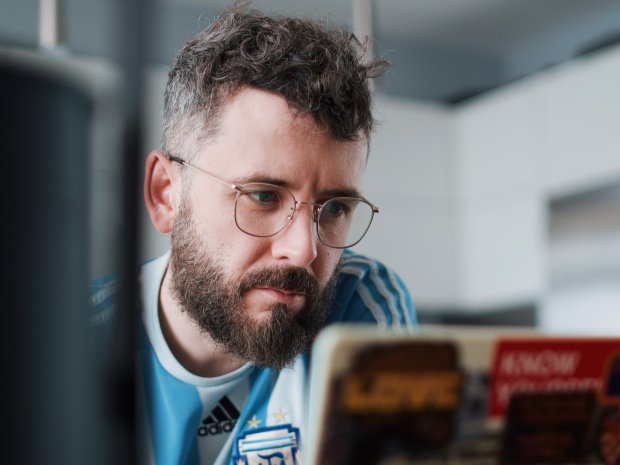
Behind the music: Noah '40' Shebib on life with MS
Noah ‘40’ Shebib is a Grammy Award-winning music producer from Toronto, Canada. Noah is best known for his pioneering hip-hop production for rapper Drake and co-founding OVO.
Noah was diagnosed with relapsing remitting MS in 2005 aged 21. We caught up with him to ask about life as a world-famous music producer living with MS.
You were diagnosed with MS in 2005. Can you tell us what the diagnosis process was like for you?
I was diagnosed with MS when I was 21 years old. I started to feel heat in my leg, after a few days it started being really weird. It was hard for my brain to process. I stayed at Toronto Western hospital for about a month and a half. I went through my diagnosis and treatment there. Spinal taps (lumbar punctures), blood patches - a whole journey. I spent my twenty-second birthday in the hospital.
I just looked at it as motivation for myself. At the beginning my prognosis was that I’d be in a wheelchair in 5 years and I needed to prepare myself for that. That was shocking information for a 21 to 22 year old kid. But I thought to myself that as long as my fingers still work and I can still play an instrument and I can click a mouse, I'll be okay. So I just tried to look at it from that perspective. I kept pushing forward.
When did it become public knowledge that you had MS?
I think it became public because I was walking with a cane. So I had to explain why I had a cane and what my condition was to the people around me. I was just very honest about it. Some people compartmentalise these things in different ways, or they decide not to share them, and that's understandable.
But I wanted to share my journey with everybody else in the community. I thought it was really empowering, so that was something I was open about and I think it just started unfolding right away. Then I started doing press.
What is the one thing you wish people understood about MS?
That it’s hard to understand. You don’t know what it will look like and what will happen. It’s hard to comprehend how it affects your brain, spine and nerves. Days look different for different people.
For me high stress moments trigger MS episodes. Like I was supposed to be at the awards show today and I didn't show up.
People say it was ‘convenient’. 'Oh your MS was bad? I saw you yesterday - you were fine.'
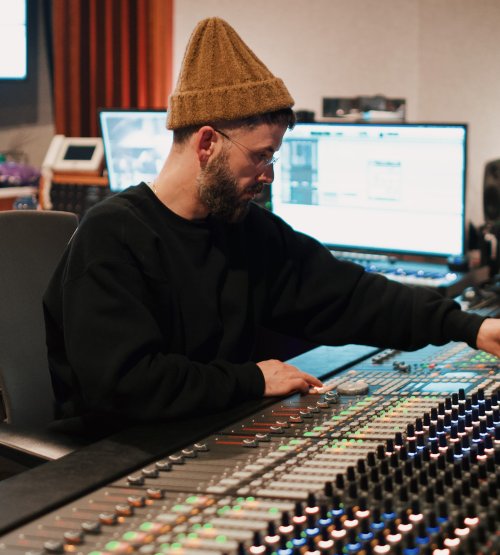
That's really troubling, and it’s something that many people with MS have to navigate. They'll see me not being able to walk, or on a cane, or I need a wheelchair to get somewhere. Things can just stop working or go numb.
They'll witness those experiences, so they know it's real. But I just wish they could understand how fluid the disease is, how quickly it changes and how my triggers operate. Like heat, stress, sleep and diet. These things are crucially important to me, and everybody else doesn't necessarily have to prioritise them to maintain the style of life that they have.
MS can affect anything in your body. Anything you feel, touch or that moves. Your senses. Your thoughts. The way your brain works and processes. Some people think it just means that you can't move your legs or your arm doesn't work. They don't realise it could also affect your mood and your anxiety and who you are as a person.
I'm not out in public all the time. When people see me, they're in shock. Like, “Oh man, you're never out in public. I can't believe you're here at the party. This is crazy.” Everyone thinks it's by choice. I think that's just something many of us have to manage as people that live with this disease.
Your mum Tedde was diagnosed with MS two years after you. Did she have similar symptoms to you, or was her experience different?
Very different. She actually had MS symptoms decades before I was diagnosed. It just wasn't officially diagnosed. It was diagnosed as optic neuritis. She had experience with optic neuritis for 20 years before I was diagnosed with MS.
Then when I got diagnosed she learned more about it, and it ended in a diagnosis for her as well. Albeit a very different kind of MS. For example, she's not on medications and I'm on one of the most powerful medications that we have to treat multiple sclerosis Ocrevus (Ocrelizumab). So a different experience.
MS is unique to everybody, right? There's progressive forms of MS. There's remitting relapsing MS. People have different symptoms.
So we share a common experience in many ways. But her journey has been very different to mine.
Were you able to help your mum through her diagnosis process?
Yes. I think everybody was mindful of where I was. I think her diagnosis was more like a corrected mistake than a shocking diagnosis. She already had a blind spot in her eye, so it was more just the reason for it was clarified. So I think she didn't have too difficult of a time through her diagnosis. But as the disease affected her as she got older, I was able to be a great resource for her.
What have been the biggest challenges of living with MS and having a successful career in music?
Honestly, just managing the sleep and fatigue and drawing a line and boundaries around what I need, and why I'm different. The best way to do it is with good, honest communication with the people around you. Drake, who is really my partner in this business, is somebody who's very understanding and considerate of that. So when I draw those lines, he's incredibly respectful of them.
So I haven't had much of an issue, but that's also because of the nature of how I function in this business. I work with Drake. I don't really work with anybody else. So I'm protected because I have a friend that I trust, that has the responsibility to make sure I'm cared for.
You’ve been quoted as saying ‘I have MS. I’m going to live with it, and I’m going to win with it’. How important is it to you to stay positive?
Of course, it is a real factor! Sometimes the goal posts move for me. Sometimes things take me longer. Sometimes I don’t make it to the party. These are my realities and even if people perceive them as negatives because I can't do things, I need to remain positive. It's a constant challenge living with this disease and explaining it to people.
So the best way is to always communicate with the people around me about what's happening. And remain in a positive space that “this is just my reality”. And “things just look a little different for me”. That's how I've been able to manage it.
But I'm speaking from a very privileged MS perspective because the medication I'm on, Ocrevus (Ocrelizumab) is working incredibly well and efficiently for me. But I think I'm a very fortunate person, so I can stay positive a lot easier than others in this scenario.
But I guess what I would focus on is the diagnosis. It’s a shock to the system. Staying positive for me is looking past it and realising that life is so much bigger and broader than that. For example, if you're worried about buying a fancy car, you're probably going to struggle when they tell you that you might not walk.
I’ve realised happiness is not in the car. It's in your family, and your surroundings, and your relationship and your own personal fulfilment. And it's possible to find those things whether MS is attacking your body or not.
Is it important to you to inspire others living with MS?
Yeah, of course. It’s like, look what I've achieved and it's incredible - and I did it with MS ha ha! It’s even more impressive! I feel proud when people come to me and say my story was inspiring for them. Or that that I gave them faith they could continue after the diagnosis or that they found something relatable in my story.
All of those things are hugely positive experiences for me on a regular basis. That's not the reason I do it but, boy is that a great benefit.
What would you say to someone who is newly diagnosed with MS?
Remain positive. Look forward to the future. Understand that this disease is still being learned about. And when the doctors tell you things, you reserve the right to prove them wrong. I would just suggest that newly diagnosed people keep their head up, and learn, and be optimistic.
There are lots of really good meds for many people with MS. Things like the repair of nerves is getting researched, and we will find the solution. I stay optimistic. That's the easiest place to go, and the safest place. I’m very confident they’ll figure it out in the future.


