
Standing Firm in Power and Pride: Masta Ace on life with MS and music
When Masta Ace was diagnosed with MS in 2000, he thought it might end his career. Instead, it marked the start of a new chapter. Two decades later, the New York hip-hop legend is still performing, creating, and speaking openly about life with MS.
We caught up with him for Black History Month to talk about resilience, family, and the power of art.
“It felt like a sign”
Masta Ace had kept his MS quiet for more than a decade. But in 2013, his diagnosis became public when police searched his tour bus.
Officers searched the van for over an hour, going through every bag, every zipper. The crew was left shaken and silent. Among their belongings, the police found needles of Avonex (beta interferon) – Ace’s MS medication. Marco Polo, Ace’s producer, asked him what it was. For Ace, it was a moment of reckoning, and the moment he chose to speak up.
“I’d been thinking about telling my close friends for a while,” he reflects. “That incident felt like a sign. Like, okay, you’ve been holding this in, now’s the time.”
He shared his diagnosis with his tour crew: “Marco Polo, Maria, the driver, Stricklin, my collaborator and rapper, and Steve, the merch guy. “It was quiet for like 15, 20 minutes. Nobody said a word. I think they were just shocked.”
Ace told them he was stable, taking weekly injections, and open to questions. “After that, it was business as usual.”
Family support and acceptance
Ace credits his wife, Leschea, as his rock. “Nothing phases her,” he says. “I feed off that energy. She’s been an incredible support, and in many ways, like an agent for me.”
She’s always encouraging me to make smart lifestyle choices and keep forging forward.
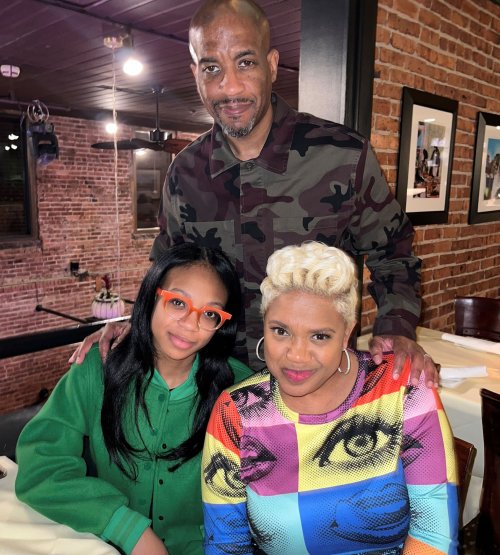
His daughter Meema, now 21-years-old, has also grown up around MS. “When I first told her, I think I showed her an interview I’d done. She was in high school, and I didn’t want her to worry. When she was younger, I’d wait until she was asleep to take my injections. Even now, I try not to do it in front of her. But she knows what it is. She’s accepted it.”
What would she say about her dad’s MS now? “She probably thinks I’m the healthiest member of the family, because I eat well and I exercise.”
MS and music
Ace’s diagnosis in 2000 came just before the release of his landmark album titled ‘Disposable Arts’. At the time, he thought it might be the last of his career.
“I said, if this is it, I want to go out on the right note. I told my team, ‘Let me do this record my way. No input, no comments.’ Every lyric, every skit, every chorus was exactly what I wanted.”
That album didn’t mark the end. It sparked a whole new chapter.
I’ve had a longer, stronger career after my diagnosis.
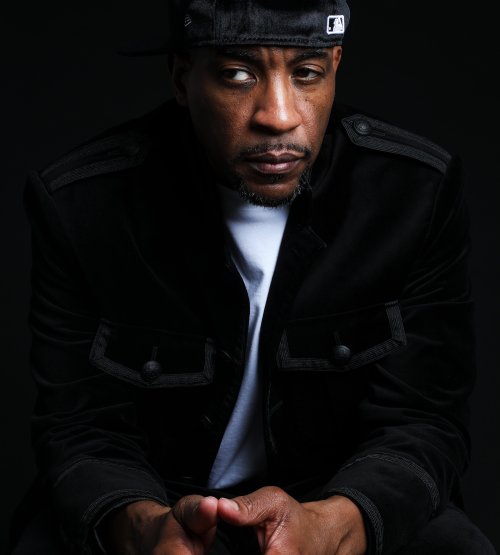
One of his most powerful tracks, The Fight Song from A Breukelen Story, turns MS into a lyrical opponent. “My friend MC Paul Barman suggested I battle MS in a song. My producer Marco had a beat I hadn’t used, and once we restructured it, the words just flowed. It wrote itself.”
The rapper Pharoahe Monch stepped in to voice MS, delivering a powerful verse humanising the disease:
You never heard of me, you'll listen / When I attack your spinal cord and weaken your immune system
Excruciating pain, suffering that's atrocious / For the multitude, I'm multiple sclerosis
Ace’s own verse is a declaration of defiance:
Ignore the pain, I won’t be slain by my enemy / My eyes closed, I’m havin’ talks with the inner me
You might slow me a little bit, but you won’t stop me / You might stand in my pathway, but you won’t block me
“Every day is a victory”
For Ace, fighting MS isn’t just about music, it’s about movement.
“Getting out of bed, walking, going to the gym, those are victories. I know people with MS who can’t do those things anymore. I never take it for granted.”
He jokes with his wife about long walks on tour: “She’s not a fan of walking. I tell her, I’m happy I can walk. I’ll walk for two hours if I have to.”
“I’m on stage, moving, showing people I can still do this”
Asked about this year’s Black History Month theme, Standing Firm in Power and Pride, Ace reflected on his career as a testament to resilience.
“The better part of my career has been post-diagnosis. That shows you can take a jarring moment and become stronger. It would’ve been easy to hide away, but I chose the opposite: to be on stage, moving around, showing people that I can still do this. Every step, every jump on stage is me showing resilience.”
For Ace, Black History Month is about education and visibility.
So many contributions by Black people have been hidden or omitted from history. Black History Month is a chance to bring those stories forward, and make people question why they weren’t taught in the first place.

"We need to celebrate those legacies not just in October, but all year round.”
Beyond the mic
Ace’s creativity is expanding beyond music. He’s developing a stage musical, The Falling Season, based on a young man navigating a tough neighbourhood, mirroring parts of his own life.
“Having MS has opened up my mind to doing the things I’ve always wanted to do. I used to keep my ideas on my laptop. Now I’m ready to get them out into the world.”
The musical blends theatre with hip-hop, and the response has been electric. “People who don’t like musicals came to our reading and said, ‘I love this.’ That’s exciting.”
“The music pushes the narrative forward,” he says. “There’s a lot of songs that you wouldn't expect to hear on a theatre stage.”
He’s also working on a TV series, a crime drama set in 1980s Brooklyn, based on real events and inspired by his childhood friends. “I’ve always been a writer at heart. Rap was just the vehicle. Now I’m ready to take my writing to the next level.”
Fuel for the next chapter
Ace’s shows are high-energy, and his upcoming performance at London’s Jazz Café promises something extra special as it falls on his 24th wedding anniversary.
“My wife will be there with me. I’ve got to figure out something cool to surprise her.”
From MS diagnosis to music milestones, from resilience to creativity, Masta Ace embodies what it means to stand firm in power and pride. His words remind us that while MS is part of his life, it’s never been the end of his story, only fuel for the next chapter.
Masta Ace performs at the Jazz Cafe in London on 10 November.


