Seven highlights from the ECTRIMS research conference
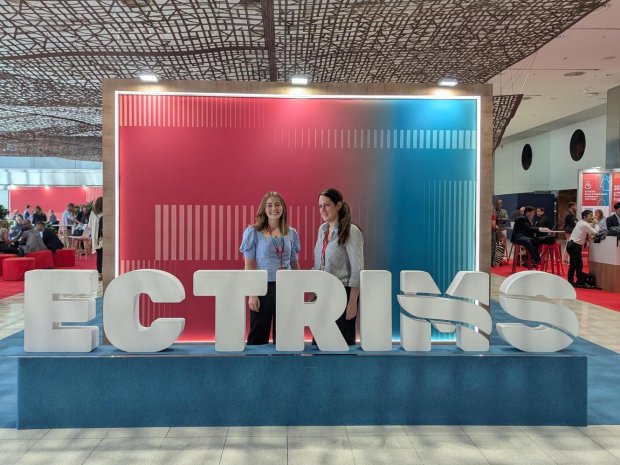
In September, over 9500 MS researchers gathered to share insights on the latest MS research. Caitlin Astbury, our senior research communications manager, shares her highlights from the conference.
1. Breaking news from clinical trials
Of course, one of the most exciting things was the positive results from two major trials. The results were shared in the late breaking session, and there was a definite feeling of excitement among researchers in the room.
You can read about the results of the trials in our news stories:
2. Focusing on cognition
Professor Maria Pia Amato from the University of Florence opened the meeting with a talk on cognition in MS. She acknowledged the huge impact cognitive problems can have on the quality of life of people living with MS. And how important it is that cognitive symptoms are given the same attention as physical symptoms.
Her talk highlighted the progress we’ve made. Cognitive problems are now more widely recognised as an MS symptom. And researchers have developed tools to screen for cognitive symptoms and improved our understanding of the biology behind them.
However, more work is needed to understand the impact of MS treatments on cognitive symptoms. And to develop better ways to detect and monitor cognitive changes. This could help identify cognitive problems earlier and make sure people with MS get the support they need to manage these symptoms.
3. Exercise and myelin repair
We know exercise can be helpful when you have MS. It can improve your mood, mobility and muscle strength, as well as some MS symptoms. But some evidence is emerging that it could also play a role in myelin repair.
Dr Lindsey Wooliscroft from Oregon Health and Science University presented early data from a study of aerobic exercise in people with MS. People in the trial used exercise bikes. Early MRI data from the trial suggests that the people who took part in this exercise had increased myelin.
This was a small study, with 21 participants. And researchers are still analysing the clinical data, to see if there were differences in disability. But it adds to what we know about the potential benefits of exercise for people with MS.
4. Predicting who’s at risk of rapidly worsening MS
We know that disability progression can vary widely between people with MS, even if they have similar early symptoms. Dr Owain Howell from Swansea University combined data from our UK MS Register and Tissue Bank to identify markers that predict who’s at risk of rapidly worsening MS.
18.6% of people with MS from the Register had rapidly worsening MS. MRI data showed that people who went on to have rapidly worsening MS had more lesions in the outer layer of the brain. And when researchers looked at brain tissue, they saw that people who had experienced rapidly worsening MS had higher numbers of ‘active’ lesions – areas of inflammation.
One day it could be possible to use data like this to identify individuals at risk of faster progression. And tailor the treatment and support they receive.
This work received a special mention in the closing session as a scientific highlight at the conference.
5. Impact of menopause on MS symptoms
Data from the Register was also used in Imogen Collier’s work. This highlighted the impact of menopause for people with MS on symptoms like fatigue, cognition and bladder problems. This was awarded one of the best posters at the conference. You can read more about Imogen’s work in her blog.
6. New criteria for MS diagnosis
There were also a lot of conversations between researchers and neurologists about updates to the criteria used to diagnose MS and how to use them.
You can read more about updates to the criteria, which were announced last month, in our news story.
7. Bringing people together
Research conferences like ECTRIMS are a perfect place for collaboration. We had the opportunity to meet with other MS organisations from across the world to discuss our research plans and strategies and identify opportunities to work together.
And for the second year, ECTRIMS held an afternoon session which brought together the patient community. People with MS were able to join online or in-person in Barcelona to hear from leading experts about the latest developments in MS research. You can catch up on these sessions on the ECTRIMS website.
You may also be interested in