
Can new footwear combat foot drop and restore independence?
Many people living with MS experience ‘foot drop’. This happens when the brain’s signal to lift the foot doesn’t reach the muscles correctly. It causes the toes to drag, often leading to trips and falls. For many, this fear of falling can cause their “radius” to shrink as they lose confidence to leave the house.
A team at Queen Margaret University, Edinburgh are developing shoes specifically to overcome this problem. We caught up with two of the founders of the Health Design Collective social enterprise, Professor Cathy Bulley and Gillian Wilson. And filmmaker Andy McKenna who trialled the shoes and made a powerful film documenting his experience as part of the research project.
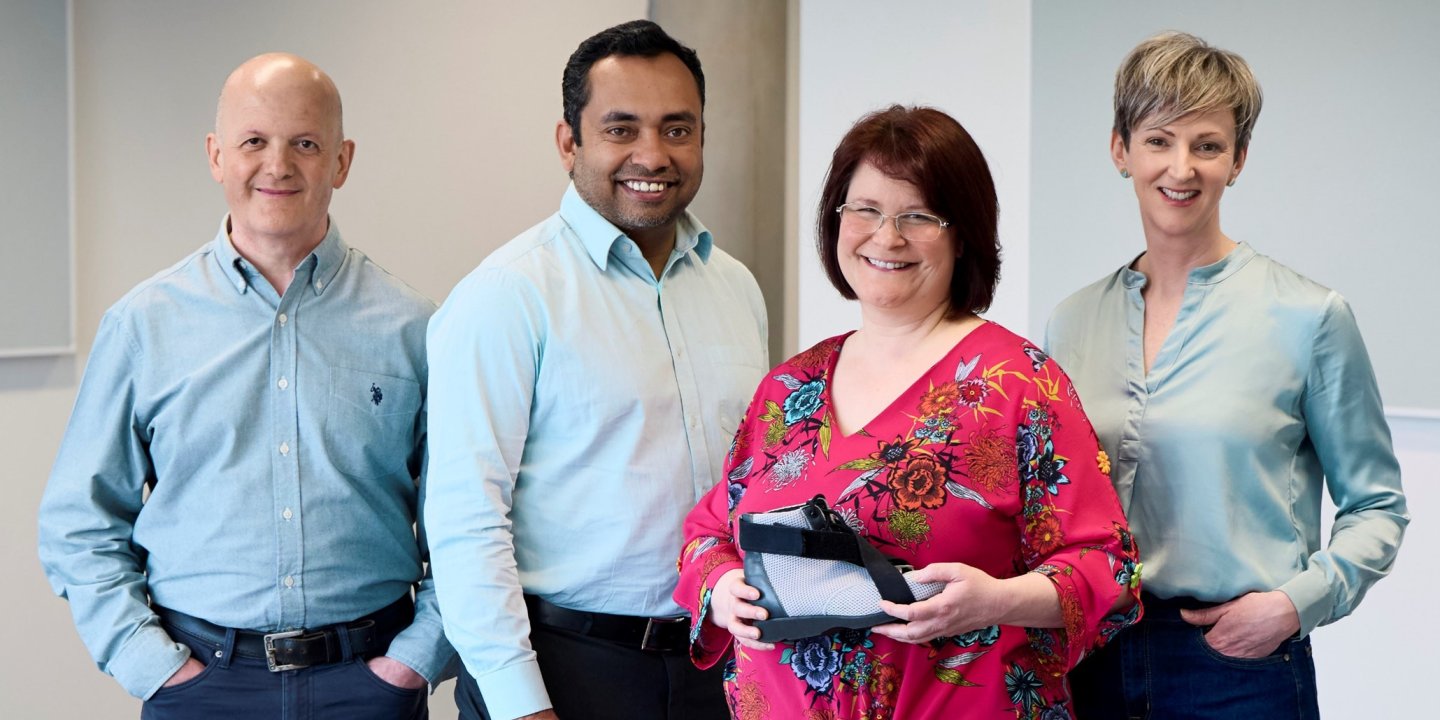
Bringing the right people together
Progress often takes getting the right people together in the right room. The idea for this project first began over coffee in 2017. Gillian, a neurological physiotherapist and PhD student at our Doctoral Training Centre met Cathy, Professor in Physiotherapy for coffee.
Gillian has spent years seeing patients struggle with the existing options for foot drop. She recalls saying to Cathy, “If only I had a product developer. There are a number of things that would make my patients' lives better if someone would just make them!”.
Cathy had spent years researching existing devices and saw an opportunity. "Existing devices help some people some of the time,” she explains. “We wanted to use a co-design process to weed out the 'cons' and address them directly." She also explained that access to existing devices can be a real “postcode lottery” and often require specialist physiotherapists. This drove them to create a high-impact, accessible option.
The innovation: built-in support
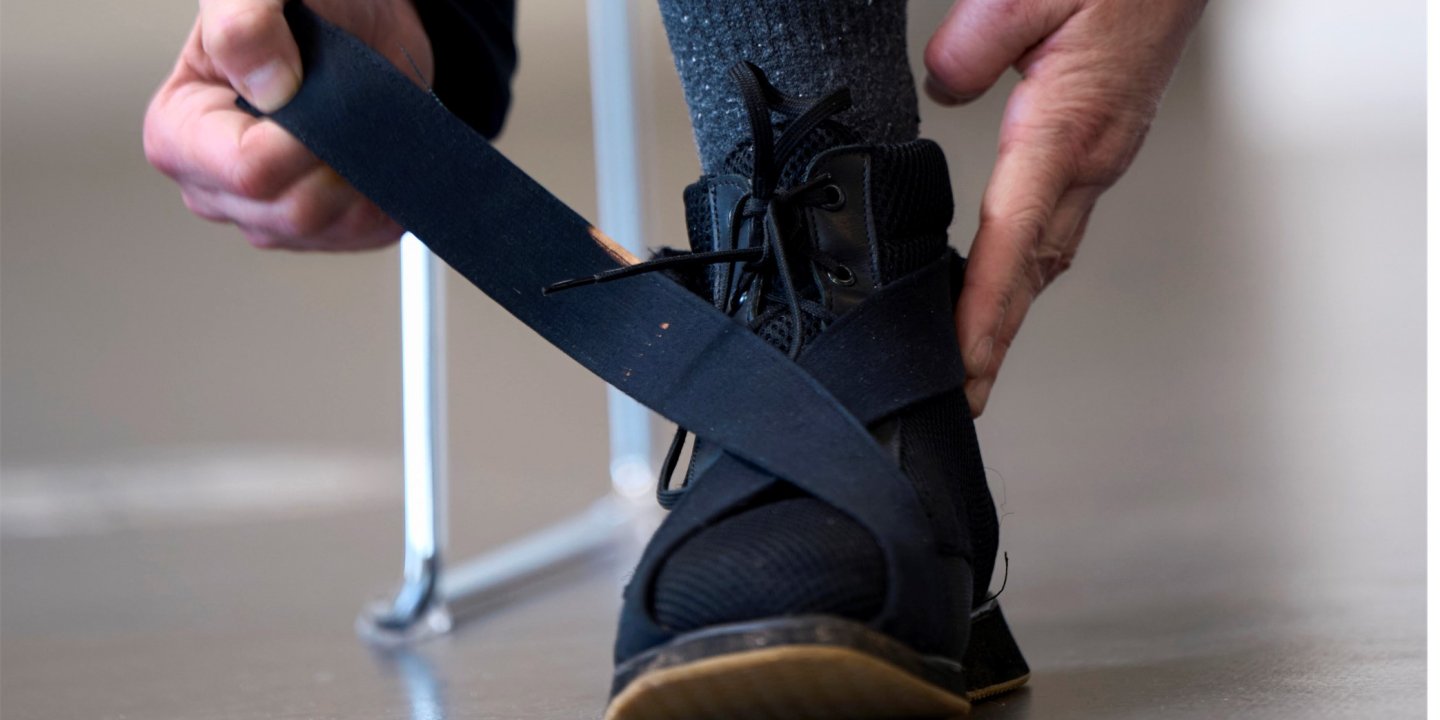
Along with colleagues Dr Kavi Jagadamma and Professor Derek Santos, the research team developed a shoe with integrated support. Key features include:
- the crossover strap. This is a diagonal design that provides lift and stops the foot from dropping or rolling outwards. While still enabling movement at the ankle.
- adjustability. MS symptoms often fluctuate. Users can adjust the tension throughout the day.
- aesthetics. The support is built into the footwear. This allows it to look like a standard walking boot or trainer, rather than a medical device.
More than a physical issue
Through extensive interviews and workshops, the team realised that foot drop is far more than a physical problem. It affects a person’s identity and sense of self, often leading to social isolation. Gillian noted that for many, as their mobility decreases, their social networks shrink. As they can no longer meet friends in the ways they used to.
Andy is a natural-born explorer and has been a professional mountain bike guide for decades. He found that foot drop made it increasingly difficult to do any of the things he loved.
Foot drop has meant trips and stumbles. Falling in the road, falling in front of cars. It can steal your confidence. It makes you want to move less. You spend most of the time in an anxious state of mind because you are scanning, scrutinising every crack in the pavement.
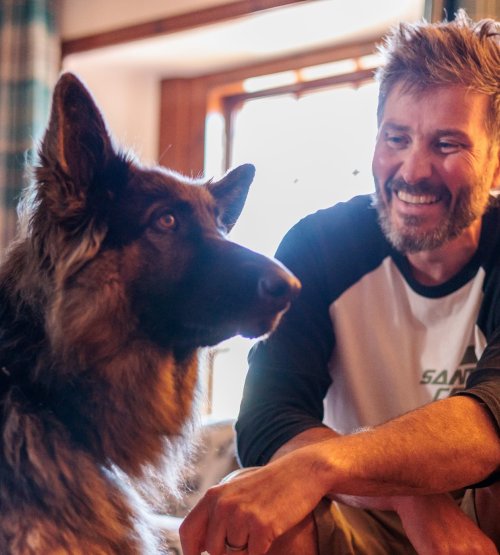
Before finding the Queen Margaret University team, Andy had resorted to his own solutions.
I was duct taping my shoes- basically pulling up my toes and making a kind of harness. I must have looked like a right clown.
Immediate improvements
The team recently completed a small initial study with 15 participants trying out the shoes, with very encouraging results. Participants who had reported several falls in the six weeks leading up to the trial recorded zero falls while wearing the shoes.
Andy noticed a change straight away: “There was almost an immediate sense of returning to what is a natural walking posture. My walking had evolved to being more forward-leaning, braced for the inevitable. The biggest difference was consciously walking on my heels. I’d forgotten what that felt like.”
The impact has gone beyond the physical. The shoes have helped Andy regain his independence. “My wife doesn’t let me go up ladders nowadays, but I’m quite surprised she’s given me a pass to use power tools- but only if I’ve got my boots on.” He added “I can now go to the supermarket on my own. It’s made me think, ‘Yes, I can do these things.’”
As Gillian puts it: “There's nothing better than someone saying, ‘You have given me my life back.’”
The future: NHS and global access
The team are now working with professional shoe designers to make the footwear lighter, easier to fasten, and affordable. They're exploring different designs to suit different individuals’ needs and lifestyles.
Beyond the design of the shoes, the team are looking to create a “decision aid”. It will help healthcare professionals and users to make sure the shoes are the right match for their specific symptoms. “We want this to be a very ethical process”, Cathy explains. “We don’t want people buying our footwear if they can’t benefit from it.”
Their goal is to make sure they're available to everyone via the NHS. But it doesn’t stop there. They’re also looking at adapting the design for warmer climates like India. Existing devices there are often unaffordable or difficult to use in the heat.
The right side of the tipping point
Andy’s message to others with MS is clear: don’t wait until the radius has shrunk to nothing. He views this footwear as a tool to stay on “the right side of the tipping point.” He says: “If you can intervene early enough in that journey, the person can continue to be active and stay fit. The team at Queen Margaret is onto something really significant.”
Find out more
To learn more about the team and the footwear, or to sign up for updates visit the Health Design Collective website.
Follow Andy’s journey at: Stoked on MS
For support and information on MS symptoms, contact MS Help.
You might also be interested in


Join the Research Network
Our Research Network make sure all the research we fund reflects the needs and interests of people living with MS. And they help us talk about it in a way that’s accessible to everyone.
Anyone who lives with MS or cares for someone who does can get involved. It doesn't matter where in the UK you live or how much research experience you have.
