Developing an extended reality tool to support people with MS with exercise
We know that exercise can be beneficial for people with MS. It can improve mood, mobility and muscle strength, as well as some MS symptoms. But many people find it difficult to stick to an exercise routine.
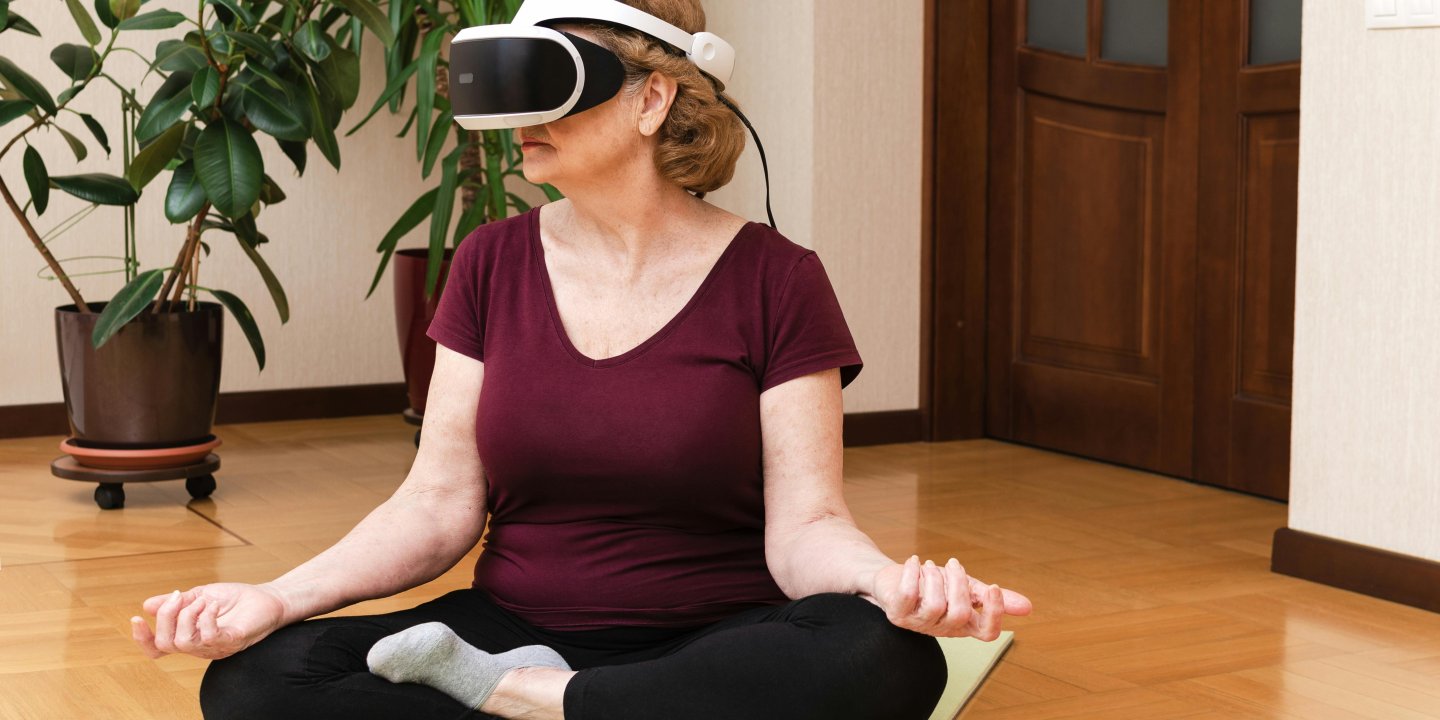
Researchers are exploring the use of extended reality (XR) in exercise. XR are technologies that create interactive digital experiences. They often involve people wearing a headset that changes that they see. For example, a completely virtual environment or digital elements on top of the real world.
Combining exercise with XR could make it more fun and rewarding – which might mean it’s easier to stick to a routine. Several research studies have already looked at XR and exercise. The findings have been mixed. But they seem to suggest game-like approaches to XR and exercise are the most effective. For example where people have goals, rewards and structure.
About the project
In this PhD project, supervised by Dr Alastair Smith, the team aims to design and develop a new XR tool. People with MS can use this tool to support their exercise goals. The project will have 3 stages:
- In stage 1, researchers will hold a series of workshops with people with MS. This will allow people with MS to share their experiences with exercise and what they’d like to see in a new XR tool. It will also allow the team to understand how people with MS use digital technology. And how XR might fit in with their existing therapy routines. The team hope that co-designing the intervention with people with MS could help to improve how well people engage with the XR tool.
- In stage 2, the team will design, build and test an early version of their new XR tool. They'll look at how well it works and whether it fits with what people with MS want.
- Finally, in stage 3 the team will test the tool with a group of people with MS. The group will use it alongside their existing rehabilitation exercises. They'll look at whether using the XR tool improves motivation and makes it easier for people to stick with their routine. The team will also gather data about how practical and easy it is for people with MS to use the XR tool. Without supervision from healthcare professionals.
How will it help people with MS?
If the results from this initial project are positive, the team hope to test the XR tool in a larger clinical trial in the future.
Ultimately, this could lead to a new intervention that could help make exercise-based rehabilitation more enjoyable. And more motivating and accessible for people with MS. This could help to support their MS symptoms and overall wellbeing.
You might also be interested in


Join the Research Network
Our Research Network make sure all the research we fund reflects the needs and interests of people living with MS. And they help us talk about it in a way that’s accessible to everyone.
Anyone who lives with MS or cares for someone who does can get involved. It doesn't matter where in the UK you live or how much research experience you have.
