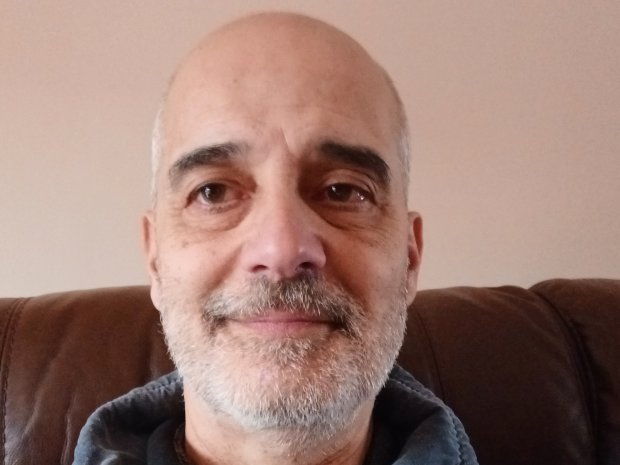
Why I’ve pledged to donate my brain to the MS Society Tissue Bank
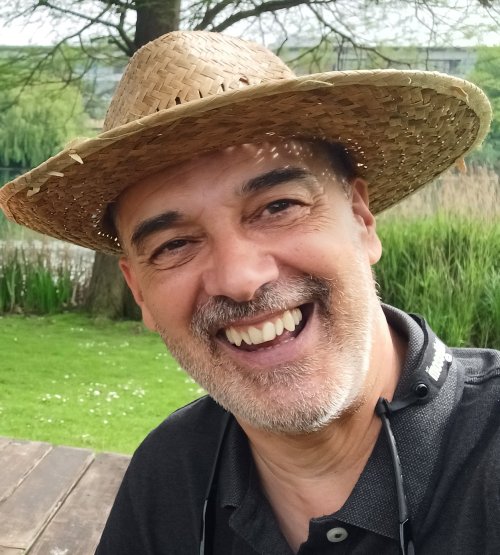
Mark was diagnosed with relapsing remitting MS in 2021, aged 56. He lives with his wife and their two sons in Kent. He’s pledged to donate his brain and spinal cord to research, and is part of our Tissue Bank patient and public involvement group.
For me, pledging to donate my brain after I die is - sorry - a no brainer. If it’s going to help researchers, they can make use of it.
I'm fairly pragmatic. Today’s research probably isn't going to benefit me directly very much. But the care and treatment I'm getting with my MS now is a result of research that happened in the past. I hope to be able to contribute to help this continue.
I hope the research I support will benefit people in the coming years.
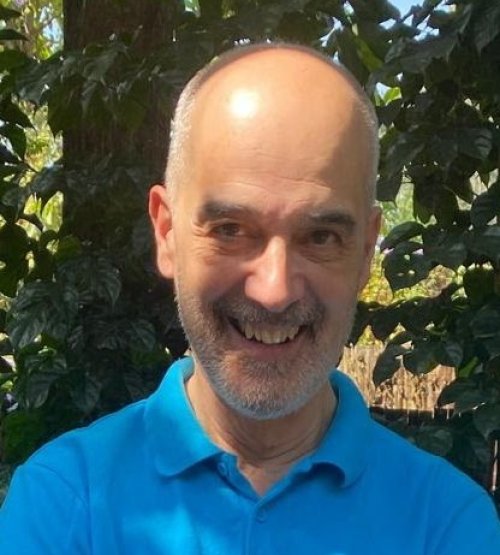
I’m also leaving a legacy in my will to the MS Society. There’s so many ways to support research.
How MS affects me
I have left side weakness. My mobility is impaired, so I whenever I leave the house, I walk with a stick. My walking pace drops off a cliff very, very quickly. Fatigue has also crept up on me, and I’ve experienced some emotional changes too.
I’m fortunate that the care I get is excellent from my MS nurse, my neurologist and the local neuro rehab team. Six months after my diagnosis I started on a disease modifying therapy (DMT) – ocrelizumab (Ocrevus) - which I'm still on. Since then I’ve had stable MRI scans.
A lot of people assume that DMTs are going to stop everything in its tracks. If you're lucky enough, that's great.
Although I've got no new lesions and clear MRIs, the MS is still gradually progressing.
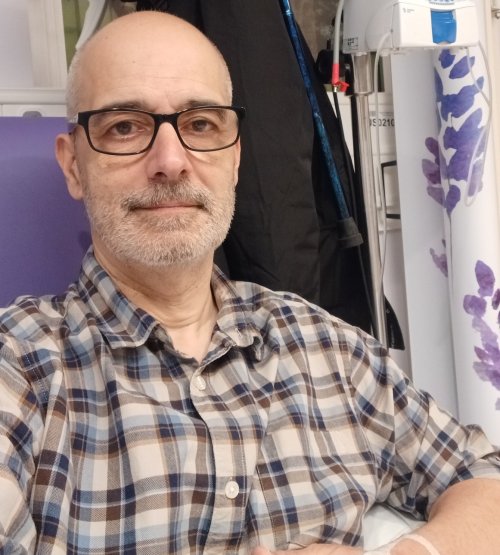
Finding ways to give back
For the first 18 months after my diagnosis, I had to get my head together. Then I wanted to know what I could do to help. I signed up to volunteer with the MS Society's Research Network.
I’m no longer working, and volunteering keeps me focused with things to do. It’s a way of helping the MS community and learning what's going on around research for the condition. I'm not a scientist, but I’m naturally curious and used to reading technical information.
One of things I help with is how the Tissue Bank communicates to encourage more people to pledge to donate their brains. As someone who’s already pledged, I bring personal insight.
How do we talk about brains?
It’s tricky to figure out the best time to talk to people about the Tissue Bank. People have different emotional responses to the idea of brain donation.
But I think it can be a real talking point within the MS community. We need to sell what it's achieved.
We need to tell people that samples from the tissue bank have supported over 350 MS research projects.
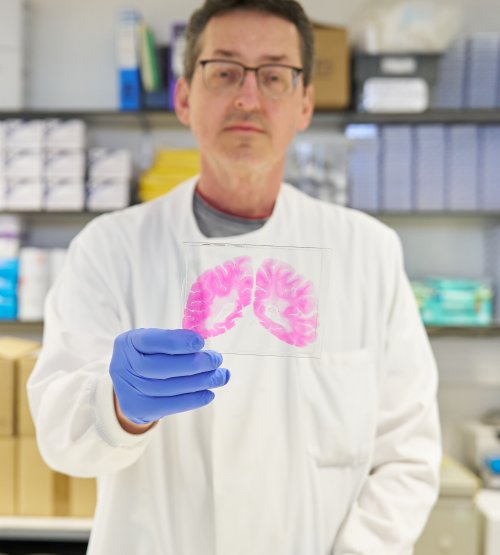
And that of those research projects, one of them contributed to the discovery of ocrelizumab for MS. This is the treatment that I’m on, and the first treatment for some people with primary progressive MS.
Nothing happens by accident. So I’m personally very grateful to those people who donated the tissue that helped lead to that discovery. And ocrelizumab is such an important treatment for people with progressive MS, for whom there are so few treatments.
Wonder and hope
I’ve been around science and medicine all my working life, and I’m still impressed by the science of the tissue bank. It amazes me that you can continue to learn from tissue that’s years and years old.
I feel very, very positive about the future of MS research.
Over thirty years ago, there weren’t any DMTs, it was harder to get a diagnosis and the level of care was inadequate. Things have improved massively and now we're moving into therapies for progressive MS. That’s so important, because in the majority of cases, MS progression doesn't stop. If there's no donations and no support for any research, nothing happens. Which is why I’m also a fundraiser.
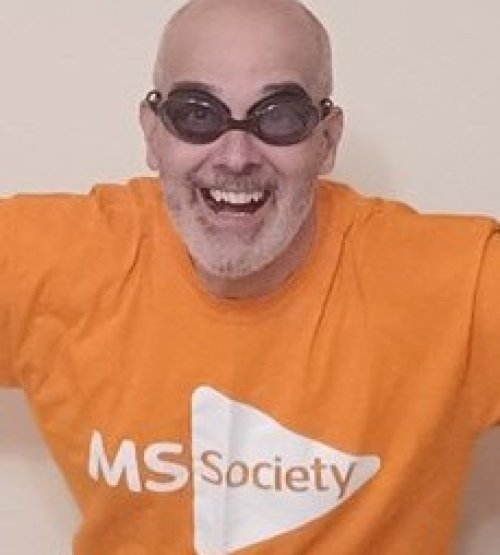
Last year, for my sixtieth birthday, I threw myself out of an aeroplane to raise money. Along with six other people from my local MS group!
If everyone works together to support MS research, I’m optimistic about what it can achieve.
Vital research and resources like our Tissue Bank could hold the key to stopping MS for good.
Give today to support MS research.
You may also be interested in


One donation. Double the impact.
We did it! Thanks to our match funders and your generous support, we've hit our £500,000 target!
But you can still help to raise money for vital MS research.
