Our experience with the MS treatment ocrelizumab
Did you know that tissue from the MS Society Tissue Bank helped scientists develop the treatment ocrelizumab (Ocrevus)? Three people who take the treatment tell us how it’s impacted their lives.
“I wanted to hit MS as hard as I could.”
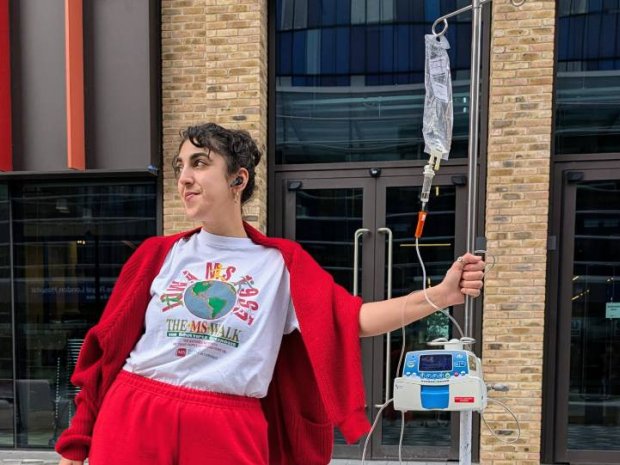
Maria was diagnosed with relapsing MS in her early twenties. She lives in London in a house share and works as a patient coordinator at a fertility clinic.
My MS came on very hard and very fast. So when they said to me: “we're going to put you on the aggressive treatment”. I was like: “thank God”. I wanted to hit it as hard as I could from the start.
I know people who were diagnosed with MS before there were treatments. I feel very lucky that I had a choice of treatment as soon as I got diagnosed.
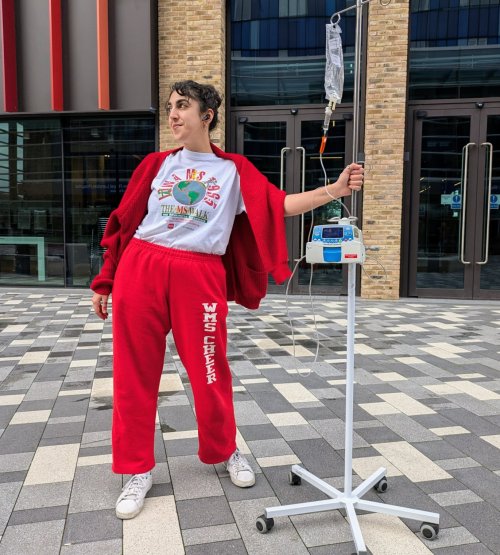
I was on Tysabri (natalizumab) for a few months and then I tested positive for the JC virus, and changed to Ocrevus (ocrelizumab). I haven’t had a relapse while taking it, I’ve only had flare ups in my symptoms. For example nerve pain, foot drops, tremors and fatigue.
I take it twice a year, by infusion. That suits me better than injecting myself every week. I don’t want to think about MS any more than I have to. And I really like going to hospital to have my infusion because I've met so many amazing people there – we’re all having the same thing, so we talk.
Lots of people think I’m OK now I’m on medication. I explain that no, I still have symptoms every day.
But since Ocrevus I've not had any relapses, I’m still walking, and I’ve not been back in hospital.
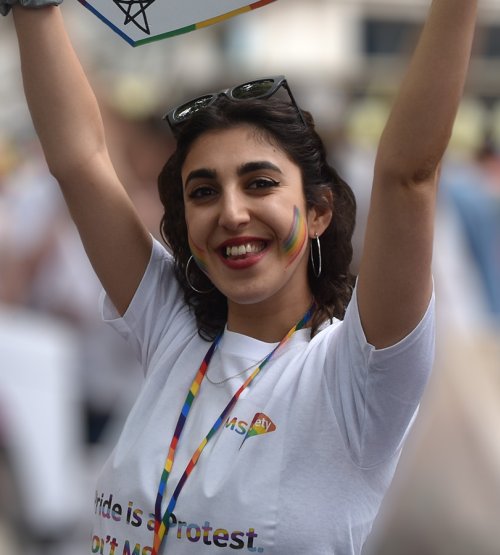
Hearing that ocrelizumab was in part developed by people who donated their brains and spinal cord is amazing. It's easy when you've got MS to feel a bit helpless. What can we do? But there’s lots of ways to help. If someone wants my MS-addled brain after my death, they can have it!
Whatever fundraising you do, it helps. To raise money I’m doing a sponsored skydive this year! We’ve been showing that with more and more research, we’re learning more and more about MS.
It’s not out of reach to stop it for good.
“Ocrelizumab has greatly slowed down my progression.”
Fiona was diagnosed with primary progressive MS in 2017, just after her nineteenth birthday. She lives in Edinburgh and is training to be a chartered accountant.
When I was first diagnosed there were no treatments for primary progressive MS. My neurologist did try me on steroids to see if they helped reduce inflammation but unfortunately that didn’t work.
Two and a half years after my diagnosis, in 2020, I was told ocrelizumab could be an option for me. I was meant to start in March that year, which didn’t go to plan thanks to covid, so I finally started in August. I was really happy to have a treatment option for primary progressive MS. Until then, my outlook had been a bit bleak.
Ocrevus has greatly slowed down my progression, which is great. I went from new lesions every time I had an MRI scan to one tiny one since I started taking it.
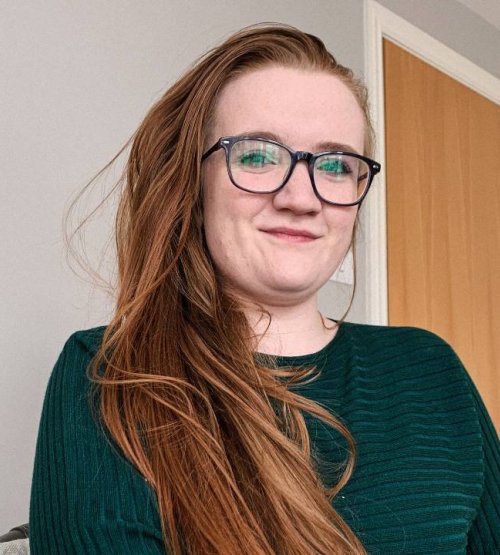
I love that tissue from people who’d donated their brains helped develop ocrelizumab. I’m very supportive of donating your body to science. I figure when the time comes I’m no longer going to be using it, so why not use it to help people? I’m extremely grateful to the people who’ve already done so.
I've generally accepted my diagnosis and disability. But I’d be ecstatic if someone turned around and told me that I wouldn’t have to walk with a crutch one day. I miss being able bodied - funnily enough disability can be quite restrictive!
I think one of the big things about MS is that it’s unpredictable. Being able to stop that and give people certainty back would be ideal.
Research and development of new treatments that might one day stop MS are impossible without funds. Donations are just as vital as the research.
“People who’ve donated their brains have directly benefitted me and my family.”
Raph was newly married and settling into his career as a maths and physics tutor when he was diagnosed with relapsing MS, aged 26. He’s now dad to two children aged eight and five.
My first questions about treatment were whether they would affect me and my wife, as we were trying for our first child. I needed to know if treatment was safe for us to continue trying, and if it would affect a baby at all.
My first disease modifying therapy (DMT) was Copaxone (glatiramer acetate), which I took by self-injecting at home. Stabbing myself three times a week wasn’t the nicest thing to do… even if it came with a special pen that did the inecting into my skin.
I started on Ocrevus (ocrelizumab) in mid-2020. Again, my main question was whether it could prevent us from growing our family (as we were hoping to give our little girl a sibling).
For me, Ocrevus has been excellent. Taking a half day off every six months to have my infusion is something I look forward to. I enjoy sitting in a chair and watching or reading something with snacks while it's done (even if hospital parking can be a nightmare!) It's simple, it doesn’t require me to stab myself with a needle three times a week, and I get time to reflect.
My MS has been kept stable with no significant progression seen on my MRIs. I've had no relapses, and no adverse effects from the infusions.
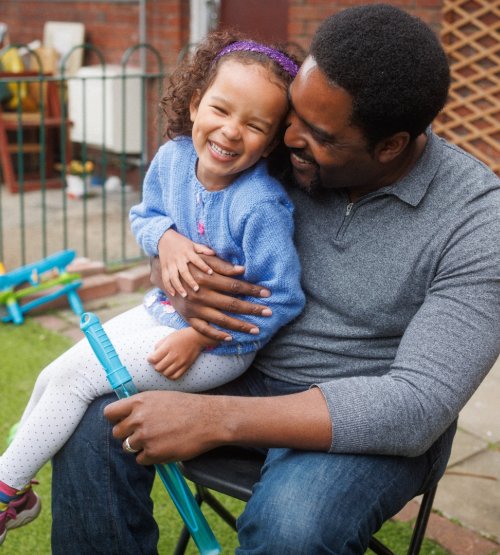
It's incredible to think there are people so generous that they're willing to donate parts of their bodies after they've passed away. Their generosity is helping people still living with this condition. I cannot express how truly grateful I am for this. Their donations have directly benefitted my family and my children with more (and healthier) time with me.
If it weren’t for brave and generous people supporting research, we’d be decades behind the treatments we have today.
For this spring campaign, any money you give to support MS research will be doubled, thanks to four committed supporters. Just think how much further our donations will go, and how much good they can do! To me and my family, new discoveries give us so much hope that MS will one day be relegated to history.
Vital research and resources like our Tissue Bank could hold the key to stopping MS for good.
Give today to support MS research.
You may also be interested in


One donation. Double the impact.
We did it! Thanks to our match funders and your generous support, we've hit our £500,000 target!
But you can still help to raise money for vital MS research.
