
My MS changed dramatically, but my PIP award didn’t
Despite worsening symptoms and increased care needs, my PIP award stayed the same. Only at the tribunal was the true impact of my MS recognised.
I am a naturally positive person. A lifelong believer in Pollyanna’s Glad Game, I try to find the good even when life gets complicated. But there is one part of my life where positivity alone can’t carry me through: the Personal Independence Payment system (PIP).
Too many people with MS are being assessed by a system that doesn’t understand the condition. It doesn’t recognise the risks with fluctuating symptoms and doesn’t see the human being behind the form.
I live with secondary progressive MS. My husband, Peter, is my full‑time carer.
We’ve managed years of decline together, but the last few years have been particularly hard.
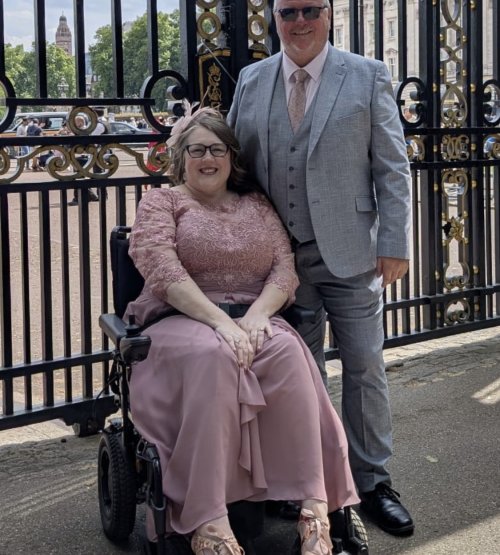
I told PIP that things had changed. But my award stayed the same.
When my PIP review came around, I reported substantial changes. My mobility had worsened, my care needs had increased, and my symptoms were more severe and unpredictable. Yet the Department of Work and Pensions (DWP) decided there was “no change”. I asked for a Mandatory Reconsideration and again received a “no change” response. So, I appealed.
The waiting was almost as hard as the decision itself. I submitted my review form in January 2024 and didn't receive a decision until December 2024. That was eleven months of uncertainty, worry and trying to manage without the right level of support.
When I appealed in April 2025, it took another full year before my tribunal hearing in April 2026. Even though the tribunal agreed I should have been on the enhanced rate all along. But the award was only backdated to December 2024, not to when I first reported the changes. Those missing months mattered. They were real life, real costs and real strain.
When I finally reached the tribunal, I arrived with a mountain of evidence: hospital reports, consultant letters and test results. The year has been so medically chaotic that I had more documentation than ever. But the tribunal panel looked at me and said: “Do not bother getting your paperwork out. You have already reached the points for the enhanced rate.”
I was relieved and grateful, but also furious. Nothing about my MS had changed between the DWP’s decision and the tribunal’s. Only the understanding changed.
The realities of MS aren’t always visible
There is one part of my MS that I have always found mortifying to discuss. But it is also my clearest example of why PIP is failing: bowel incontinence. When it happens to me, it is explosive, messy, humiliating, exhausting and utterly life‑stopping. If I am at home, it is awful. If I am out, it is catastrophic. When an episode hits, I often do not make it to the bathroom. I am in pain, sweating, faint and sometimes vomiting. My energy collapses. I can’t stand, safely, clean myself, manage my clothes or deal with the mess.
Peter has to help me undress, stop me slipping. He has to clean me, hose me down in the shower, clean the bathroom. Then he’ll rinse and wash soiled clothes, clean any room I pass through and help me back to bed. This can take hours and may have to be repeated the same day. It is unpredictable, dangerous and traumatic. We deal with bladder incontinence too, and bladder retention needing self-catheterisation. Yet PIP awarded me only two points for managing toilet needs.
Why fluctuating symptoms need to be understood
There are other parts of my MS that PIP doesn’t consider at all. I can become fully paralysed, often on waking from an afternoon sleep. Sometimes it’s just my limbs. Sometimes it’s my whole body. When it is full paralysis, I can’t call for help. I am trapped, unable to move or speak. If no one comes, I stay like that. It hurts. It is terrifying. PIP doesn’t consider this.
I need someone with me all the time (what PIP calls ‘supervision’) because I am at risk of injury. I’ve had a broken wrist, a severely sprained ankle, nerve damage and multiple hospital trips.
Risk is not theoretical. It’s my daily life. And I can’t do anything reliably, repeatedly or safely – which is the criteria that PIP uses.
Some days I need more hands‑on support than others, but I always need support.
I’m a person, not a checklist
It pays for the things that allow me to exist safely and take part in my community. My mobility component is essential. Through Motability, I can lease a vehicle that fits my powerchair and equipment. Without this, I couldn’t leave the house.
PIP is supposed to recognise the extra costs of disability, but too often it fails to recognise the reality of disability.
Tribunals get it right more often because they listen. They see the person, not the checklist. If the assessors applied the law the way tribunals do, the system would work.

A fairer system starts with understanding people’s lives
I am sharing what I find are the most humiliating parts of my life because honesty is the only way to change public understanding. People can imagine what it’s like to have mobility issues, fatigue and pain. But bowel incontinence, paralysis and the sheer indignity and danger of these symptoms are rarely spoken about. These are the realities that PIP doesn’t see. Change will only come when the truth becomes impossible to ignore.
Our chance to improve PIP
My experience shows why PIP must better recognise fluctuating conditions.
At the moment, the UK Government are reviewing PIP. This means we’ve got a chance to improve PIP for people with MS. I’ve joined the campaign calling on the UK Government to listen to people with MS and make PIP fair.
Join me in this campaign and sign the petition to fix PIP for people with MS.
Need support?
If you need emotional support or information, our free MS Help Hub is here for you. Call 0808 800 8000 or find out the different ways you can contact our friendly team.
You may also be interested in


Speak to someone who knows MS
Our free MS Help services are here for everyone affected by MS.
We can provide trusted information so you can understand and manage MS. Personalised support and guidance for everyday living so you can live well. And help you connect with others by finding, growing and maintaining your MS community, in person and online.
You can talk to us in confidence by phone or our new webchat facility from 9am to 5pm Monday to Friday (except bank holidays) and email us any time. Explore our services or start a conversation by visiting our MS Help Hub.
