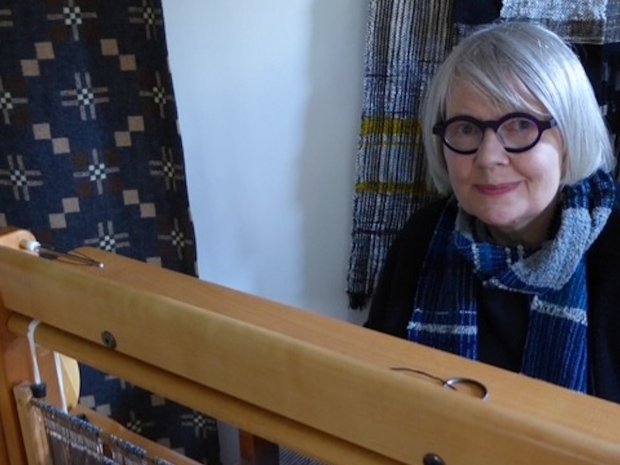
MS Letters: to my research nurse, Rachael
Helen’s been living with primary progressive MS for 25 years and recently took part in the ChariotMS research trial. She shares what it meant to be part of a study designed for people with advanced MS.
It’s three months since my final visit to the Walton Centre as a patient on the ChariotMS research trial. I wanted to thank you again for your support over the past two and a half years, and to explain why being part of the trial has been so important to me.
I first heard about ChariotMS through social media and, as you know, I was very keen to join the trial. At last, after living with primary progressive MS for 25 years, here was a research trial designed for people like me. It was not just ‘ok’ to have advanced MS symptoms, but that was the whole point!
For once, my disability didn’t disqualify me from taking part. My walking was already very limited, but I hoped the trial could slow further loss of function in my arms and hands.
I wanted to help find life-changing treatments
Joining a double-blind trial, I didn’t know whether I was taking the active treatment (Cladribine) or a placebo (dummy drug). But the possibility of personal benefit mattered less to me than helping others who also have advanced MS.
For years, neurologists told me there was nothing they could do for me, while my symptoms gradually worsened. I’d love to think that, in the future, fewer people will have to hear those words.
Becoming a partner in vital research
What I hadn’t expected were the non-medical benefits of being in the trial. And this is why I especially want to thank you. From our very first phone call, I could ask or say anything to you.
Taking part in a trial can be quite demanding and after each visit, I left the Walton Centre feeling tired and ready for bed. But it was always a good feeling too.
For the first time in my long history with the NHS, I felt valued as a person, not just seen as a patient with a stubborn condition.
Perhaps that’s the special thing about taking part in research: in a trial, you become a collaborator - almost a partner - with the research team.
You listened and understood
Your support went further still. Last year my condition suddenly deteriorated: almost overnight, my legs became so painful that I couldn’t move or sleep. I had difficulty controlling my bladder, and I lost my balance and then my confidence. You listened to me and were so understanding.
We rescheduled my next appointment. And when I was well enough to come to the hospital, you helped me focus on what I could do rather than what I couldn’t.
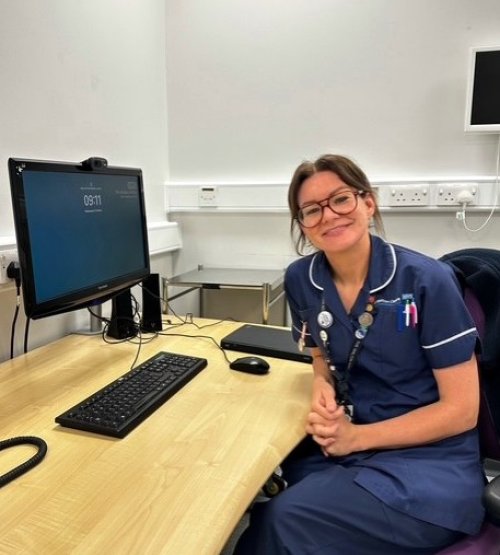
Since then, I’ve adapted to my new ‘normal’, regained my strength, and I feel far more positive. In a usual clinic, appointments tend to be short. On a trial, you spend a whole day together, which is a luxury, even with all the tests and questionnaires. That extra time makes such a difference.
It’s a community effort
I still don’t know if I was taking Cladribine or the placebo. It’ll be fascinating to find out when my trial notes are released. But for now, I’m pleased that I was able to take part. I learned a lot about myself as well as about my MS, and I felt part of a team helping to move the dial on research.
Knowing that everyone else in the trial is also living with advanced MS gave me a sense of solidarity with people I’ll never meet, but who, like me, are also helping with this joint effort.
Together, we’re showing that disabled people have the agency to co-produce knowledge about new treatments.
So, thank you. For welcoming me, for hearing me, and making me feel valued as a research participant.
Thank you again,
Helen
Every MS Letter tells a story. Help us write the end.
Helen’s letter is real. So is the impact you can make by donating to help fund vital MS research.
You may also be interested in


It's time to write the end of MS
Donate today and help turn world-leading research into life-changing treatments.