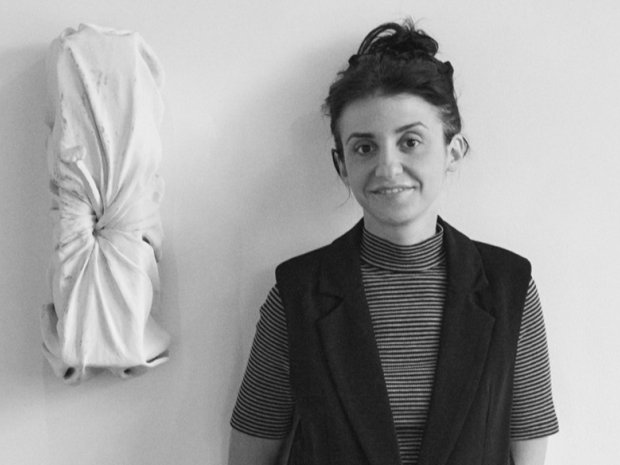
Making art from invisible symptoms
Painter and sculptor Patricia Rullo shares how her invisible MS symptoms inspired a new art practice.
I’m a primary school teacher, but when I got MS I had to readjust my life. I tried to keep teaching, but it was very stressful – I was unsuccessful. At work, people kept saying I looked well – they didn't understand what I was dealing with.
I stayed for around a year and a bit but then I was off sick, mostly due to mental health reasons. It was hard to go to work in pain and then having to deal with a reaction like that.
Showing the reality of MS
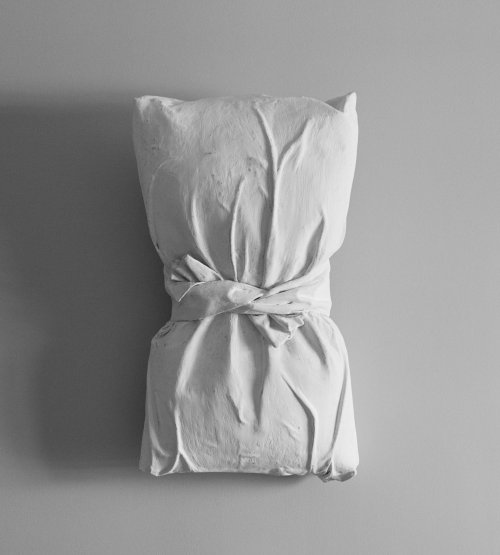
I realised I had to show people that I’m not well even though I look it. Art has always been a hobby. And then I managed to get some time off work to develop more of a practice. I decided to try to show MS – the invisible symptoms.
You can tell people what it feels like – like your legs are pulling apart for example – but people can only understand fully when they see it.
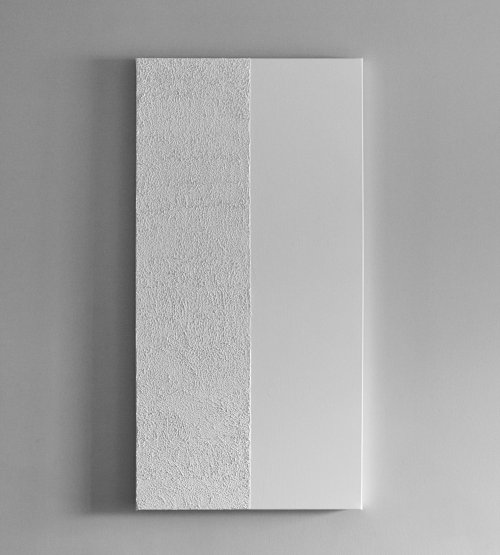
I had some useful feedback from people, including my husband. Even he said, ‘I didn't realise it was like that!’ It was a cathartic process. It took several months to create the work for different symptoms. The most important one for me – was the first symptom I got – tingling. Just by creating the canvas felt like the symptoms were fading away. It was a powerful moment, it was liberating.
I felt stuck when I finished though. I wanted to shift away from that topic for a while.
I worried I would be recognised as the artist with MS, and it's not who I am.
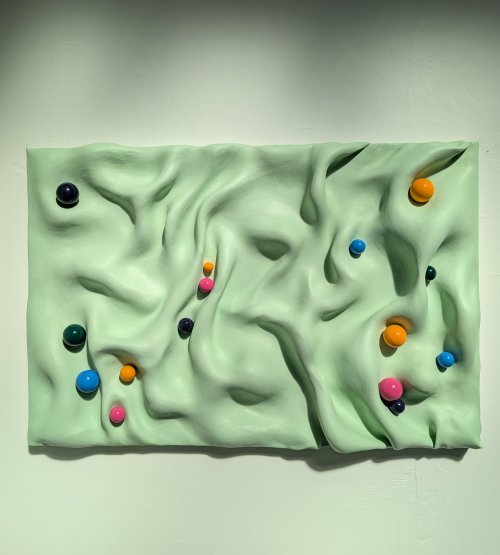
I did a solo exhibition, using crowdfunding to rent a space, and the first night was World MS Day, 2024. I had a blank canvas at the exhibition and it said 'give me some colour'. All the artwork was white – to represent the white spots in MS on MRIs. It was a call for help, and people could stick colour dots on it – to create an abstract piece. From there I created three pieces of art as a tribute to people that came to the exhibition and funded it. They were called Trust, Energy and Strength. Each one had a coloured sphere and from that I developed my own style.
But I was stuck for a while until one day I was in the studio with my son. He was painting a playground – that was my inspiration. I’m a mother and a teacher – the energy children give me is important. I created my most beautiful piece, it’s called Playground and it’s an abstract playground. I sold it this year – the first painting I’ve sold. My son cried.
I’ve had to adjust the way that I work
I have to go slowly. After I sold that piece the man that bought it asked me for a another one – a much bigger one - four by three metres. I had to say I can't. There was no way I could manage the size of it and the stress, along with the heat – it was summer already.
I work very slowly. I probably produce about four artworks per year, rather than one a month.
Fatigue
I do sometimes find myself lying in bed and struggling to stand, but this has given me another perspective and another strength. The ability to create something that people appreciate. MS has been positive in a way. I would never have done art without it. I wanted to do art as a teenager, but my parents said: "There’s no way – you need to go to uni, get a job – we can't afford you being an artist."
But when I got MS I thought I don't know what my life is going to look like, but I want to do art.
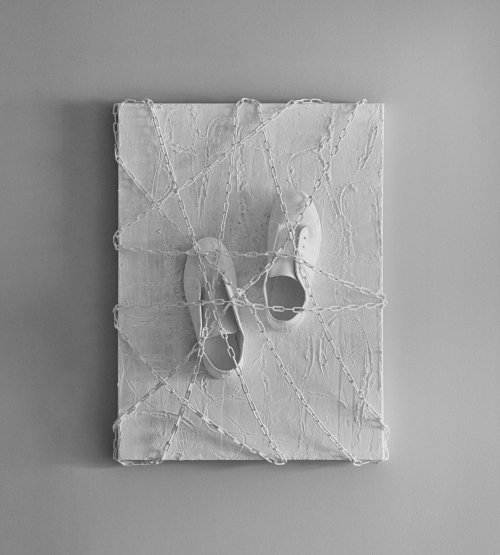
It was there in a drawer, closed and locked.
Most of the time, I go to the studio with no clue what I'm going to create and then while I’m there something happens.
I took part in a competition at the Zari Gallery near Tottenham Court Road. I didn't even want to go to the prize night – I thought there was no point in wasting the energy, but my husband said you have to go. And then I won! So we were there with my voucher for £1000, and my husband and son were jumping around. My son started saying 'my mum’ s an artist, she wins prizes.'
He’s seven now, he was about to turn three when I was diagnosed. It was difficult to parent then and it still is. My husband does a lot. He also knows mummy has to sleep. He understands in a way what I created – he is precious about the Look Well art work – he doesn't want them to leave the house.
I told him when I was diagnosed, mummy has a disease that means she has to rest a lot, that I get pain and I get tired.
He asked if I'm going to die. I said no, but it's hard to tell how much of an influence it had on him. But I know I'm very lucky because some people are in a much worse state with their MS.
I have no plans. I did a couple pieces on sex recently, and a gallery in Greenwich took me on and I exhibit there every month for free. So I say to myself, I started two years ago and I've sold one artwork and I have to create for a gallery that wants my works. I'm really proud of myself.


