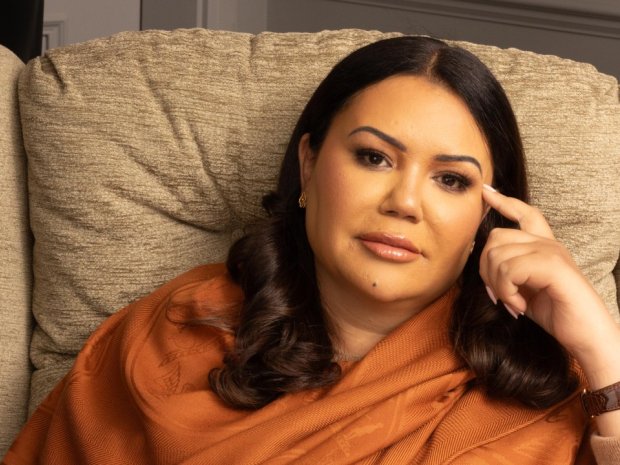
“I’m a very private person – now I’m ready to talk about MS.”
Apart from her family, Reeshma hasn’t told anyone about her MS. For the last decade she’s kept it to herself out of fear of judgement. But now she wants to highlight why it’s important to have more MS conversations.
Around the middle of 2015 I noticed I was walking like I was drunk. I couldn't walk in a straight line and kept falling over. My legs felt very heavy. My GP referred me to a neurologist. I had a lumbar puncture, which led to my diagnosis of relapsing remitting MS.
I was really sad to hear I had MS and there was no cure. My neurologist said there were certain medications which could potentially delay any worsening in my health. I took Tysabri (natalizumab) and then Ocrevus (ocrelizumab). But now unfortunately my MS has become secondary progressive.
I’ve always been a great swimmer and had won many medals at school. Now I can barely kick my right leg. I can't walk, and I use a wheelchair. I have practically no mobility in my right arm and hand and limited mobility in my left arm and hand. Luckily, I am left-handed.
Supportive conversations with my neurologist
I found the initial conversations with the neurologist to be very memorable occasions. I think it was the shock of the diagnosis. It was very difficult for me, I was always questioning why this happened to me. As far as I could tell there had been no other cases of MS in my family and I couldn’t really see it in my Muslim community.
But my neurologist was very professional, informative and supportive. Without him, I think I would have found receiving such news to be much, much worse.
I have found it very easy to have conversations with healthcare professionals with respect to my MS.
Talking about HSCT
Another memorable occasion was when my neurologist discussed the possibility of having HSCT. At the time my concerns about the side effects and the mortality rates caused me to not take this option.* This was very early on in my condition and with hindsight, I wish I had proceeded with HSCT. I wish I had realised the potential severity of having MS. And had a greater confidence at the time of about being offered HSCT.
In the end, much later in 2022, I did have HSCT abroad. The chemotherapy was so aggressive that my kidneys failed. So I’ve been having dialysis three times a week. This has further impacted on my MS, as I am even more exhausted.
*The risk of death from HSCT was higher 20 years ago
The conversations I haven’t had…
My mother, father, husband and daughter have always been very supportive.
But to be honest, I am a very private person. I was keen to make sure friends and colleagues didn’t know about my condition
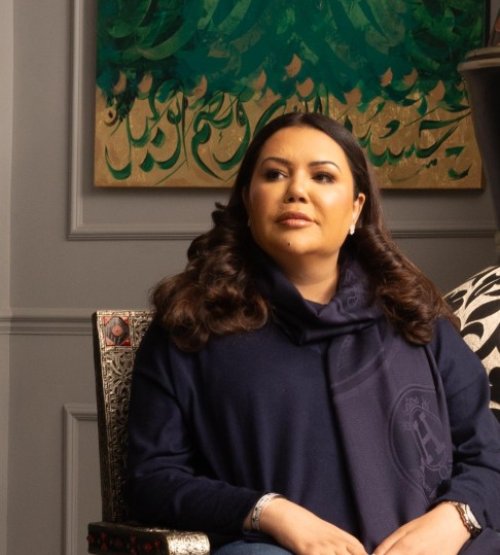
I felt that within my Muslim community such an illness would be frowned upon. I feel there is a great deal of misunderstanding of such an illness and that people would be judgmental.
I have been for the most part in denial about having MS. I have found the whole experience to be soul crushing. I've always tried to avoid any conversations with people outside my family and have found in general the whole subject to be very difficult. I believe this is because I didn't want to hear somebody telling me that I would only get worse.
Keeping my MS a secret has been very difficult
Living in denial and having to keep such an illness as a secret in my community has been a very difficult and a painful thing to do. I feel people would be looking at me and judging me.
From my experiences, I believe that having more conversations about MS would be very important in a community like mine. My feelings are that people are very superstitious and suspicious of conditions like MS. Having been brought up in such a community and environment has led me to live in denial. I feel the whole thing is very unfair and highlights people's ignorance about these health conditions.
Sharing my feelings through music has given me strength
I have been in a cocoon. The only thing that kept me going and sane was my music. My roots in music comes from when I used to recite at my mosque. After meeting my manager Lawrence, I feel I now have the strength to tell people of how my music has kept me going.
At my lowest times I would just write and write songs. This helped me, before MS, to process abuse I had suffered. With the onset of MS, I found that writing and singing helped me. It was an escapism. My music was the only thing that got me going (and my love for rescuing cats!).
Now I am ready to come out with it. I’m hoping that by having people listen to my situation and to hear about my issues there will be a greater understanding of MS.

Reeshma’s debut single ‘Switching Channels’ is out on Friday 2 May.
MS Awareness Week
Talking about MS can be difficult, we can help you get started. Visit our MS Awareness Week hub, where we're sharing stories and resources to help you start those all-important conversations.
You can also get support by contacting Asian MS. They’re a national group that offers tailored and culturally-sensitive services for Asian people with MS, their carers, friends and family.
You may also be interested in


Speak to someone who knows MS
Our free MS Help services are here for everyone affected by MS.
We can provide trusted information so you can understand and manage MS. Personalised support and guidance for everyday living so you can live well. And help you connect with others by finding, growing and maintaining your MS community, in person and online.
You can talk to us in confidence by phone or our new webchat facility from 9am to 5pm Monday to Friday (except bank holidays) and email us any time. Explore our services or start a conversation by visiting our MS Help Hub.
