RefuelMS: trialling an app to treat MS fatigue
RefuelMS is an app-based digital treatment that could help people develop personalised ways of managing their fatigue. Researchers are testing it in a new clinical trial.
Fatigue is one of the most common invisible symptoms of MS. But less than a third of people with MS experiencing fatigue have been offered treatments for this symptom as part of their routine care.
That’s why RefuelMS aims to help people manage their fatigue day-to-day. It’s an app-based digital treatment that will help people develop personalised ways of managing their fatigue.
The RefuelMS team is now starting their main trial. This is where they’ll test if the programme has an effect on MS fatigue.
We're co-funding the trial with the National Institute for Health and Care Research (NIHR). The trial team is based at King’s College London.
What does taking part involve?
People taking part in the trial will be randomly split into two groups.
One will continue with their usual care and not get additional treatment for their fatigue.
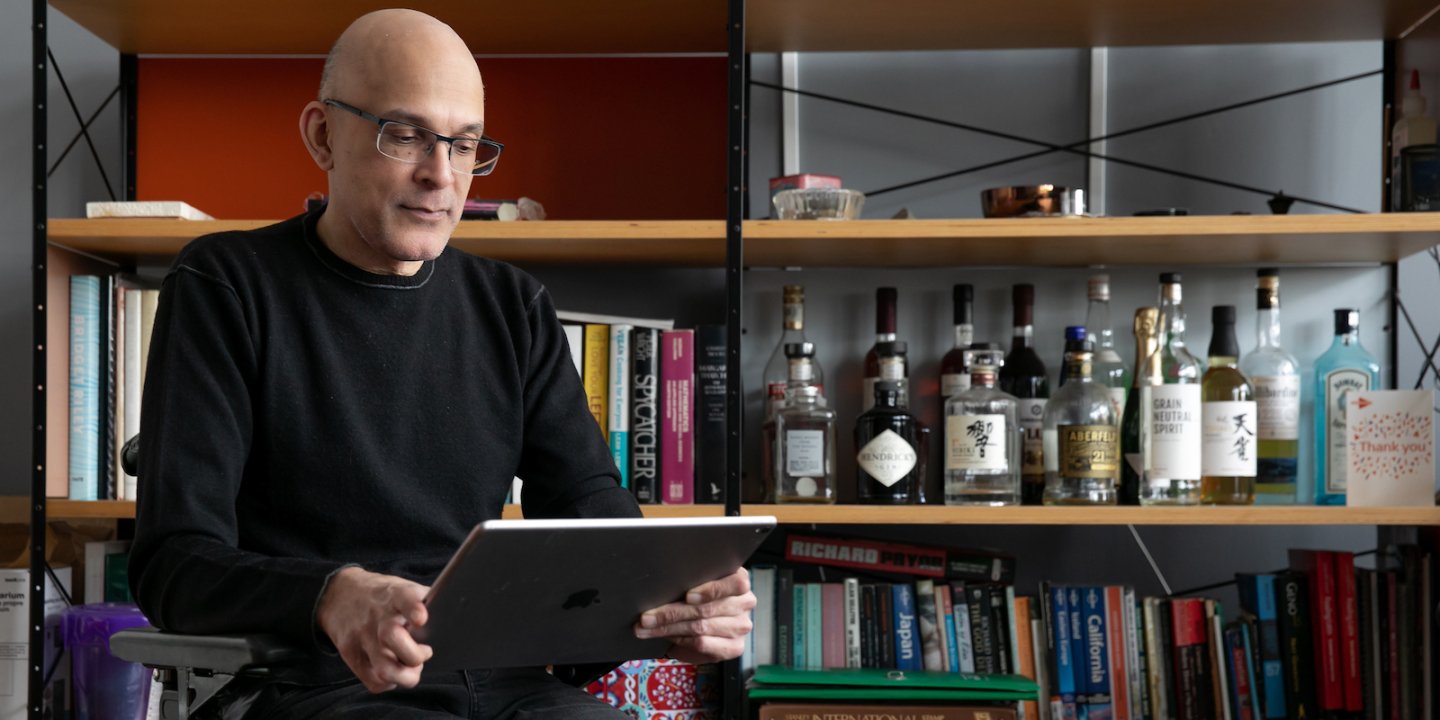
The other will use the REFUEL-MS app for 16 weeks, completing weekly sessions on a smartphone or tablet from home.
They can choose to focus on one of three different approaches:
They'll also receive support from healthcare professionals. Including physiotherapists, occupational therapists, health psychologists or MS nurses trained in the RefuelMS approach.
Both groups will fill in regular questionnaires.
Who can take part?
Recruitment will initially be by invitation only, through the UK MS Register. The trial team will recruit around 380 people living with MS to take part in the trial. People who experience fatigue and have a diagnosis of relapsing remitting MS, primary progressive MS or secondary progressive MS can take part.
Because RefuelMS is app-based digital treatment, people anywhere in the UK can take part.
What has the team done so far?
To ensure the app genuinely benefits people living with MS, it was designed and tested with direct input from the MS community.
Ayad and Kaz are part of the RefuelMS Patient Advisory Group. The Group played a key role in shaping the app as it was developed. They reviewed exercises and designs of the app.
Ayad was diagnosed with primary progressive MS in 2019 at the age of 21. He says:
“I initially got involved as a research participant, but it was great to be invited to help shape the intervention itself. Being part of the Patient Advisory Group means we’re not just asked for input occasionally. We’re involved throughout the entire process, helping ensure the app is accessible, relevant, and genuinely works for people living with MS.
Being involved in research is a chance to contribute towards improving the lives of people with MS. Any input I can have on that journey, I’ll take it. With something like this, it feels like only good things can come of it—and if nothing does, you’ve still not lost anything. You can sleep easy knowing you did what you could.”
Kaz, who was diagnosed with MS in 2007, says:
“I've always been involved in various projects because I’m always on the lookout for opportunities to positively impact the lives of people with MS. Of course, we’d all love to see a cure, but that’s not the nature of MS. So, we focus on where we can help. Whether that’s contributing to research for better medication or services, or simply making life a bit easier for people with MS.”
Before launching the main trial to test if the app helps with fatigue, the team completed a feasibility trial. They explored how people with MS find using the app.
Ann was diagnosed with relapsing remitting MS 13 years ago and took part in the feasibility trial. She says:
“I was really interested in RefuelMS to see if tech could help people with MS. I’ve found journaling helpful in the past. And having access to the app made it easy to track symptoms and receive support from the team.
It was brilliant to see how the exercise elements could fit into everyday life. Even after I finished the feasibility trial, I’ve kept up with the balance exercises and make sure I go out for a walk daily. I’d stopped walking as much after my dog died last year. So the trial gave me the motivation to get out again and prioritise a walk each day.”
What are the next steps?
RefuelMS is now starting their main trial. We’re expecting to see the first results in 2027.


