What is brain reserve and why does it matter?
Our brains have an amazing natural ability to compensate for damage. We asked Dr Antonio Scalfari, Consultant Neurologist at Imperial College Healthcare Trust to tell us more about how this works and how we can protect it.
When I see people with MS in clinic, they often assume a lesion in a specific region of the brain will cause a specific type of symptom. But that’s true only to some extent.
All our brains actually work as a massive network. Alternative routes through the network allow signals to bypass damaged areas and keep things functioning.
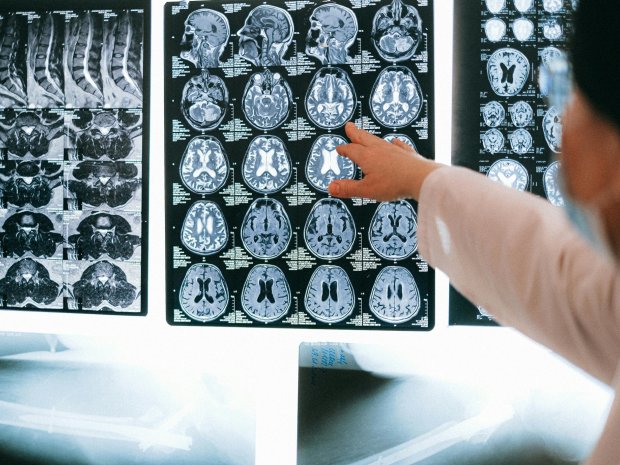
This compensation ability is what we call the brain’s "reserve capacity". It’s the reason why we often detect new lesions on MRIs, while people remain free of new symptoms.
Brain reserve versus cognitive reserve
We sometimes talk about two types of reserve, although they’re interconnected:
- Brain reserve is like a computer’s hardware and is related to its physical structure: its volume, the number of neurons (brain cells), synapses (connections among brain cells) and so on.
- Cognitive reserve is more like the software. It varies among individuals, according to what cognitive input someone’s been exposed to throughout their life, such as education or other complex mental tasks.
How does reserve relate to ageing?
The clinical features of MS tend to change with age. As you grow older, symptoms generally become more progressive. One explanation for this is brain reserve, which naturally declines with ageing.
As you grow older, whether or not you’re affected by MS, you may become more forgetful or your walking more impaired, for example.
So in people with MS, the brain reserve is being affected by both normal ageing and ongoing MS damage. Indeed, to some extent we might refer to MS as “accelerated brain ageing”.
Can you measure how much reserve someone has?
The brain remains one of the least understood organs and reserve is still largely a theoretical concept.
Over the past years we’ve made tremendous progress within the research setting in understanding reserve. It still can’t be directly measured but we can use proxies, like using neuroimaging to measure the size of the brain. The amount of brain shrinkage is thought to be linked with the brain's reserve capacity.
We’re at a much earlier stage in the clinical setting, because it needs specialised tools which aren’t yet routinely available, and a lot more time than in routine NHS appointments.
It’d be amazing if we could measure brain reserve. I’d love to do it for each of my patients.
Why is protecting brain reserve important in MS?
Imagine the focal damage from MS is like a series of tiny punches inside the brain, similar to someone hitting a solid wall relentlessly. Even the strongest wall will start to wobble.
In the brain, your reserve protects you from the punches for a while - the wall holds. But once a certain threshold of ongoing damage is reached, your reserve capacity can’t withstand the damage any longer.
But there are strategies we can all adopt to help keep our brains as healthy as possible, and to help protect our brain reserve, whether or not we live with MS.
How can people protect their brain reserve?
Disease modifying therapies indirectly help to protect reserve by limiting the damage that eventually can overcome the brain’s reserve capacity. But they’re only part of the picture.
There are several lifestyle factors that affect reserve, like smoking, other health conditions, diet, exercise and social and cognitive activities. These are still emerging concepts in MS research, but they’ve been studied extensively in the general population, so I think it's safe to assume they apply to people with MS too.
Even though we don't have always have specific data on MS, we think healthy habits have the potential to protect the brain’s reserve capacity in MS.
- Smoking: We know from large bodies of evidence that smoking can have a bad effect on MS progression. The good news is that if you stop smoking, even if you’ve smoked for many years, it can make a significant, positive difference. Indeed, data has shown that when you stop smoking, the rate of MS worsening reverses back to the same rate as people with MS who never smoked.
- Other health conditions: Having some other conditions alongside your MS, such as diabetes, high blood pressure or high cholesterol levels, may impact your MS. So preventing or managing them effectively, is important.
- Nutrition: We don’t have evidence that a specific diet benefits MS, but a large body of evidence support the notion that a healthy, balanced diet helps protect our hearts and brains. This involves limiting ultra-processed foods and alcohol, and focusing more on proteins, fruit and veg, healthy fats and fibre.
- Physical activity: Exercise has been shown to enhance brain reserve capacity. That's why I encourage my patients to keep moving and being physically active as much as possible. Not pushing yourself to the extreme but adapting to your own level of disability and doing what you can.
- Cognitive and social activities: The same applies for cognitive reserve - keep your mind trained. Activities like reading or playing cards might help build and maintain the cognitive reserve. Social isolation can also have a negative effect. So taking part in social activities could help your cognition.
The goal of such interventions is to help avoid extra damage and prevent extra disability worsening in the future. So people with MS might struggle to see a direct impact of making such changes. It’s important to promote realistic expectations.
All these measures are cornerstones of a holistic approach to MS. They work together within the large umbrella of keeping our brains, and the rest of our bodies, as healthy as we can in the face of MS.
I think the idea of caring for your brain reserve can be empowering. That’s true for every person. It’s not just something limited to those of us living with MS.
"I like to think of these sorts of changes as part of a toolbox, where you have freedom to choose certain tools some of the time in order to live well. I like the idea that I’m caring for my cognitive reserve every time I phone a friend or go to the cinema!"
Ailsa Guidi, living with secondary progressive MS.
Let’s do this together
Over the past 25 years, I think the relationship between clinicians and people with MS has changed. Lots of people take a more proactive role in managing their own MS now.
Of course, people’s individual circumstances and the variability of resources provided by the NHS can mean it’s not always easy to make changes.
We need to keep empowering people to feel they can have a positive impact on their brain health through the choices they make every day. Managing MS needs to be a real partnership between us as clinicians and people living with MS themselves.
MS Society tips for healthy habits
Our website has lots of information about how to make healthy changes when you have MS.
Getting better sleep if you have MS

You may be interested in


Join the Research Network
Our Research Network make sure all the research we fund reflects the needs and interests of people living with MS. And they help us talk about it in a way that’s accessible to everyone.
Anyone who lives with MS or cares for someone who does can get involved. It doesn't matter where in the UK you live or how much research experience you have.
