Let’s talk about sex
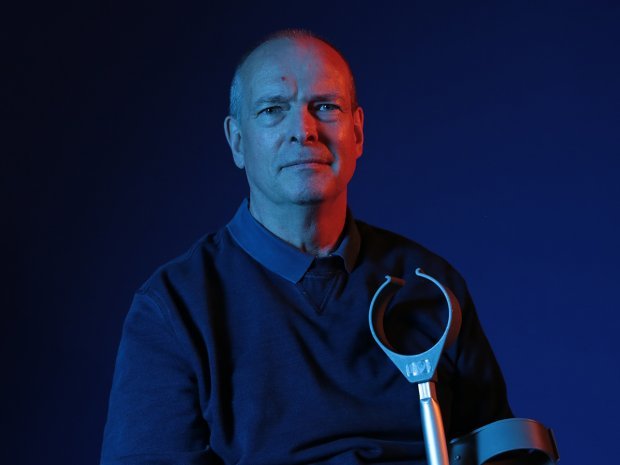
Research Network member Tony Sibley lives with secondary progressive MS. He asks Emily White, PhD student at King’s College London, and Dr Ashley Brown, her supervisor, about their research into sex and MS.
I’m Tony. I’m currently enrolled in a study about a topic that many people struggle to talk about: sex and MS. I had the pleasure of interviewing Emily and Ashley about their study. They’re developing an app to help people with MS who experience sexual difficulties.
What is your research about?
Emily: Sexual difficulties are often an invisible symptom of MS that many people find hard to talk about or seek help for. Our research is focused on developing a digital app that delivers a self-guided psychosexual intervention for people with MS.
Ashley:It’s about creating a safe, accessible resource that can address sexual well-being in a condition as complex as MS.
What made you want to tackle the subject of sex and MS?
Ashley: I’ve been working in the field of sex and well-being since 2017. In 2020, my focus shifted towards people with long-term conditions. I connected with Professor Rona Moss-Morris, who had done a lot of work around MS. 60-80% of people with MS experience sexual difficulties, so we knew this was an important area to focus on.
Emily: It was the human element that drew me in. Sex is a subject many people feel uncomfortable discussing, but it’s vital for people’s overall quality of life and their relationships.
Sex is a subject many people feel uncomfortable discussing, but it’s vital for people’s overall quality of life and their relationships.

So how could an app help people with MS?
Ashley: Many people are diagnosed with MS when they’re considering families and relationships. So early intervention and self-management of sex and intimacy issues are incredibly important.
Moving to a digital format is a big leap forward, especially with limited NHS resources. NICE guidelines are moving more towards self-management strategies. That’s where the app fits in — it provides structured support people can use at their own pace.
Many people are diagnosed with MS when they’re considering families and relationships. So early intervention and self-management of sex and intimacy issues are incredibly important.

What have you learnt so far?
Emily: One of the most valuable things I’ve learnt is how important it is to stay connected to the people we’re designing the app for.
We learned some features of the app, like automatically turning pages, weren’t helpful for people with MS. They wanted to be in control. It was a powerful early lesson — the small things mattered. Based on feedback, we’re also working to make the app relevant to both people with and without partners.
The MS community has taught me so much already— from the emotional impact of intimacy to communication challenges as MS progresses.
What are the next steps in your research?
Emily: Right now our goals are to understand how to best measure sexual difficulties in people with MS and finalise the content of the app. After that, we’ll start user testing and set up a small trial of the app.
Ashley: Once we have a better idea of the outcomes from our small feasibility trial in the next 2-3 years, we’ll be looking at funding to help us run large scale trials and implementation work. Long-term, we want to get this into the hands of people with MS to transform how sexual wellbeing is supported. Eventually, we hope the lessons we learn can be applied to other long-term neurological conditions too.
After the interview, I found myself sitting and reflecting on what these two professionals have achieved so far and how this could be a huge leap forward for many MS patients. I hope that when the time comes, they can take the study to the next level.
Tony
For more information
To find out more, visit https://www.kcl.ac.uk/research/navigate-ms or email the team at [email protected].
You might also be interested in


Join the Research Network
Our Research Network make sure all the research we fund reflects the needs and interests of people living with MS. And they help us talk about it in a way that’s accessible to everyone.
Anyone who lives with MS or cares for someone who does can get involved. It doesn't matter where in the UK you live or how much research experience you have.
