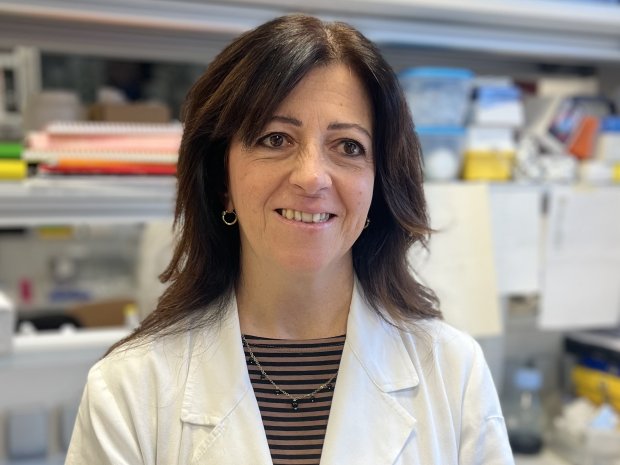
“I did my PhD at the MS Society Tissue Bank 20 years ago. Now I’m Co-Director.”
Dr Roberta Magliozzi is an Associate Professor at Imperial College London and Co-Director of the MS Society Tissue Bank. She told us how tissue from the tissue bank has shaped research breakthroughs in the past and shared her hopes for where it’ll lead next.
I’ve now known the MS Society Tissue Bank for over 20 years. In 2004, I moved from Italy to London for a research fellowship at the tissue bank. Two years later, I started my PhD under the supervision of Professor Richard Reynolds, the previous Director and Founder of the MS Society Tissue Bank.
After my PhD, I went back to Italy to work in MS research at the University of Verona and I continued to collaborate with the tissue bank. But when Professor Reynolds retired and I was invited to take on the role of Co-Director with Professor Richard Nicholas at the tissue bank, it was like a dream come true.
Unlocking progress
Over the last decades, the tissue bank has led to many breakthroughs in MS research. Listing them all would take too long, but here are some of my favourite discoveries:
Unlocking the first treatment for primary progressive MS
We used tissue from the tissue bank to better understand the role of a type of immune cell called B cells in MS.
This formed the first building block for a discovery that later led to B cell therapies for MS, including ocrelizumab (Ocrevus) - the first drug to become available for people with primary progressive MS on the NHS.
Changing how clinicians use MRI to look for lesions
For a long time, MRI scans for MS mostly focused on lesions in a type of brain tissue called white matter. But researchers using tissue from tissue banks around the world, including ours, found we also have lesions in the grey matter. That’s the tissue we can find in a part of the brain called the cortex. Lesions in this part of the brain are often connected to faster disability progression and damage to the nerves.
Because of this discovery, clinicians now look for lesions in both grey and white matter when you get an MRI at the hospital. That’s a huge improvement from 20 years ago.
Discovering a route to myelin repair
Previous research using tissue from the tissue bank led to a myelin repair trial investigating the drug bexarotene. Even though the drug was not pursued further because of the side effects it caused, it was the first ever trial that showed that myelin repair in humans is possible.
This discovery laid the foundation for the new generation of myelin repair trials now underway.
This work wouldn’t be possible without the people who so generously decided to give their brain and spinal cord to the tissue bank. Without them, our research would come to a stop.
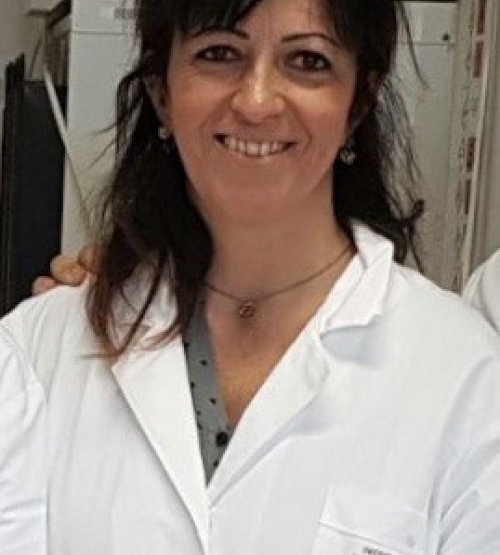
Changing MS one discovery at a time
I focused my research on chronic inflammation in MS. By understanding the mechanisms behind this inflammation, we hope to eventually find ways to block it and, possibly, delay or stop MS progression.
We found different biomarkers that are involved in this chronic inflammation. Biomarkers are detectable changes in the body that can be useful when we diagnose, track or predict the course of a condition. In the future, the biomarkers my team and I identified could help us predict what course someone’s MS might take, for example, if it will progress rapidly or slowly.
We study these biomarkers in biological fluid, for example in cerebrospinal fluid from the tissue bank. They’ll help us detect which type of immune cells is involved in someone living with MS and identify the most appropriate “tailored” therapy for them. This could help give people more certainty over their future and make decisions about what treatment might be best for them.
The future of MS research
Making sure we use the latest, cutting-edge technology is part of my responsibility at the MS Society Tissue Bank. Previously, we could only look at tissue through the microscope. With new technology we can now look at someone’s genetics, their proteins, their molecules and so much more. It’s really opening doors in terms of what kind of research we can do. For example, investigating the causes of MS.
But it’s not just new technology driving progress. Similar to me, many young researchers start their career doing research with the tissue bank. Many of them then go on to become leading scientists across the world, continuing the research they’ve started with us. That’s something we can be really proud of.
Vital research and resources like our Tissue Bank could hold the key to stopping MS for good.
Give today to support MS research.
You may also be interested in


One donation. Double the impact.
We did it! Thanks to our match funders and your generous support, we've hit our £500,000 target!
But you can still help to raise money for vital MS research.
