Highlights from the world's biggest MS research conference
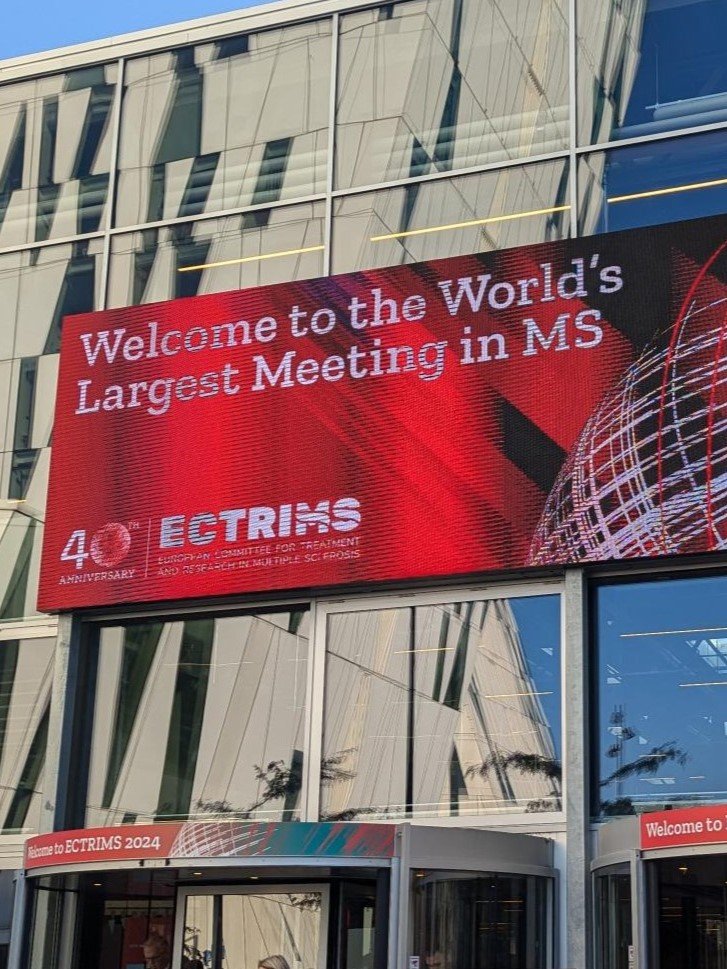
In September, almost 9000 researchers, neurologists and healthcare professionals from across the globe gathered in Copenhagen for the European Conference for Treatment and Research in Multiple Sclerosis (ECTRIMS).
We joined leading experts to discuss the latest advances in MS research and treatment.
Refining how we diagnose MS
Professor Xavier Montalban, director of the Multiple Sclerosis Centre of Catalonia, presented an update on proposed changes to how MS is diagnosed.
These changes will move us away from relying on clinical symptoms like relapses to diagnose MS. Instead, diagnosis will be based on the biological changes that happen in the brain and body when MS starts.
This could help doctors diagnose MS earlier, more easily and more accurately. And in some cases, before someone even experiences any MS symptoms.
The proposed updates are now being reviewed by the scientific community. Once the updated criteria are published by a scientific journal, neurologists and healthcare providers can begin using them.
Developing better ways to measure MS progression
Current clinical trials can take a long time. This is partly because researchers measure whether a drug has an impact on someone’s disability using the Expanded Disability Status Scale (EDSS), usually over a period of several months. To speed up research into MS progression, we need ways to measure it on a biological level – for example, using a blood test.
Glial fibrillary acidic protein (known as GFAP) is emerging as a potential marker of MS progression and came up in many of the sessions at the conference. Research has found that levels of the protein in the blood of people with MS are higher when people have faster rates of disability progression. This relationship appears to be unrelated to the number of relapses they experience, suggesting it could be a marker of underlying progression.
Finding a way to monitor progression using a biomarker in the blood could speed up MS research, helping us finding effective treatments sooner.
Highly anticipated trial results
The last day brought one of the most eagerly awaited sessions: the late-breaking session. This session includes new, exciting advances and the results of big clinical trials. This year was a packed session which included the results from clinical trials of simvastatin and tolebrutinib.
You can read more about the MS-STAT2 in our news story. And you can find our tolebrutinib news story here.
Global collaboration
One of the best things about ECTRIMS is the opportunity for collaboration. Research leads from MS societies across the world take advantage of all being in the same time zone. This gives us the opportunity to talk about the latest research and how we can improve our national programmes, as well as identify areas we can work together on.
These discussions spark new ideas and partnerships. An example of this is a research roadmap was recently published. This looks at the big picture of what we need to do next in MS research.
Sharing the latest research with people with MS
Research conferences are an excellent way to stay up to date with MS research. But the content can often be very technical and inaccessible for people without a scientific background.
This year, ECTRIMS held a Patient Community Day in person and online. This provided people affected by MS with specially tailored content, giving our community the opportunity to learn more about topics featured at the conference.
You can watch the Patient Community Day sessions on the ECTRIMS website.
You may also be interested in