Dealing with temptation – using repurposed drugs before they’re approved for MS
Many trials for MS test drugs already used for other conditions. It can be tempting to try them though they’re not approved for MS. But that can be dangerous.
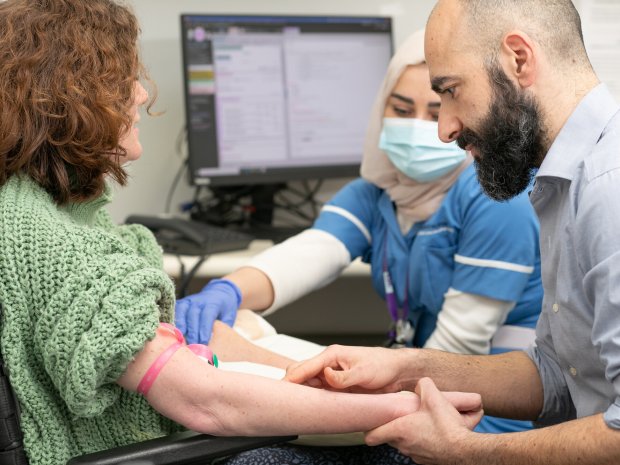
Christine Chapman lives with secondary progressive MS. She's part of our Research Network.
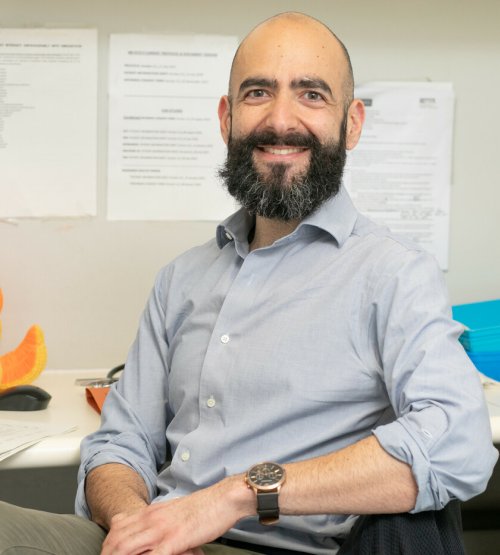
Dr Sean Apap Mangion is part of the Octopus trial team at the National Hospital for Neurology and Neurosurgery, University College London. Christine spoke to him to find out more about the risks of using repurposed drugs before they’re approved for MS.
What are re-purposed drugs?
Many trials for MS are testing drugs that are already used for other conditions. It can be tempting to take these drugs even though they’ve not been approved for MS yet. But that can be dangerous.
Re-purposing drugs means using them outside the condition they were approved for. Repurposing drugs has already brought significant success in treatments for MS. For example, the DMTs dimethyl fumarate (Tecfidera) and cladribine (Mavenclad).
Sean explains: “Trials like Octopus are using this approach to test promising medications for MS. For repurposed drugs, there’s substantially more knowledge available regarding safety and side effects. It’s also much cheaper to test and potentially bring into real world use.
But this doesn't mean they would be risk-free or could replace dedicated large trials. This is for two main reasons:
- We don’t yet know what side effects people with MS might experience.
- We don’t yet know it has a real benefit to people with MS.
Resisting temptation
Some people might be tempted to start taking these repurposed drugs whilst they’re still being investigated for MS. But taking medications that haven’t yet been approved for MS or haven’t been prescribed to you by your clinician can be dangerous.
Sean says: “When a medicine is approved for use and prescribed by a doctor, it means there have been studies showing how safe it is in that group of people, what monitoring needs to be done to avoid risks, and that the potential advantages of taking the medicine outweigh the potential risks.
I think it's entirely understandable to want to try them considering how limited we are for treatment options in progressive MS at present. But if you take drugs outside of a clinical trial that haven’t been approved for MS, you can put yourself at risk.
"Self-medicating means you risk potentially serious side effects without support and supervision from your clinician. And you could cause harm without knowing whether you’ll actually benefit from taking these drugs.
That’s why it’s also important that you don’t take other drugs without disclosing them to your research team whilst you’re in a trial. This is to make sure they can monitor potential side effects and interactions with other medications.”
Why do we need clinical trials for repurposed drugs?
Even though we know much more about repurposed drugs, we still need to investigate how they work in MS. For example, through early research using cells in a dish or animal studies. Only if these early studies look promising do we test the drugs in people with MS.
Sean explains: “Early studies test whether a drug is a promising candidate for MS, but they cannot tell us if they’ll be helpful for people. For example, a drug could show a positive effect on cells under a microscope. But a person is much more complicated than a cluster of cells. And only a large enough clinical study looking at definite, tangible measures, like MRI scans or symptoms, can tell us for sure.
For MS, most treatments require regular safety monitoring to check that they're working as expected and not too much. For example, by suppressing the immune system more than needed. We also need to check if they’re affecting a person's other organs, like their liver and kidneys, or blood pressure.
We need to make sure the medication is safe for people with MS, and the only way to do that is by testing it in enough people under close medical supervision, such as a Phase 3 trial. That’s why taking a medication before it’s been approved for MS, or before your doctor prescribes it, can be risky. In a clinical trial, those risks are reduced because you’re being very closely monitored by medical professionals.”
Keeping research on track
None of the incredible progress MS research would be possible without people taking part in clinical trials.
“Deciding whether or not to take part in a trial is, of course, entirely a personal decision - and everyone will have their reasons for considering taking part. With this in mind, I would say that every effective medical treatment, procedure, or discovery that we benefit from today has been the result of countless numbers of people who have given their time and energy to research studies, from early phase research to big trials like Octopus. In this same way, it’s the contributions of all these people that will bring effective treatments for disease progression into reality.”

Find out more about our Research Network
Christine is a part of our Research Network. A group of people affected by MS who use their lived experience of MS to influence and shape research.
It’s important that the voices of the MS community are heard in all areas of MS research. And our Research Network members help make this happen.
You may also be interested in


Join the Research Network
Our Research Network make sure all the research we fund reflects the needs and interests of people living with MS. And they help us talk about it in a way that’s accessible to everyone.
Anyone who lives with MS or cares for someone who does can get involved. It doesn't matter where in the UK you live or how much research experience you have.
