Bridging the gap between researchers and people with MS
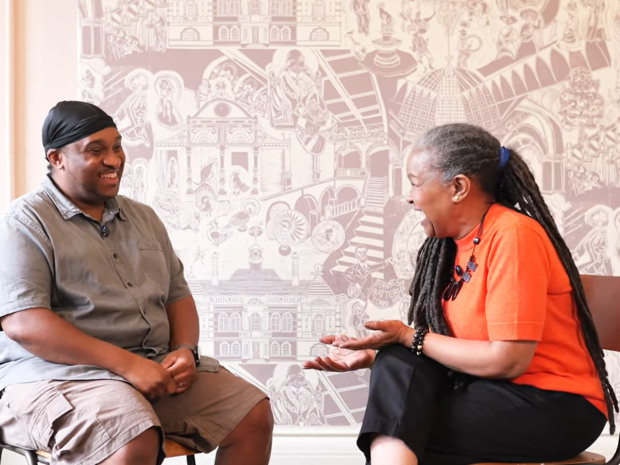
Dr Alison Thomson is a researcher at Queen Mary University of London. She’s been working alongside a team of peer researchers on a project to improve MS care for people from minoritised ethnic backgrounds.
We caught up with Alison and her team to find out more about what they've learned from the project - and why lived experience of MS is so important in research.
Putting people with MS at the heart of research
Alison explained that peer research is a way of putting people with the condition being studied at the heart of research.
“In this case, our peer researchers were Black and South Asian people with MS. They worked alongside academic researchers as co-researchers in all stages of the project. For example, leading interviews and focus groups with other people with MS about how they access MS services and what information they use.”
Rawda, a peer researcher, shared:
Being peer researchers who live with MS and get to interview people with MS bridges the gap in research. We have the people who know what it’s like supporting and giving a voice to people who historically may not have been involved in the type of research we’re doing.
Uncovering hidden aspects of MS
Alison reflected that using peer research in this project showed how deeply people with lived experience enrich the research process.
“The presence of the peer researchers enabled more open conversations, allowing participants to feel understood and supported. The team were able to uncover aspects of the MS patient experience that otherwise would have remained hidden.”
This resonates with peer researcher Saf:
These are voices that don’t really get heard, or nobody asks. So it’s a breath of fresh air for someone to show interest in what we’ve actually experienced, rather than what they’re told we’ve experienced.
The team discovered that ethnicity plays a much more complex role in someone’s MS journey and access to care than anticipated. For many participants, cultural expectations, fears of stigma, family dynamics, and community perceptions were deeply intertwined with their experiences of MS.
Addressing under-representation
From Alison’s perspective, including diverse voices in research ensures that it truly reflects the full range of people’s different experiences and needs. People’s experiences of MS are shaped by culture, ethnicity, gender, language, cultural expectations and socioeconomic factors, and access to care. Yet people from Black British, South Asian, and other ethnically minoritised backgrounds remain significantly under-represented across MS – from research and PPIE activities through to services.
Lauren, one of the peer researchers, shared her experiences of going to an MS support group.
I wasn’t really seeing a diverse population. I was thinking, well, where is everybody? Is it just that people aren’t accessing the services or don’t know about it? Are they not being told about it? Is it because English isn’t their first language? All these different things we’re now finding out through the research we’re doing. I feel really good that we’re able to highlight the barriers and we’re actually about to do something about it.
Encouraging more inclusive approaches
Alison and her team are now working to translate what they’ve learned into real change for people with MS.
“Ultimately, we hope the project will lead to more culturally responsive MS information resources and support services. By centring lived experience and involving peer researchers throughout, the project aims to reduce inequalities in MS care and influence wider research practices. We also hope it encourages funders, clinicians, and researchers to adopt more inclusive and collaborative approaches.”
Peer researcher Ashley shared: "I'd like to see this research change the way we see MS and how we treat it. And have an impact in the future on projects involving MS."
And as Lauren put it:
If we can just change one thing for one person to make their journey easier, then I think we’ve done a good job.
The team have created a series of videos to share their findings. You can watch them all online on their YouTube channel.


