Behind the headlines: CAR T-cell therapy for MS
You might have seen the news about the first person in the UK to receive CAR T-cell therapy for MS as part of a new clinical trial. We take a look behind the headlines to see what this could mean for people living with MS.
What is CAR T-cell therapy?
CAR T-cell therapy stands for chimeric antigen receptor T-cell therapy. It’s a type of immunotherapy designed to ‘reset’ the immune system. And has already shown success in treating some blood cancers.
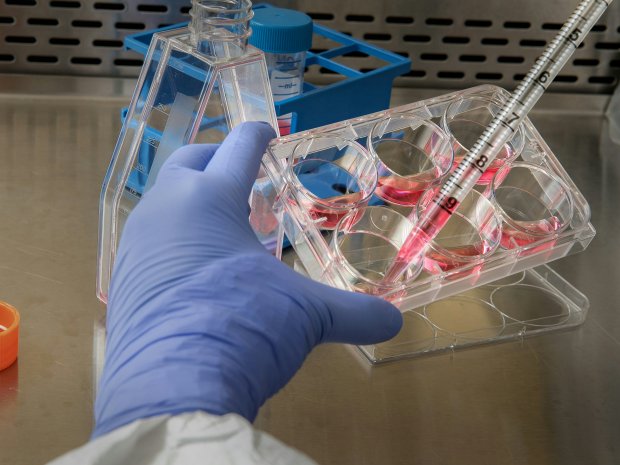
The process uses a type of immune cell called T cells, which normally find and kill infections. Doctors remove patients T cells and reprogramme them in the lab to find and kill specific cells instead. They're then transplanted back into the body.
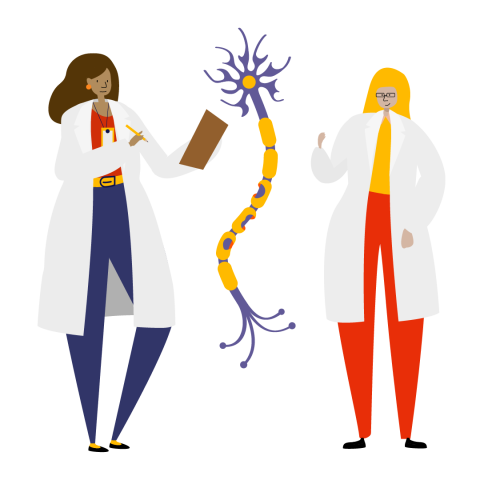
In MS, immune cells called B cells are thought to cause damage to the protective myelin coating around nerves. Researchers are now testing if CAR T-cells can be used to recognise and kill these B cells. This approach has the potential to slow or even halt progression of MS.
This therapy is especially exciting because it could be a one-time treatment that could halt disability progression and potentially lead to long-term remission.
What stage is the research at?
CAR T-cell therapy isn’t available as a treatment for MS right now. But there are several studies testing this type of therapy in MS.
The study that has been in the news recently is called AUTO1-MS1. It’s a Phase 1 clinical trial, led by Dr Wallace Brownlee at University College London Hospitals. The main goal of the trial is to test whether CAR T-cell therapy is feasible and safe for people with MS. They’re testing the treatment in people with relapsing or progressive forms of MS who aren’t responding to existing treatments and whose disability is worsening.
Several other early-stage trials are testing different types of CAR T-cell therapy in MS.
If the results of these trials are promising, the treatments will then need to be tested in larger clinical trials. These will tell us whether they're an effective treatment for MS, and how they compare to existing MS treatments.
How is CAR T-cell therapy different from other MS treatments?
We don’t know how CAR T-cell therapies compare to existing MS treatments yet. Which is why further clinical trials are important.
CAR T-cell therapy works by reducing the number of B cells in the body. These are a type of immune cell that can cause damage in MS. Existing MS treatments like ocrelizumab work by targeting B cells. So do BTK inhibitors, which are currently being tested in trials.
Existing treatments need to be given regularly to reduce levels of B cells. But researchers think CAR T-cell therapy could last longer – or potentially even be a one-off treatment. And unlike most existing MS treatments, CAR T-cells can cross the blood brain barrier. This is the protective border of cells that controls which molecules can enter the brain and spinal cord from the blood. This means it could fight immune cells more effectively, at the location where they’re causing damage.
Like HSCT, CAR T-cell therapy aims to reset the immune system. Both involve removing a type of cell from the blood and then transplanting them back into the body. However, HSCT uses stem cells to rebuild the entire immune system. While CAR T-cell therapy uses a person’s reprogrammed T cells to specifically target B cells. This could lead to a more targeted approach.
Who could benefit from CAR T-cell therapy?
Researchers are testing CAR T-cell therapy in people with relapsing and progressive MS.
They think that it has the potential to reduce or stop MS relapses for people who experience them by targeting B cells, which attack myelin in MS. And research has also shown that people with progressive MS can experience ongoing, low-level inflammation in the brain and spinal cord, even if they don’t experience relapses. CAR T-cell therapy could also target this inflammation, which could slow or even stop further disability progression.
But we’ll need to wait for the results of clinical trials to know exactly who could benefit from this therapy.
What could this mean for people with MS?
Trials are still in the early stages. If successful, CAR T-cell therapy could be used to slow or stop MS progression and prevent relapses.
But this would only target the immune system. Which is why it’s important that we continue to fund research to find treatments that can target other aspects of MS – like repairing myelin that has already been damaged and keeping nerves healthy.
Caitlin Astbury, our senior research communications manager, says:
“As the UK’s leading charity for people affected by MS we’ve been following developments in CAR T-cell therapy with interest. It’s amazing to see this new avenue of treatment being explored.
"There are over 150,000 people living with MS in the UK, but existing treatments don’t work for everyone. It’s early days but, if trial results prove successful, CAR T-cell therapy could be a game changer for how we treat the condition.”
To find out more about clinical trials for MS, visit our Be in a Study page or the NIHR Be Part of Research website. Or speak to your neurologist.
You might also be interested in