Ask the expert: MS risk and prevention
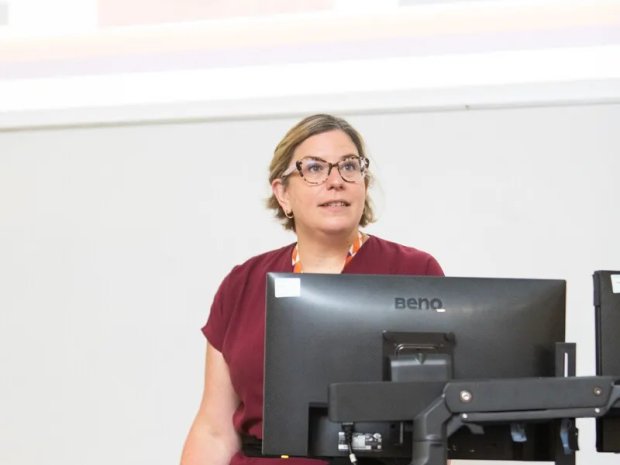
Professor Ruth Dobson is a neurologist and member of our UK MS Prevention Taskforce. We asked her some of your questions about MS risk – and what research into MS prevention could achieve.
Why did I get MS?
This is one of the questions I’m asked most frequently by people with MS. And I don’t have a good answer yet. Which is why I’m involved in research to understand risk and prevention.
Around 1 in 400 people in the UK has MS. There are things that can increase someone’s chance of developing MS. These are often called risk factors. We have strong evidence to support the role of some factors that increase the chances of getting MS. These include:
- Your sex. Women are almost three times more likely to get MS than men.
- Someone’s genetic background
- Low levels of vitamin D
- Childhood obesity
- Smoking
- A common virus called Epstein Barr virus (EBV). We know that infection with EBV seems to be the one thing that is necessary to cause MS in most people.
But many people with some or all of these factors don’t get MS. So no one thing is directly causal.
Researchers have also looked at the role of other potential risk factors, including stress and other infections. But the evidence for these is more limited, or varies between studies.
We also don’t know if there's a particular order that exposure to these risk factors must happen in, or if they need to happen at a specific time of life. For example, if someone has low vitamin D levels and then becomes infected with EBV. Or whether there are combinations of risk factors that add together to play a role. These are all questions that we need to address through research.
A lot of why someone does or doesn’t get MS isn't to do with what's happened to them, what they’ve done, or their family history. There are lots of reasons that we have no control over, haven’t discovered or don’t understand yet. Chance is also a part of this.
Importantly, people shouldn’t feel to blame for their condition, or for the chances of their children or other relatives developing MS.
Does MS run in families?
When we talk about MS risk in relatives, it’s crucial to highlight MS isn’t genetic in the way we think about some other conditions. It's not a single gene and it's not directly inherited. It's more about your overall genetic background.
Having a parent with MS increases someone’s chance of developing the condition. But it remains much more likely that a child of someone with MS won't get MS than they will. The risk of getting MS in the UK is about 1 in 330. If you have a parent with MS, this risk increases to approximately 1 in 70 people. People can find that quite reassuring. Because often they have the impression that it's more like 1 in 2 or 1 in 10.
Some people might also find it helpful to put MS in context with other conditions. 1 in 2 people will develop some form of cancer in their lifetime. While 1 in 13 people have diabetes.
As humans, it's really tricky to understand what those probabilities mean in reality. What one person sees as a high risk, another person might see as low. Others might see everything as 50-50, because either it happens or it doesn't. How each person feels about risk is very individual.
Read more about the causes of MS
Can I reduce my - or my child's - chances of developing MS?
Yes, some healthy habits can potentially reduce the chances of developing MS. These include:
- Not starting smoking, or stopping smoking if you already smoke. Vaping is newer, so we don’t have the evidence yet to know if it increases someone’s chances of getting MS in the same way smoking does. Until we know more, I’d advise people to treat vaping with the same caution as smoking.
- Maintaining a healthy weight. We don’t know whether diet is important in influencing chances of MS outside of the role it can play in obesity. But having a healthy diet and exercising regularly is important for overall brain and body health.
- Taking vitamin D supplements
Healthy habits like this are important to improve overall health for everyone.
Read more about ways to look after your physical and mental health
We don’t know for sure how much doing these things might affect the chances of someone developing MS later in their life, or at which stages of life they’re most important. For example, we know that obesity during childhood and early adulthood seems to increase someone’s risk. But when it comes to vitamin D, we don’t know if there’s a single point in time when it's really crucial to have the right levels.
The same principles apply if you’re thinking about your child's risk. It’s natural to want to reduce their chances of developing MS as much as possible. There’s no way to remove that risk altogether. But you do what you can as a parent. And it's quite tricky when your small children then become teenagers and do exactly the opposite of whatever you tell them!
We know that having these conversations with family members can be challenging, too. We led a piece of research to understand more about how families think and feel about MS risk and prevention. We found that there are a lot of emotions and complexities in families where someone is living with a chronic condition like MS. As a result of this, we’re working with the MS Society to develop resources to support people to have meaningful conversations about these topics. This long read is a step on this journey.
What do we mean by ‘preventing’ MS?
There are different approaches to prevention. Usually when we use the term prevention, we mean something called primary prevention. This is where we stop a condition from occurring in the first place. Secondary prevention is where we identify a condition like MS early on so we can give a treatment to reduce the risk of things getting worse. An example of this is using aspirin after a mini stroke to try to prevent a larger stroke in the future. Early detection and prompt treatment is an important part of this.
But in MS, it’s not as clear cut. These labels don’t tend to work as well because MS often gradually builds up before people have any clear relapses. When the condition starts depends how you define MS. Is it when there are changes in the brain? When people start displaying possible symptoms? Or only when you get a diagnosis?
Knowing when MS really starts is one of the really complex questions we’re trying to untangle.
What could a preventive treatment look like?
I think there are two possible ways this may play out, potentially in parallel.
The first is where we target risk factors associated with MS in the general population. This could be something like vitamin D supplementation, or targeted weight management for children who are overweight.
Trying to stop people from getting EBV could also be part of this. Vaccines for EBV are being developed. But the vaccines that have been developed so far stop you getting symptoms, rather than the infection itself. Stopping EBV infection would have the biggest impact on the number of people who develop MS – but there aren’t any treatments that have been proved to do this at this moment in time. Hopefully there will be in the future though.
The second approach is more individual, using some form of targeted screening to identify people whose chance of developing MS is particularly high. Whilst the most obvious way to do this might be by using MRI scans, there are problems with this kind of approach. Not only would it be very time consuming and expensive, but we also don’t know when would be best to scan people. Or how often people would need scanning to check for new changes.
Instead, researchers are working to identify biomarkers - changes in the body, for example in the blood - that can be used to detect the very early signs of MS. This could help us identify at-risk groups before symptoms start. And offer people a scan where we think their risk of MS is much higher than the general population. We could then give specific treatments to try to stop people from ever developing symptoms of MS.
There’s a lot of work that needs to happen before we get to that stage. And a lot of questions to answer. How do you identify the people who are at an increased risk of MS? Who do you offer an MRI scan to and when? What could the treatment be, and when would you need to give it? What measures could you use to understand whether it works?
What are your hopes for the future of prevention?
Lifestyle, like not smoking and maintaining a healthy weight, can reduce people’s risk of developing MS. But lots of people get MS despite doing all of this.
If we could find ways to reduce the number of people getting MS in the first place, or treat people effectively really early, some people might never need treatments.
It sounds ambitious, and it is. But you've got to be optimistic.
A shorter version of this blog originally appeared in our MS Matters magazine. You can explore the full back catalogue of the magazine.

You may also be interested in


Speak to someone who knows MS
Our free MS Help services are here for everyone affected by MS.
We can provide trusted information so you can understand and manage MS. Personalised support and guidance for everyday living so you can live well. And help you connect with others by finding, growing and maintaining your MS community, in person and online.
You can talk to us in confidence by phone or our new webchat facility from 9am to 5pm Monday to Friday (except bank holidays) and email us any time. Explore our services or start a conversation by visiting our MS Help Hub.
