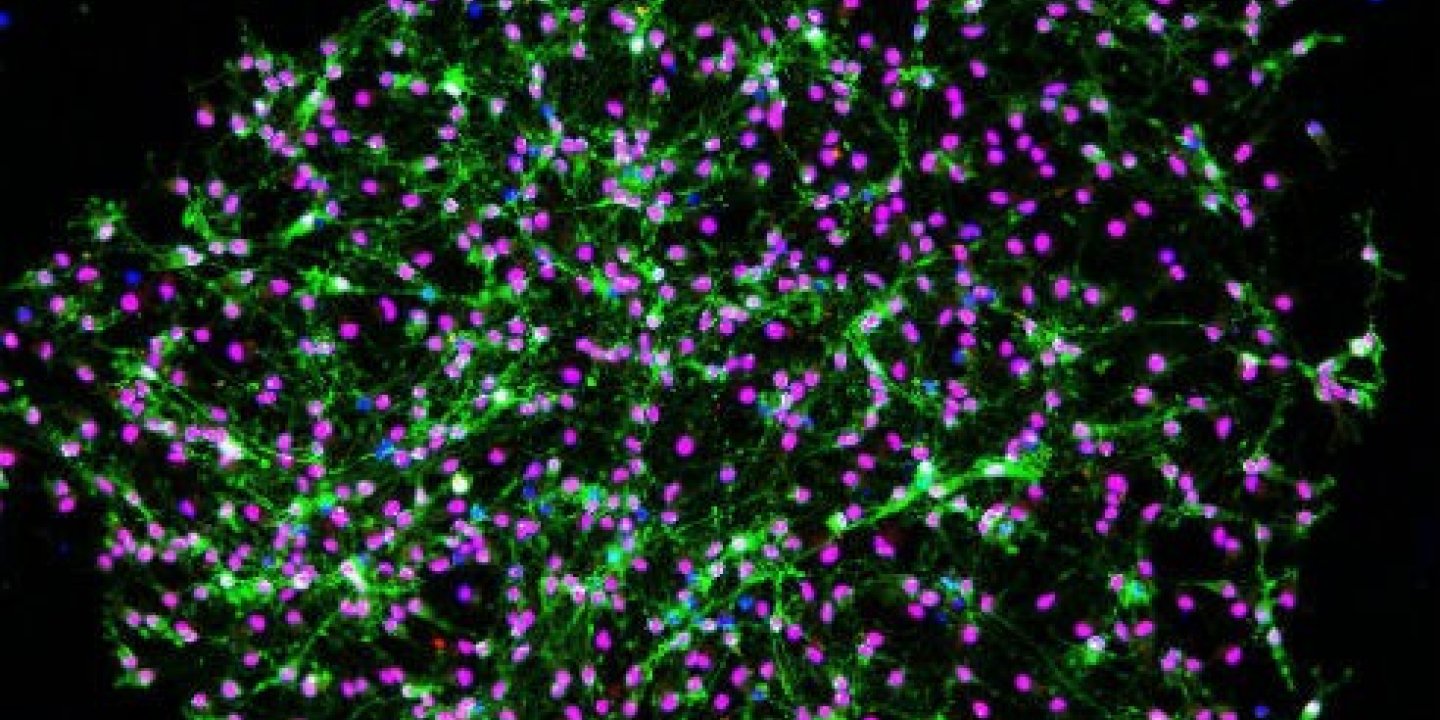
Researchers show transplanted stem cells can repair myelin in mice
In 2023, a small early trial showed that a new type of stem cell transplantation in humans was safe. Now in a new study with mice, scientists at our Cambridge Centre of Excellence have shown how this approach might be able to boost myelin repair.
What did the researchers do?
Stem cells are cells that can turn into other kinds of cell. We already have an MS treatment called HSCT that uses haematopoietic stem cells. These stem cells can produce all the cells in your blood.
This new study used neural stem cells. Neural stem cells are found naturally in the brain and can transform into different brain cells.
The researchers transplanted neural stem cells into the brains of mice with an MS-like condition.
What did they find?
In areas of the brain with MS-like damage, the neural stem cells were able to turn into myelin-making cells called oligodendrocytes. And this led to the formation of new myelin. This was the first time this has been done.
Dr Luca Peruzzotti-Jametti, who led the study, said:
"This research provides critical evidence that induced neural stem cell grafts can effectively turn into myelin-producing cells within the damaged central nervous system, suggesting a potential new way to treat progressive MS."
What does this mean for people with MS?
Our bodies have the natural ability to repair myelin, the protective coating around nerves that’s damaged in MS. But in MS and as we age, it stops working effectively. To slow or stop MS progression, researchers are trying to find ways to boost myelin repair.
This research is still in its very early stages. However, these results in mice are invaluable. They help us understand how neural stem cells might one day be able to unlock desperately needed myelin repair treatments.
Dr Catherine Godbold, our Senior Research Communications Manager, said:
We’re proud to have supported this study and hope it can bring us another step closer to stopping progression for everyone with MS.


