Understanding what stops myelin repair in MS
In MS, the immune system mistakenly attacks and damages myelin, the protective insulating layer surrounding our nerve cells. The body can initially replace the damaged myelin, but this natural repair becomes less effective with age and repeated attacks. Even early on, the newly replaced myelin layers are often too short, too thin or in the wrong place, which eventually leads to permanent nerve damage and worsening disability. We don't fully understand why this repair fails.
Recent research suggests that certain molecules called adhesion proteins play a crucial role in making sure that myelin wraps around nerves properly. These proteins are found on the surface of the myelin and help it to stick to the underlying nerve cell. Studies in animal models have shown that when these adhesion proteins are faulty, the resulting myelin layers are smaller and in the wrong place- similar to what we see in repaired MS lesions. Sophie and the team think that these adhesion proteins don't work properly after myelin damage, preventing new myelin from attaching to the nerve.
About the project
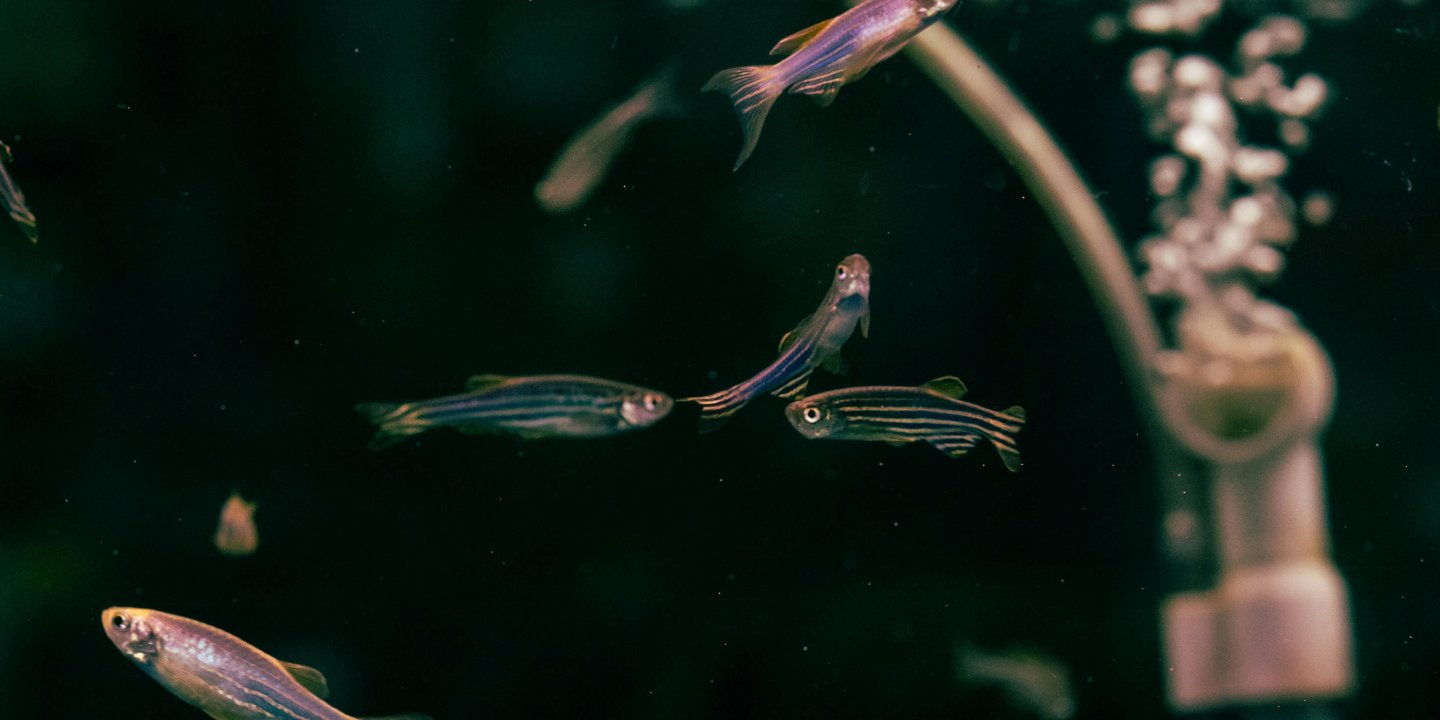
To test this idea, Sophie and the team will look at the specific proteins that make up myelin before and after damage and repair. They will do this using zebrafish.
They have genetically modified zebrafish so that they can both trigger myelin damage and label myelin proteins with fluorescent tags. Young zebrafish are transparent, so the tags allow the team to watch the myelin being repaired in real-time using a special microscope.
They will also use these tags to purify and extract myelin and any other linked proteins. They can then use a technique called mass spectrometry to identify and measure these proteins in healthy, damaged, and repaired myelin. This will help to pinpoint the changes in myelin during the repair process, and which proteins are involved.
How will it help people with MS?
This research will produce a dataset showing which proteins are linked to poor myelin repair. This will help us to understand more about how natural myelin repair works, and why it sometimes fails. It should identify key proteins involved in faulty myelin repair and could lead to new treatments that boost myelin repair and help slow or stop MS progression.
You might also be interested in...


Join the Research Network
Our Research Network make sure all the research we fund reflects the needs and interests of people living with MS. And they help us talk about it in a way that’s accessible to everyone.
Anyone who lives with MS or cares for someone who does can get involved. It doesn't matter where in the UK you live or how much research experience you have.
