"MS is difficult enough": Why ADP must change
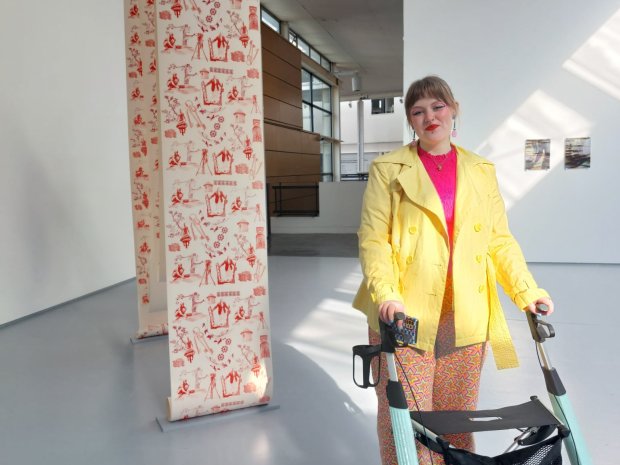
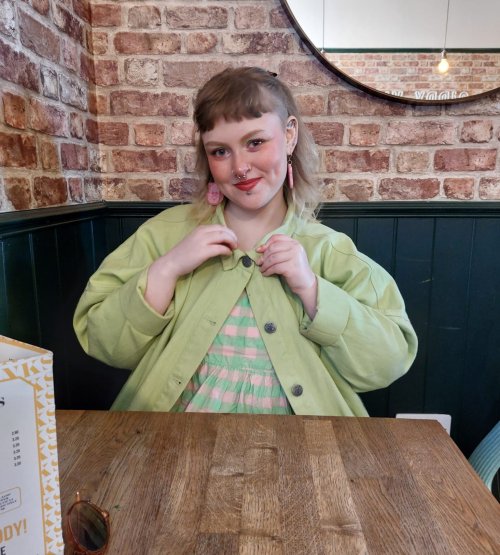
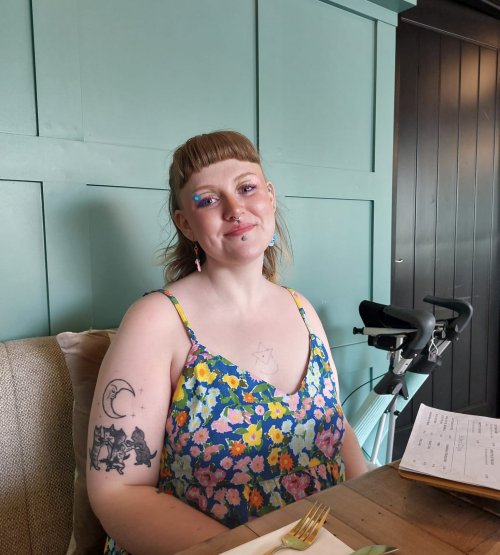
Paige Barclay lives in Dundee with her partner, Ace, and their cats. After she was diagnosed with MS in 2022, Paige applied for Adult Disability Payment (ADP). But the 20 metre rule failed to take into account the fluctuating nature of her condition.
I was 22 when I was diagnosed with MS. It was a real shock.
I had lots of different symptoms – from partial seizures to migraines, numbness and fatigue.
About three months after I was diagnosed, I applied for Adult Disability Payment (ADP) – the benefit that replaced Personal Independence Payment (PIP) in Scotland. It was a chaotic time in my life: I was working full-time in a new job, attempting to pick my life back up after my father had suddenly passed away.
I wasn’t in a good place, and I was quickly realising that my job wasn’t a good fit for someone with MS. Particularly as I’m affected by Uhthoff’s phenomenon - the temporary worsening of symptoms when core body heat rises.
The people around me told me about ADP. And, using one of my quickly running out sick days, I decided to face the music and tackle the application. I needed some financial support to keep me going.
Applying for ADP
I was able to apply online, and I didn’t have to speak to a person about the details of my disability until later in the application process. Although it was relatively straightforward, it was repetitive. I felt that I was having to stress, over and over, that MS is hard to live with. But the real difficulty was the “Moving Around” component.
That’s where I faced some real challenges. In retrospect, they were close to the process of applying for PIP. I can’t recall all the details, but here’s what I do remember.
The online questionnaire had a question about whether I was able to walk 20 metres unaided, asking me to explain in as much detail as possible. It was hard to express that, while I technically can some of the time, that’s not always true. My MS looks different every single day.
I tried to answer as best as I could, and sent off the form.
A few weeks later I received a phone call from a member of staff at Social Security Scotland asking to go over the “Moving Around component” to “clear things up”. I remember it was a woman who sounded a little stern and decades my senior.
She asked me things along the lines of, “Can you walk the length of a bus unaided?” I said I could - with a walking stick, some of the time.
We went through more questions in this vein and, after months of waiting, I was given my results. I remember the relief at the time that I was getting anything at all and that it was being backdated to my application. But there was a huge wave of disappointment when I realised that I was given standard rates for the “Moving Around” section.
I felt they understood the seriousness of MS, considering they gave me a higher rate for daily living, but failed to give “Moving Around” that same understanding. My question for them: “why?”
I believe with my whole chest that people with disabilities and chronic illnesses in the UK are being let down by benefits systems. My experience with ADP is just one example.
What we deserve
We are always being told that we are more capable than we are, or that because we can do something some of the time, we don’t need help when we can’t do it. We’re told we don’t deserve more than the most basic access to food, water and shelter.
I believe that we deserve more than that: we deserve a chance to enjoy life. To live life. That looks different for everyone, and especially looks different for people with conditions like MS. We deserve the opportunity to drive, to live in accessible houses. To have access to public spaces with accessible entrances and decent, clean disabled toilets. To be able to go on holiday, to create, and read, and attend events.
Just because we are disabled doesn’t mean we deserve to be kept alive and nothing more.
Moving forwards
When I was a carer for my dad, I saw what PIP assessments were like up close. So I know what they’re like, and think that ADP is a significant improvement on PIP. But there are still people being let down by the application process.
MS is serious. It’s a lifelong progressive condition with no cure. And if Social Security Scotland can see that - in my case, in the “Daily Living” component - why aren’t they taking it into consideration in the “Moving Around” component?
I know I’m far from the only person being let down by this. I know lots of people feel the same way I do.
Being awarded the higher rate would change my life: I’d be able to start driving lessons, I’d be able to take my rollator in the boot and drive with my Motability car to the shops when I need milk.
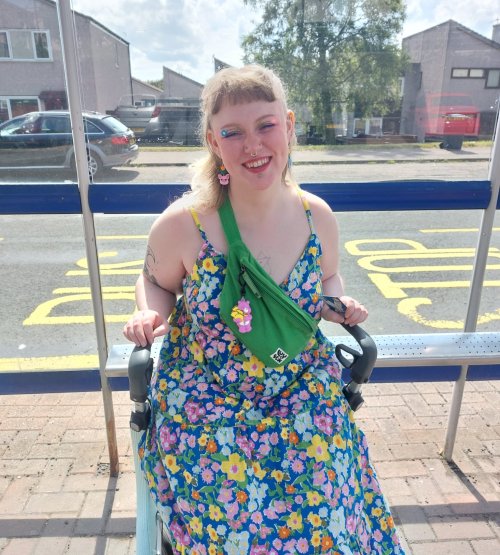
Right now, I rely on my partner to nip to the shops. I rely on delivery services for my shopping. And I rely on friends to travel to me or use social media to stay in touch.
Life with MS is a continuous cycle of body grief, of losing, of adaptations. There are endless hospital appointments, medications and more. I’m only three years into being diagnosed, and I already feel medical burnout.
While I was writing this blog, I received a letter inviting me to my annual MRI. MRIs are fine, but they’re also a reminder that anything could be going on in your brain and nervous system. A reminder that you will be monitored for the rest of your life.
My point is this: MS is difficult enough. If there have to be people making decisions about what people like me deserve in terms of financial support, then this assessment must be kind, considerate and fair.
We’re writing an open letter to Shirley-Anne Somerville MSP, Cabinet Secretary for Social Justice in Scotland, to push for positive recommendations for ADP to be adopted - including removing the 20 metre rule, and ensuring that dignity, fairness, and respect are embedded in practice through improved assessments and support.

You may be interested in