Radiologically isolated syndrome (RIS)
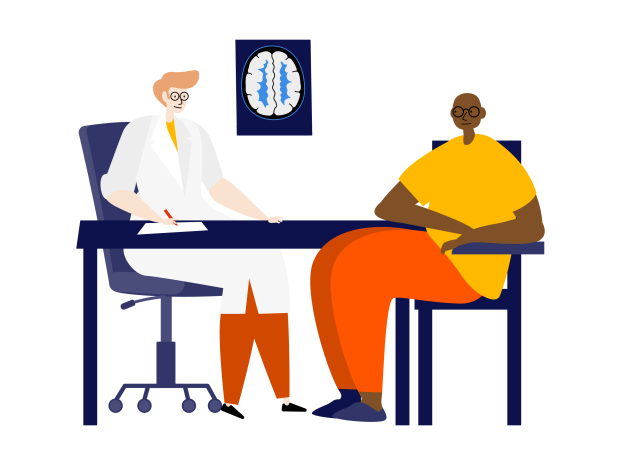
You might be diagnosed with radiologically isolated syndrome (RIS) if an MRI scan of your brain or spinal cord shows damage that looks like MS. And you haven’t noticed any MS-like symptoms.
RIS is diagnosed by a specialist doctor called a neurologist. They treat people with conditions of the brain, spinal cord and nerves. Some people who have RIS never go on to get symptoms and MS. But some do develop MS years later.
What is radiologically isolated syndrome (RIS)?
In the name ‘radiologically isolated syndrome’:
- ‘radiologically’ means MRI scans show you have signs of damage to nerves in your brain or spinal cord. With RIS these look very like the areas of damage (lesions) you see on scans of people with MS
- ‘isolated’ means the only signs that anything is wrong are on your MRI scans. You have no physical symptoms
- a ‘syndrome’ is a collection of signs that something’s not right in your body
With RIS you have signs typical of MS on your scans, but without any of the obvious symptoms that people with MS get. RIS is normally found unexpectedly while looking for the cause of another health problem.
Some people get a diagnosis of RIS, then later get diagnosed with MS. But many people with RIS never go on to get MS.
The causes of radiologically isolated syndrome (RIS)
Like MS, radiologically isolated syndrome (RIS) happens when your immune system attacks nerves in your central nervous system. That’s your spinal cord or brain, including your optic nerve. That’s the nerve that connects your eyes to your brain.
This attack causes inflammation and nerve damage. The fatty covering around the nerves (called myelin) gets stripped away. Without this protection, messages travel less easily along nerves. Often, but not always, this causes symptoms.
In RIS there are no symptoms. This could be because the damage isn’t in a place that triggers symptoms. Or perhaps your body has repaired enough of the damaged myelin to keep the affected nerve working. Or maybe nerves in other parts of your brain or spinal cord have taken over from the damaged ones.
We don’t know exactly why the immune system attacks like it does in RIS. But in MS it’s thought to be a combination of your genes, lifestyle and something in your environment.
How is RIS diagnosed?
Only a neurologist can diagnose RIS. Neurologists are doctors who are specialists in the brain, spinal cord and nerves.
Tests for RIS
RIS is diagnosed by looking at your MRI scans for areas of nerve damage. These are called lesions. One lesion isn’t enough. You need at least two lesions that are typical of MS to be diagnosed with RIS.
A physical examination must show no symptoms typical of MS. And you must not have had obvious MS symptoms in the past.
There might be subtle signs that something is wrong. When doctors look closely, they see that about one in three people with RIS show signs that their memory, thinking or concentration are affected in a mild way. Sometimes anxiety and depression might be a sign of RIS, too. But all these things affect lots of people and might have nothing to do with RIS or MS.
You’ll have other tests to rule out other possible causes for your lesions. This can include blood tests and tests to measure your vision. A test during a lumbar puncture checks the fluid around your spinal cord and brain. It looks for signs of inflammation or infection.
Discovering RIS by accident
RIS is usually diagnosed by accident while looking for other things. People will have an MRI scan for a reason that has nothing to do with MS. Maybe it’s to check an injury or because they’re getting headaches. Then lesions are found that no one was expecting.
A diagnosis of RIS can change to one of MS if you later get your first MS-like symptoms. Or new lesions show up on your scans. You might also have more tests that find further evidence of MS. But for many people RIS won’t ever become MS.
An MS diagnosis without symptoms
When you have two or more lesions but no symptoms, this is usually diagnosed as RIS. But sometimes it’s also possible to diagnose MS without waiting for your first attack of symptoms.
A diagnosis of RIS can soon become one of MS if more tests find the evidence that’s needed. Lumbar puncture tests and MRI scans can find this evidence. These can prove you’ve had attacks in different parts of your brain or spinal cord or at different times. This is what MS is.
Lumbar puncture
If a lumbar puncture finds signs of inflammation in your spinal fluid, that might point towards MS. These signs can be:
- oligoclonal bands (a kind of protein)
- high levels of something called kappa free light chains (another kind of protein)
MRI scans
If a special kind of MRI scan shows a certain kind of lesion, that might point towards MS. These lesions have a vein in the middle. When they show up on a scan, it’s called the central vein sign (CVS). If enough of these lesions show up on the scan, it could be MS.
Read more about how MS is diagnosed
What’s the difference between RIS and MS?
The main difference between RIS and MS is whether you’ve had symptoms or not. With RIS you’ve not had the obvious symptoms that are typical of MS.
Another difference is treatment. There are over 20 disease modifying therapies (DMTs) to treat MS, and early treatment is recommended. As yet there’s no agreement between experts on whether to treat RIS, or how.
Does RIS mean I have MS, or will get it later?
RIS can be an early stage of MS for some people. If you get your first attack of symptoms, your diagnosis is likely to change to one of MS.
With a diagnosis of RIS your neurologist might plan regular reviews to check it’s not become MS. When you get your RIS diagnosis, you should be given information about it. Your neurologist should tell you who to contact for advice if you start to get symptoms.
What are the chances of RIS becoming MS?
In several studies people with RIS over time often developed symptoms or were diagnosed with MS. This happened to:
- 19% of people after two years
- 35% after five years
- 51% after ten years
- 72% after 15 years
Some things make it more likely that RIS will lead to MS symptoms:
- being younger (under 37) when you’re diagnosed with RIS
- having lesions on your spinal cord or in a particular part of your brain
- if fluid around your spinal cord is tested and the test finds oligoclonal bands
- you have certain types of lesions
- if a Visual Evoked Potential test shows your vision is affected
The more of those are true, the bigger the risk of MS.
If you have RIS which leads to clinically isolated syndrome (CIS), chances are very high that you’ll be diagnosed with MS within a couple of years. CIS is when you have your first attack of MS-like symptoms. You might be offered treatment with a DMT if you’re diagnosed with CIS.
MS treatments for RIS
There are no official NHS recommendations about treating RIS. There’s no guidance about drugs that might lower your risk of MS. You might be prescribed extra vitamin D if your levels are low. Being low in this vitamin might increase your MS risk.
A recent trial followed 44 people with RIS who took the DMT dimethyl fumarate (Tecfidera) for two years. Around the same number of people took a dummy drug with nothing in it. The group who took the DMT had a big reduction in their risk of developing MS. It’s likely a much bigger study would be needed before RIS is routinely treated with a DMT.
If you have RIS with a higher risk of getting MS, your neurologist will discuss what happens next. This can include more MRI scans in the future. And monitoring, in case any symptoms appear.
Last full review: 1 October 2025
Next review date: 1 October 2028
We also update when we know about important changes.
You may also be interested in


Speak to someone who knows MS
Our free MS Help services are here for everyone affected by MS.
We can provide trusted information so you can understand and manage MS. Personalised support and guidance for everyday living so you can live well. And help you connect with others by finding, growing and maintaining your MS community, in person and online.
You can talk to us in confidence by phone or our new webchat facility from 9am to 5pm Monday to Friday (except bank holidays) and email us any time. Explore our services or start a conversation by visiting our MS Help Hub.

This information carries the PiF Tick stamp of approval
The PiF Tick shows our information is accurate, reliable and easy to use.
