Seven years later: What I’ve learned
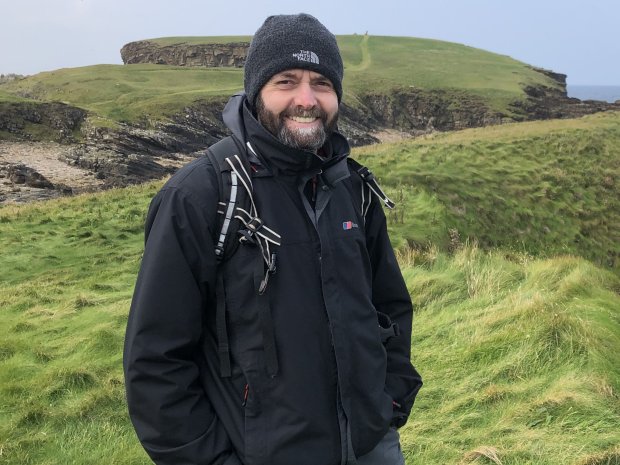
July 2025 marked seven years since I was admitted to hospital with symptoms that would, a month later, be diagnosed as multiple sclerosis. So what have I learned over these last seven years? About myself. About MS.
The first lesson is that MS is an individual, unpredictable condition. Previously, I knew of one person with the condition and I’ve since met people who have minor impairment, others who are severely affected. I learned to not compare myself to others because my MS path may not follow theirs.
Asking for help
I found diagnosis extremely difficult to deal with so perhaps my most important lesson was not being afraid to ask for help. Unexpectedly my life was turned upside down. Wrapping my head around this was challenging but I sought counselling through my GP. This really helped me to get through those first difficult months and the techniques still help me today. I stopped catastrophising and started to be more mindful of the here and now.
I learned to stop asking “what if?” questions. Counselling helped me understand this was not helpful thinking. The exact causes of MS are not clearly understood so what was to be gained by wondering if I had done things differently would I have avoided it?
My MS Nurse team at Glasgow’s Queen Elizabeth University Hospital has been invaluable. Initially I would contact them regularly, worried that every twinge or tweak was some new symptom. They helped me understand the condition and what I should look out for. I still see my nurse every six months and I am able to contact him any time.
An interest in research
I developed an interest in research, learning about medical trials and the process that new treatments take to be licensed. I find the MS Society funding so much research to be very encouraging. The pace of development is illustrated by several new treatments becoming available since my diagnosis.
I started Lemtrada in February 2019, one of the most effective treatments available, albeit one with risks and potential side effects. I learned about those side effects when, in March 2024, monthly monitoring tests detected an overactive thyroid. This resulted in exhaustion, insomnia, weight loss and an extremely high heart rate. This is still being treated as of August 2025 but is now under control. It’s been an unpleasant bump in my MS road so would I still choose Lemtrada? Yes, as my MS symptoms have remained stable. A lesson learned in the trade-off between risk and reward.
I learned to stop asking 'what if?' questions
I’ve learned that, despite the noise, I can fall asleep in an MRI machine during my annual brain scan.
I underestimated the impact on work. At the time of diagnosis I had just started a new job and there was a lack of understanding or empathy that MS is a chronic, lifelong condition. I was repeatedly asked “are you better now?” after my treatment. I have since moved jobs and since 2021 I have been working in the charity sector.
I now know that invisible disability is a thing. People would say I looked well, even if I felt terrible inside. At first I found this hard to hear but over time I’ve understood not to take offence. Nobody means it as a negative. I’ve also been told I don’t look like I have MS. Given the wide variety of symptoms what am I supposed to look like?
A new vocabulary
I’ve learned a whole new vocabulary. Medical terms such as demyelination, remyelination, acronyms like PwMS (person with MS), DMT (Disease modifying therapy) and NEDA (no evidence of disease activity), and tongue twisting treatment names ocrelizumab and alemtuzumab (that’s the name for Lemtrada, the drug I was treated with). These all crept into everyday conversation. Well, maybe not every day.
I’ve learned to adapt. Although my left leg has some mobility limitations, I can still run and train in karate. I can’t kick as well with my left leg as I used to but I can work around this. Initially I found it hugely frustrating until realising that whilst I couldn’t do every kick, I could still do most kicks. Training at 80% is better than not training at all.
Learning to live with the ups and downs
So, after seven years on the MS rollercoaster, I’ve learned to live with the ups and downs. I recognise that I’m lucky that MS hasn’t had too much impact on my life. However, every day, week, month and year has been a learning experience. Who knows how my MS might progress over the next seven years, but what I’ve learned so far will surely help me along the way.
You may also be interested in


Disease modifying treatment (DMT) decision tool
There's a wide range of DMTs for MS available on the NHS. Each has a different combination of benefits and risks.
Use our tool to explore your DMT options and prepare for conversations with health professionals.
