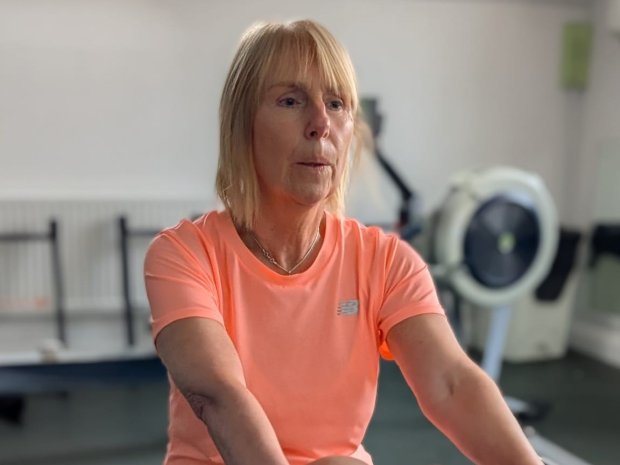
My experience of adaptive rowing with MS
Yvette’s MS journey began decades before her diagnosis. Now, adaptive rowing is helping her regain strength, control and confidence.
My official MS diagnosis came in 2016, but my journey began over three decades earlier. I was 23 when I experienced my first symptoms. Over the years, I had relapses every few years, but back then, there were no treatments on offer.
For a long time, I was able to disguise what was happening. My symptoms were mostly invisible, but the fear of the future was always there.
By 2012, the effects on the right side of my body were becoming more significant.
Living with MS with support and structure
Today, MS continues to mainly affect the right-hand side of my body, causing weakness and spasticity in my arm, hand, and leg. It's a daily challenge, but one I’ve learned to navigate with the proper support, mindset, and movement.
Back in 2013, I searched for something to give me more control over my health and life. I found the Overcoming MS program: a lifestyle approach that includes diet, meditation, exercise and medication.
Mindfulness soon became a huge part of my life. I found it so beneficial, physically and psychologically, that I completed an MSc in mindfulness and now teach it to others with MS through MS-UK.
Discovering adaptive rowing
Rowing came into my life just two years ago. A friend told me about adaptive rowing, and I was keen to find something that would push me way out of my comfort zone.
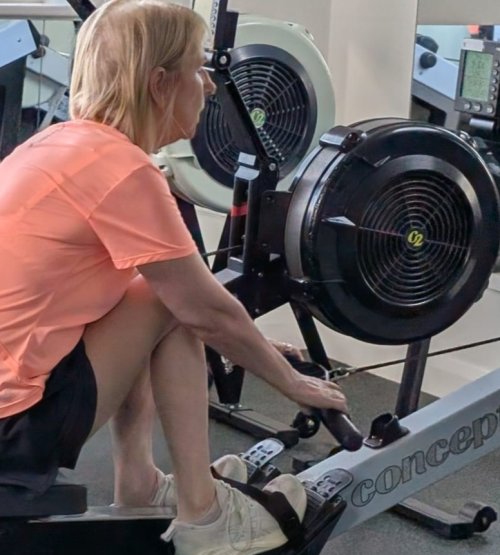
Because of the weakness on my right side, I needed a few adaptations to get started. A strap helped keep my right hand on the oar, and padding under my left leg eased the pain. But over time, I’ve been able to row without those aids.
My coach understands that I can’t do a perfect rowing stroke. We work together to make it as efficient and low-stress as possible for my body.
My first time rowing
My first time on the river was... dramatic, to say the least. Just getting in and out of the boat took me 20 minutes! I had two coaches with me, and honestly had no idea what I was doing. I was terrified I’d fall in.
After that first session, I decided to build up my strength and confidence on land. That’s when I started rowing with the club as an adaptive land rower, which is a serious sport in its own right!
Now, I row weekly with my coach and add in a couple of garage sessions at home. At first, I could only manage short bursts. But over time, I’ve built up my stamina and strength, and now I can row for much longer. The progress I’ve made feels like a massive win for me.
Adapting for my MS symptoms
Of course, there are still challenges. Gripping with my right hand can be tricky, especially when I heat up and fatigue sets in. My rowing stroke can get a bit unbalanced, but that’s part of the adaptive process.
One of the biggest highlights for me has simply been being able to row at all.
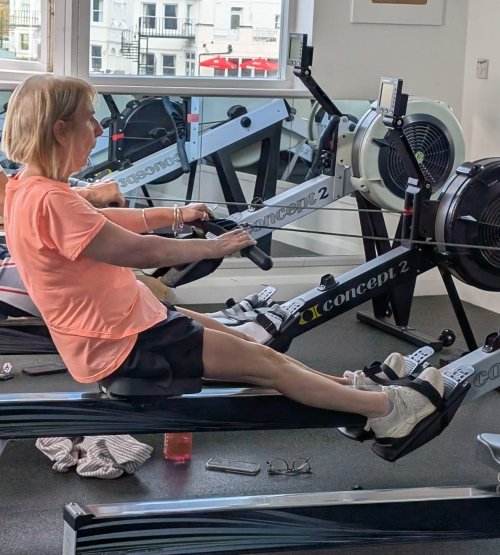
After 20 years of struggling to take part in any sport, rowing has opened a door. I’m now part of a club and a growing adaptive rowing movement in the UK. It’s one of the few physical activities I can do that really gets my heart pumping. And it’s done wonders for my wellbeing and sense of achievement.
Rowing for the MS Society
Living with MS means constant setbacks. But I’ve learned to be okay with that… well, sort of! When they happen, I just get back on the machine when I can and start again, slowly rebuilding strength and rhythm.
Rowing has brought structure, motivation, and a strong sense of community to my life. The impact has been overwhelmingly positive.
I've been training for something big – a 5km rowing fundraiser for the MS Society this September.
In 2019, I walked the 6km to raise funds. That’s not an option for me right now, but rowing is.
This new challenge, ‘Make Every Metre Matter: Rowing to Stop MS’, will raise funds for the MS Society and create awareness for adaptive rowing.
Why adaptive rowing matters
There are only 101 adaptive rowers in the UK, and British Rowing is keen to bring more people on board. I know a few others with MS who row at different clubs across the country, and I’d love to see more of us giving it a go.
I never thought I’d be able to attempt something like this, and now it’s a really cool part of my life.
Support from the MS Society has made a big difference to me, too. My husband, Jurgen, volunteers weekly on the MS Helpline, and I'm so proud of the difference he makes to my fellow MSers.
My message to others with MS
To anyone out there feeling like they can’t do what they used to, I get it. I remember being told in the '90s not to exercise. That advice is thankfully out of date now. I was cautious for years, afraid to push too hard. But I’ve learned that adaptation is everything.
If you’ve ever seen Paralympic rowing, you’ll see athletes of all abilities finding their rhythm.
Thanks to adaptive rowing coaches who take time to understand what adaptations I need, I’ve found a way to keep moving.
Find out more about Yvette’s rowing challenge on her JustGiving page


