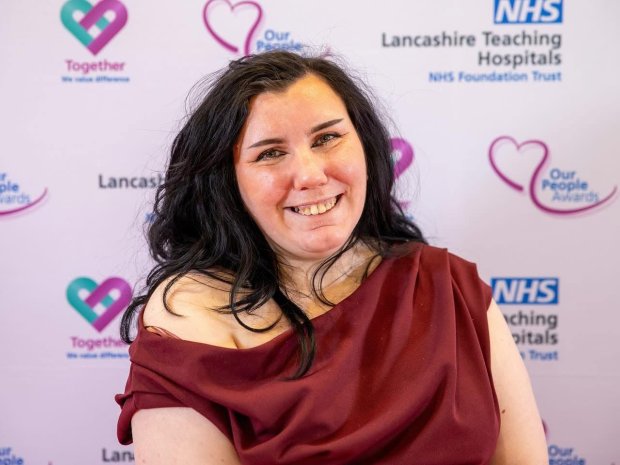
MS made me ashamed of how I looked. Now I see things differently.
Gemma’s first MS symptoms started when she was 18 years old. They hit her hard, causing her to temporarily lose the ability to walk and look after herself. As an image-conscious teenager, she lost her sense of identity. She blogs about how she rebuilt a positive relationship with her body image.
Before I was sick, I was very much into social media and seeing friends. I was in with an emo group, and I had the emo It girl look. I had my dream hair and I took pride in it. I wore it like a crown on my head. I loved myself!
And suddenly I got ill to the point where I couldn’t even brush my hair. It all matted up and it had to all be cut off. As trivial as its sounds that was one of the hardest things I had to go through.
I didn’t recognise myself anymore
During that time, I didn’t recognise the person I saw in the mirror.
I think it’s very jarring to go from a ‘normal’ healthy person with a ‘normal’ life to looking sick.
Suddenly I wasn’t that person anymore. It was a really hard pill to swallow.
It had a huge impact on my mental health. I think mental health is a huge part of any long-term illness and it needs to be spoken about more.
I stayed inside for a whole year
I became agoraphobic, I stayed inside for a whole year. I’d even hide from the postman. I didn’t want anyone to know what had happened to me. I was so scared of being judged on who I'd become. With my friends, I pretended that nothing was going on. I even bought a wig to pretend that nothing had happened to my hair.
I could still do my makeup and I’d put on a wig, take pictures for social media and I had this whole pretend life.
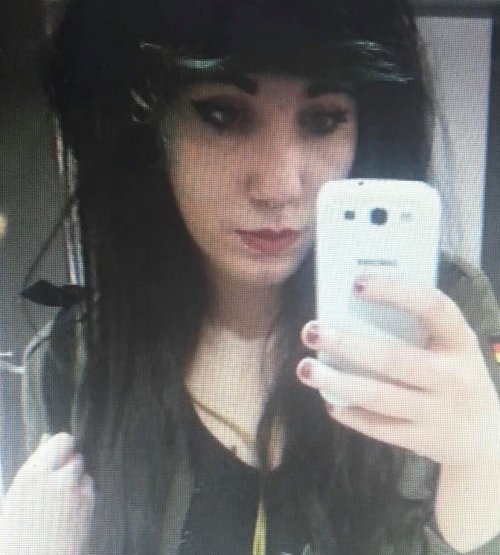
I feel quite sad thinking about it now. I felt isolated but somehow half of me also felt safe. Pretending almost became my safe space.
I was terrified whenever I did have to leave the house, for the Job Centre and the Prince’s Trust [now the King’s Trust] programme I was on. I was terrified of being recognised.
I didn’t see any positive role models
I felt lost, I felt ashamed, I had so many emotions. And honestly a big part of it was because of how media represented MS. I used to love the TV series Waterloo Road and I remember a teacher got diagnosed with MS. And in that series it got to the point where the teacher took her own life. I thought oh my god I’ve got the suicide disease - that’s what I saw in the programme, so I thought that’s how I would end up feeling. To me, that programme showed that it was something to be ashamed of.
Getting help and changing my mindset
I had talking therapy twice through the NHS. I didn’t take it seriously enough the first time. I think that I wasn’t ready. I was still too into pretending, I wasn’t ready to change. If I was to change, I’d have to admit I was ill and my life was different. I wasn’t ready to confront that truth.
But then the second time my mindset changed. I had a sort of brainwave and I realised that nothing’s going to change if I don’t push myself. I need to do things for myself.
That therapy (CBT) helped me realise I could become who I wanted to be. I might not be the same person I was before, but I could shape my life for what I want.
As well, I think it really helped that I started work. With a new job as a healthcare assistant in the NHS, I felt part of society. I realised social media isn’t real. All these things I was worried about weren’t so important in the bigger picture. I’d felt that I had to have this perfect life.
Being open helped me change
The therapist really helped me not focus so much on others’ perceptions of me. That’s something I’ve struggled with all my life. They told me: people don’t think about you as much as you think they do. And if they do, then that’s on them. That’s nothing to do with something you’ve done.
I started detaching myself from social media. It was really hard at first.
I had to just force myself not to care. I still had my accounts. I just really had to try not to go on them so often. It’s so easy to depend on social media.
And getting into work was a massive step to becoming part of society. I think my job has allowed me to be who I’m supposed to be – without that sounding corny!
In my NHS uniform I feel proud and I feel comfortable. I feel happy about myself because when I see myself in my uniform, I see me.
What helps my mental health...
Is sharing my story, helping others. I’ve been described as a role model but I’ve never thought of myself as that. All the pain I went through was worth it to make it easier for others who are newly diagnosed. I was so young at the time. And I’m sure there are lots of other young people, maybe teenagers, who have MS, going through something like I went through.
I think using what I went through as an example for others really helps me realise I’m doing good.
Need support?
If you need emotional support or information, our free MS Help Hub is here for you. Call 0808 800 8000 or find out the different ways you can contact our friendly team.
You can also can call Samaritans 24 hours a day from any phone, on 116 123
If you’re looking for talking therapy, CBT (cognitive behavioural therapy) is one type of therapy that can help. There are other kinds of talking therapies that people find useful too. A counsellor or therapist can discuss which approach might be best for you. Access to counselling and therapy varies round the country. Some people get it through the NHS, other people pay privately.
You may also be interested in


Speak to someone who knows MS
Our free MS Help services are here for everyone affected by MS.
We can provide trusted information so you can understand and manage MS. Personalised support and guidance for everyday living so you can live well. And help you connect with others by finding, growing and maintaining your MS community, in person and online.
You can talk to us in confidence by phone or our new webchat facility from 9am to 5pm Monday to Friday (except bank holidays) and email us any time. Explore our services or start a conversation by visiting our MS Help Hub.
