MS Letters: Dear John, four years ago
Diagnosed with MS aged 60, John’s had to adapt to some big changes in his life. Now 63, he offers his younger self some hard-earned words of wisdom and courage.
I’m writing to you four years after you first learnt that it was MS, in December 2021.
At the beginning of the year there appeared to be nothing wrong with your health. You were working for the Ministry of Defence, playing your part in a volatile situation.
In May, you had a fall in the street. You’ve had falls like this before. Was it your age? Your GP did some tests then referred you to a neurologist – the appointment wasn’t until December.
You wanted to kiss your neurologist
Your neurologist took about 10 minutes to say he thought it was multiple sclerosis (MS). You wanted to kiss him. You were worried you were going to die.
He went on to explain that it was an inflammation in a part of your brain called the cerebellum. Fifteen-year-old you woke up at this. It reminded you of lyrics from a Ramones song, ‘Teenage Lobotomy’: “guess I’m gonna have to tell ‘em that I got no cerebellum." At 15 you were already a huge fan.
When you left the hospital, you held onto two things. You were not going to die and 15-year-old you thought you were finally cool!
It was some much-needed light in the darkness.
Coming to terms with MS
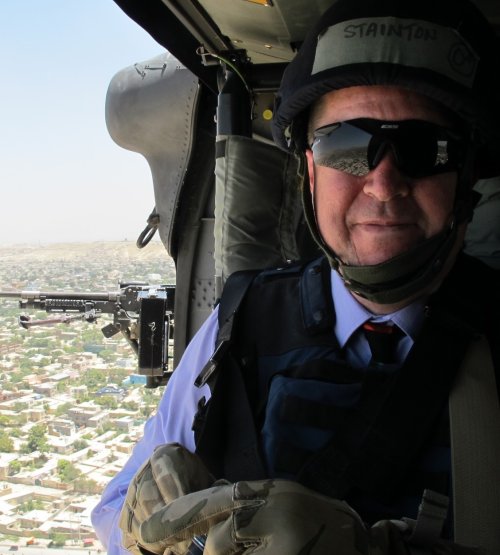
MS has some aspects that are not nice or easy to talk about. I am sorry, but after a career of 36 years, including deploying on operation in Iraq and Afghanistan with the military, that part of your life is over.
And while you are 63 not 3, you are incontinent. You’ll find out how expensive incontinent pads are. And you’ll fight hard, with others, for disability benefits.
You will have eyesight issues including double vision. And, as you're already experiencing, you walk as if you have been in the pub all afternoon. You will no longer be able to balance properly.
You’ll learn that acceptance, while unpleasant and difficult, is the answer. It might not be the right answer for everyone, but it is for you.
Why an octopus will become a symbol of hope
The doctor told you there is no cure for MS. And there’s only one approved disease modifying therapy for your type of MS: Ocrevus (ocrelizumab). It’s only available to some people with early primary progressive MS, and luckily that includes you. Three years later it seems to be working. Your MS is progressing, but the treatment is slowing it down and allowing you to take stock of life.
You will soon learn about the Octopus trial to test more potential new treatments for progressive MS. You’re 61 when you start the trial. You take part less for the options it may provide for you (although if it works for you that must be something worthwhile), but more for those to come. There are still too many people with progressive MS without a treatment that works for them. You want to help change that.
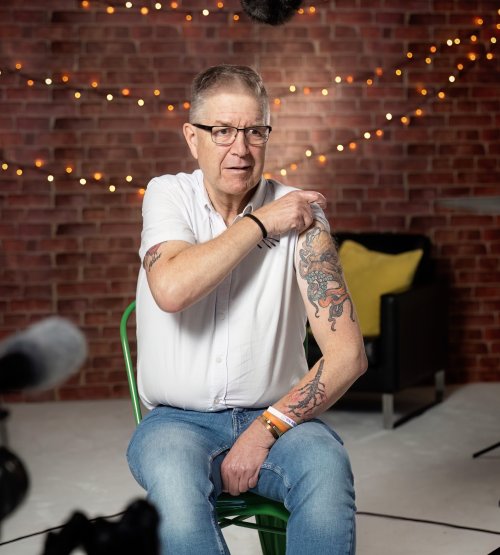
You will talk about the Octopus trial ‘til the cows come home. You will even get a tattoo to celebrate your participation in the trial.
Every time you take the tablets (two in the morning and two in the evening) you're telling MS that it will not win.
Opening up to others with MS
Right now, you are the only person you know with MS. But you reach out to others and open up a new (and better) social circle. Everyone has a different story, a different journey, but there is always someone who gets it.
You'll volunteer for the MS Society and join in their campaigning work. You’ll play your part – as you always have done.
It is not the end but a change in direction. Honestly John – your life now, with MS, is better than it was before.
Say it loud and say it proud. You live with primary progressive multiple sclerosis, but it will not win.
Best wishes (it’s going to be tough, but you've got this)
John.
Every MS Letter tells a story. Help us write the end.
John's letter is real. So is the impact you can make by donating to help fund vital MS research.
John shares his letter
You may also be interested in


It's time to write the end of MS
Donate today and help turn world-leading research into life-changing treatments.