MS affects my hands – but assistive tech has helped me adapt
As my primary progressive multiple sclerosis began its journey I had to adapt and find new ways of completing everyday tasks. Technology has been a wonderful help and I have embraced it!
“If there’s a way to make life easier, I will take it”
I decided that I wanted to go back to university, but it was daunting. What held me back the most was that I could no longer write with my dominant hand. How was I supposed to take notes?
The kit that helped me get a degree
When I applied to study psychology and counselling at The Open University I was sent to an assessment. It was to see what would make my life easier as a disabled student. I was astounded at how positive the outcome of this actually was. I came away with two important pieces of kit.
Firstly, I was given a dictation program called Dragon.
“I spoke into a headset and it typed my words onto the screen.”
As I got to know the programme better I could set commands like ‘open Microsoft Word' or 'open Google Chrome'. I was also given a screenreader called Claroread. You can choose from multiple voices and it reads what’s on the screen. As my course work was computer-based this was particularly useful. It helped with my fatigue. All these were provided as part of the normal course fees.
New ways to game
I’m an Xbox fan and many years ago they brought out an accessible controller. I bought this and a set of buttons and switches that you can customise to find out what works for you and your abilities. With the dwindling use of my hands I had to find a new way to play computer games.
“I thought I’d hung up my controller for good but I just needed to find a new way to game.”
I know PlayStation now have an accessible controller too! I've found charities such as Special Effect which help you figure out what works for you, using incredible occupational therapists. You can even borrow some of the kit from them if it is available.
Keeping in touch with loved ones
If I’m in tired or in pain, it can be difficult to work up the energy to catch up with people face to face. This is another important way I use technology – to stay in touch with people by email or by video call. With many platforms available for video calls it’s easy to stay in touch with my friends and loved ones online. At first I wasn’t that confident in using them. But searching online for ‘video call’ gave me lots of suggestions, and also videos on how to use them. I found these incredibly useful.
Making the most of tech you can wear
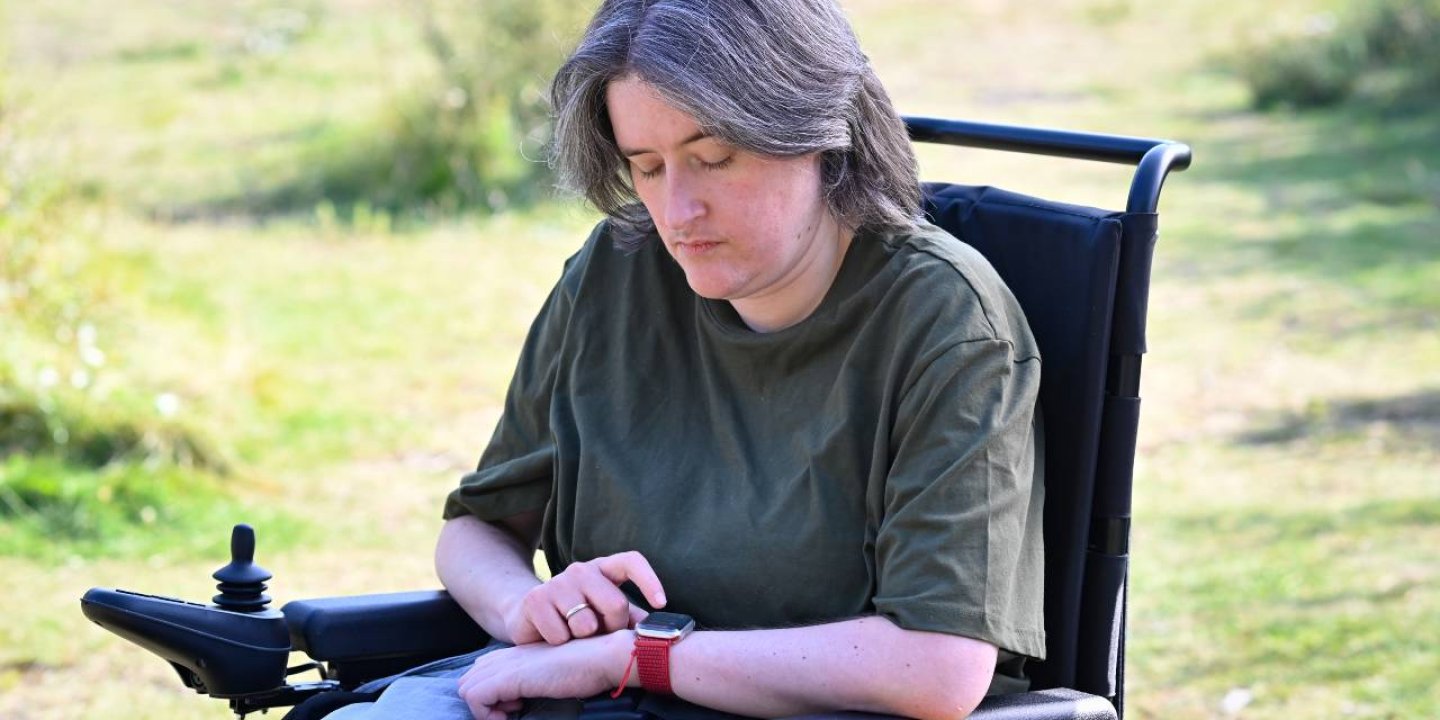
My smart watch is a very handy wearable piece of tech. On mine, one of the features is fall detection. If you have a hard fall it can connect you with emergency services or an emergency contact you’ve set up. All directly from the watch. This has given me and my wife Sarah peace of mind. If she’s not home, I can stay in touch if I need help.
A new addition to my assistive tech is my smart glasses. I realised that I had no up-to-date pictures on my phone. These glasses have cameras and I have been able to take many pictures, from adventures at our allotment to videos at our favourite concerts. Most importantly, these glasses also read signs.
When I was fatigued at an exhibition, the glasses did all the work for me and I just listened. They speak through the cochlear bones in your ears so that no one else can hear.
Achieving my goals
Assistive technology helps me day to day. And it’s also helped me reach my goal of getting a university degree! There’s more advancements every day, and although some of it is quite expensive, there’s also lots of helpful software out there that’s cheaper or even free.
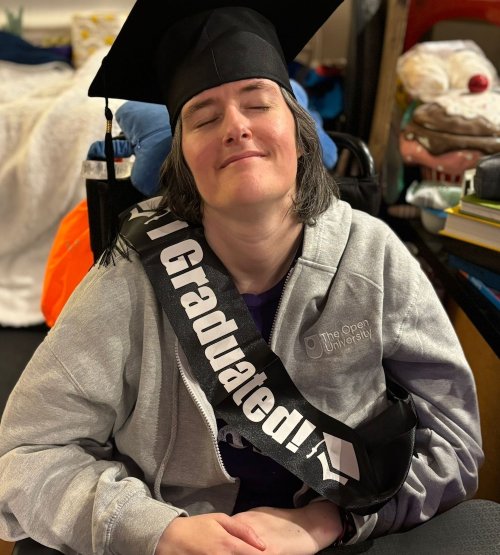
I graduated at the end of 2025 with a wonderful party thrown by my wife and family.
I am incredibly proud of my achievements. And so glad that I have embraced the technology that helped this become possible!"
You may also be interested in