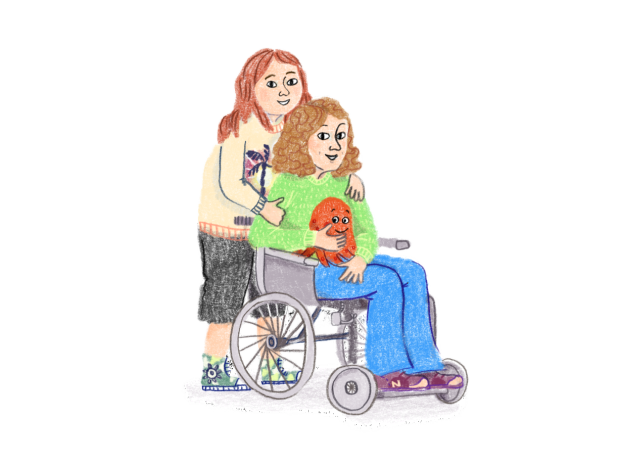
Helping to create Tingo and their story
Ailsa explains what it’s like as part of the team creating our children’s book, ‘What is MS to Me?’ and the soft toy Tingo. She lives with secondary progressive MS and has 3 children.
I’ve never had to directly tell my children that I live with MS. Because they’ve always known. But I do often have to answer their questions.
So I loved the idea of a book to help answer those questions. And I like the thought they can use it to help explain MS to their friends. When I have a visible symptom they often have to explain things. Questions like “Why does your mum come to assembly on her trike?”
How it all started – ‘co pro’
At the start, a group of us met online – the co-production team. We were parents living with MS, an MS Society editor, and a researcher in science communication. As the project developed, we involved a designer, an illustrator, and input from our children. The idea was to combine all our different ideas and perspectives and to bring our thoughts and ideas together.
Getting our voices heard
Part of creating the team was working out how we could all share ideas. I quickly admitted that I hadn’t used the software we planned to use. But we found a way round this, adapting things so it was easy for everyone.
After each team meeting ideas were summarised by the MS Society editor on the team. There was lots of opportunity to contribute. And it was really good hearing other people’s viewpoints.
Creating Tingo
Firstly, we had to decide what the resource should be. What would help primary-age children and adults talk about MS in their family? We decided on a printed book and a soft toy for the youngest children.
We worked on what the book would be like. What would it include, and what style would it be?
We chose to have a nerve character – Tingo – leading us through the book. Someone children could relate to. So we had to decide what Tingo would look like…
It was much easier to say no to things, but harder to show how we all thought it should look! But we agreed it pretty quickly and so the illustrations could begin to take shape. First with the main character and then throughout the book.
Swooshing nerve pathways
Deciding which symptoms to cover was really interesting and quite varied, just like MS! And thinking about how to illustrate the mechanisms of MS was fascinating.
It’s so important to use the right language, but just as important to get the images right. Sometimes “a picture tells a thousand words”. And the words and pictures had to work together, as well as on their own.
Deciding on the illustrations was my favourite bit. I loved the swooshing nerve pathways and all the busy messages. It’s good positive visualisation for anyone living with MS!
Getting the detail right on the humans that we see in the book was so important too. So many situations to show, so hopefully we got a good mix. From our different experiences and backgrounds, we were all aware how varied life with MS can be.
The finished book and Tingo toy
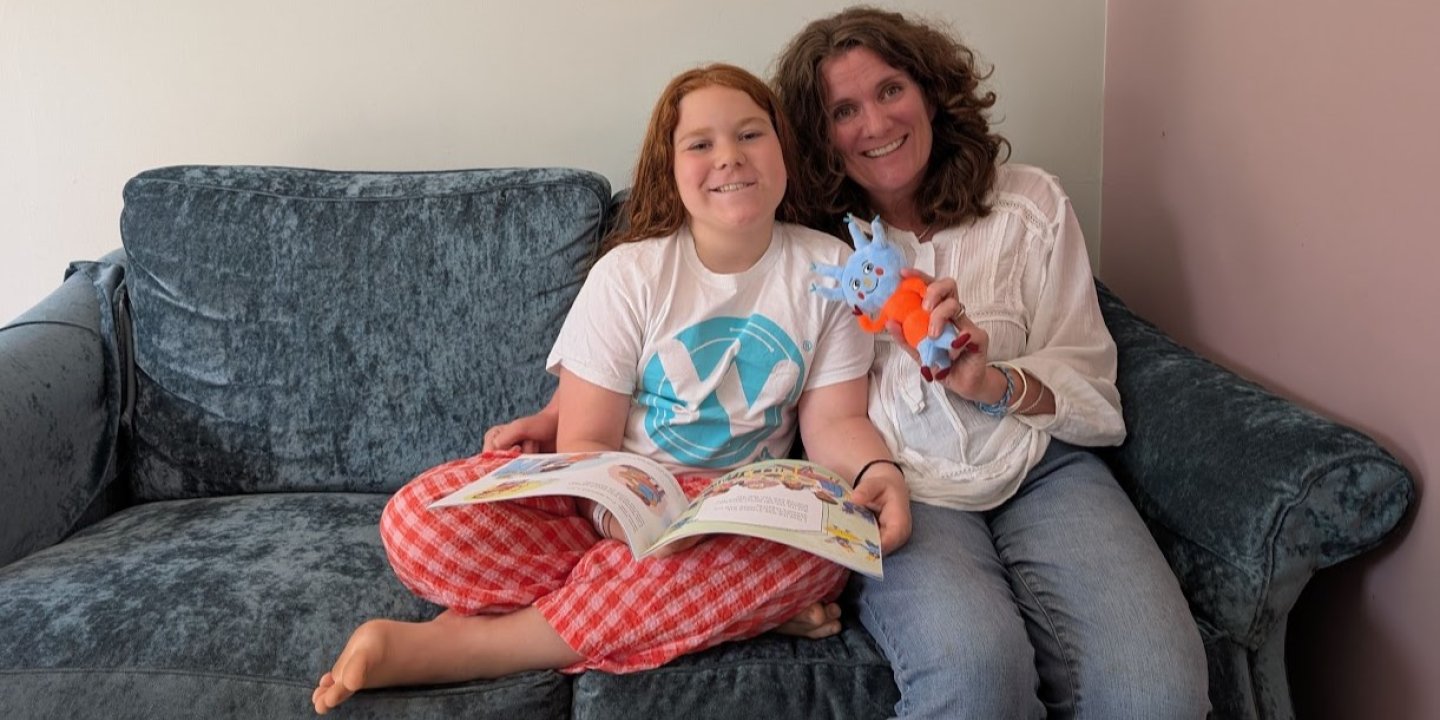
The book looks wonderful, my daughter aged 10 has studied it carefully and found all the characters on every page. I hope lots of children enjoy it and share it with their friends. And I hope the Tingo toy is a friendly face for children when they are thinking about MS.
You may also be interested in