MSToronto 2026: Highlights from the world's biggest MS research conference
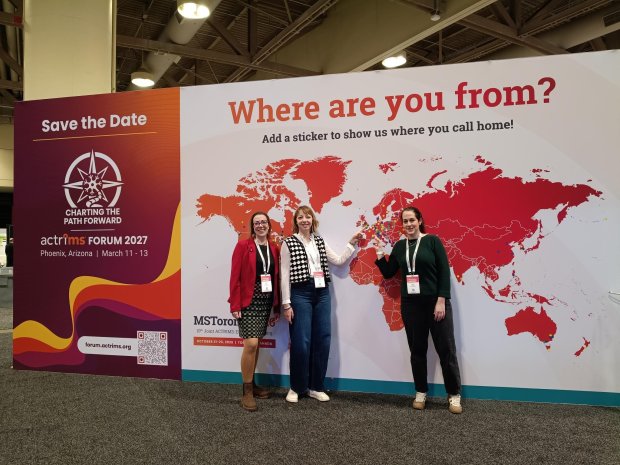
On 21-23 October 2026, MS researchers and healthcare professionals from 102 countries gathered in Toronto for the 10th Joint ACTRIMS-ECTRIMS meeting.
Our research team reflect on some of the key highlights from the world’s biggest MS research conference.
EBV takes centre stage
We’ve known for a long time that there's a strong link between the Epstein Barr Virus (EBV) and MS. But with over 60 posters and presentations dedicated to EBV, it really took centre stage this year. Researchers explored how EBV contributes to MS and whether it could be a target for treatment or prevention.
A study of 231 people being tested for MS found that all of the 202 people who went on to be diagnosed with MS tested positive for EBV. While 14% of people who weren't diagnosed with MS testing negative for EBV. The researchers suggested that testing for EBV could inform part of the diagnosis process in tricky cases.
Other research showed that signs of EBV infection appear up to 8 years before a person develops clinical symptoms of MS. This highlights the possibility of using signs of EBV infection to help identify people who have a higher chance of developing MS.
Read more about research into EBV and MS
Resetting the immune system
Chimeric antigen receptor (CAR) T-cell therapy is a type of immunotherapy designed to ‘reset’ the immune system. It involves using genetically engineered immune cells to find and kill harmful immune cells. It's recently moved into early clinical trials for MS.
Professor Daniel Ontaneda presented data from a small Phase 1 trial of a therapy called azer-cel in people with progressive MS. This showed encouraging safety data. And 16 of the 19 participants had stable or improved disability scores after 90 days.
We also saw initial results from a Phase 1 trial of a therapy called zola-cel. This was tested in people with highly active relapsing or progressive MS. Researchers found that the treatment was able to target B cells, which can cause damage in MS. And it showed promising results on relapses and disability progression.
These are still early studies though. We need further trials to understand whether it could be both a safe and effective treatment for MS. We know that CAR T-cell therapy can have significant side effects, so safety remains a focus.
Tackling progression with BTK inhibitors
Bruton’s tyrosine kinase (BTK) inhibitors are drugs that can target harmful immune cells in the brain. Researchers hope these drugs could help combat the slow ongoing inflammation that is thought to cause MS progression. As well as the attacks associated with relapses. Two BTK inhibitors were a central focus this year:
Remibrutinib
Researchers shared results from the phase 3 REMODEL-1 and REMODEL-2 trials. They compared remibrutinib with existing treatment teriflunomide in people with relapsing MS.
They found that remibrutinib:
-
Reduced relapses and the number of lesions
-
Showed lower levels of serum neurofilament light chain – a marker of nerve damage
Fenebrutinib
Previous Phase 3 results have shown that fenebrutinib could reduce relapses in people with relapsing MS compared with teriflunomide. And reduce the risk of disability progression in people with primary progressive MS compared to ocrelizumab.
Further data was presented at this year's conference which showed:
-
Fenebrutinib reduced the volume of slowly expanding lesions (SELs) in relapsing and primary progressive MS
-
Fewer people with relapsing MS developed paramagnetic rim lesions (PRLs).
SELs and PRLs are signs of ongoing inflammation in the brain. These results suggest that fenebrutinib is able to target chronic inflammation in the brain, which can contribute to disability progression.
Women’s health and MS
Women are up to three times more likely to get MS than men. And it can have different implications for women – particularly when it comes to pregnancy and menopause. So it was encouraging to see so much research focused on women's health and MS.
One study followed women taking ocrelizumab or ofatumumab who paused their treatment during pregnancy. And restarted it around a month after giving birth. They found that all 52 women in the study remained relapse-free during pregnancy and postpartum. With only 11-12% showing minor MRI activity during the pause.
Another study used data from a Swedish MS registry to look at menopause and hormone replacement therapy (HRT). They found that taking HRT during menopause didn't worsen MS symptoms. With some people reporting improvements.
Professor Sandra Vukusic closed the conference with a talk on women's health & MS. She was awarded this year's Rachel Horne prize for her work on pregnancy and treatment decisions.
She presented upcoming recommendations on family planning, fertility treatment, pregnancy and breastfeeding in MS. And highlighted the importance of supporting women with MS in their family plans and ensuring there's no competition between MS management and someone's decision to start a family.
Read more about women's health research in our blog
Connecting people with MS to research
Friday afternoon saw people with MS and researchers gather for the Patient Community Day. Held both in person and online, this gave people with MS the opportunity to hear directly from researchers about the key highlights from the conference. And share their reflections on how MS research relates to their everyday lives. You can catch up on these sessions on the ECTRIMS Patient Community website.
You may also be interested in