The journey to a diagnosis
Hiba Adan is a PhD student at the Centre for Preventive Neurology at Queen Mary University of London. Her blog was shortlisted in our recent writing competition. In it Hiba tells us about her work understanding pathways to diagnosis.
Have you ever woken up one day and felt something was slightly off? Perhaps you experienced a tingling sensation in your hands, a tiredness you could not shake, or a slight change in your balance?
On their own, these symptoms may not seem alarming at first. You may have even dismissed it as stress and thought, "It's normal to feel this way when things have been tough."
But did you know that these symptoms can be early signs of MS?
What is MS?
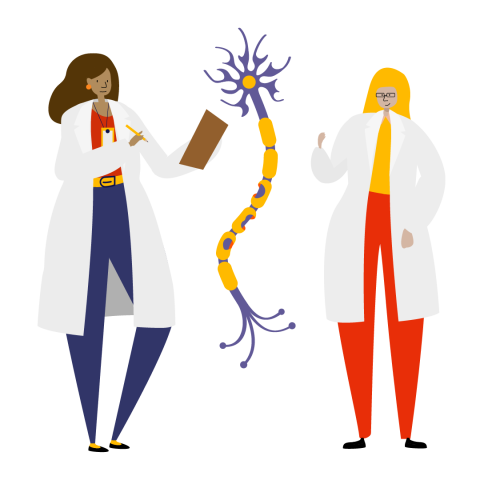
The human body has thousands of nerves starting in the brain and spinal cord. These nerves control how we move and feel. A protective coating called the myelin sheath covers the nerves. This helps the nerves quickly move electrical signals between the brain and the body, like insulation helps electrical wires work better.
In MS, the myelin sheath gets damaged. This interrupts the communication between the brain and the body. This damage can cause various symptoms, depending on which nerves are affected. This is why people with MS may experience very different symptoms.
The early symptoms of MS
Early symptoms of MS include fatigue, dizziness, depression, balance issues, numbness, and tingling. The tricky part is that these early symptoms are vague and non-specific, meaning they can be linked to many other health issues.
It is like trying to piece together a puzzle. Except each piece comes from a different puzzle box. You try to connect the pieces, but they do not seem to fit in a way that makes sense.
Similarly, people may have symptoms in the earlier stages that initially appear random and disconnected. This can make the early stage before diagnosis confusing and challenging to navigate.
Challenges in getting a diagnosis
For many of us, our GP is the first point of contact when we experience worrying symptoms. However, getting a diagnosis isn’t always straightforward.
It can be tricky to understand MS because the symptoms can come and go at different times. This may make it difficult to explain what you’re experiencing to a doctor. Some people also feel that their concerns aren’t always taken seriously, making getting a diagnosis even harder.
Unfortunately, the diagnosis process can also look different for each person. Things like where you live, your ethnic background and access to healthcare information can all play a role in the diagnosis process.
The journey ahead
We don’t yet fully understand how people with MS experience the process of getting diagnosed. This is especially important, as the time before diagnosis can be an emotionally challenging time. Research has also shown that some people spend more than a decade talking to healthcare services before they are diagnosed.
Our research aims to fill this gap by exploring the diagnosis journey of people with MS. We plan to do this in two ways.
First, we want to hear people’s stories of their diagnosis journey. Including when they first noticed symptoms and how they communicated them to their GPs. This will help us better understand how people navigate the early stages of MS and what challenges they face in getting a referral for further tests.
Second, people describe their symptoms in different ways, and doctors may interpret them differently. This is why we will also be analysing primary care medical records to see if there are any differences in how symptoms are documented in medical records. And if this influences the diagnosis journey.
By including personal stories and medical record data, we hope to understand the diagnosis journey better and work towards a future where MS is recognised sooner.
How to take part
Recruitment for this study is now open. We're looking for people to share their experiences of being diagnosed with MS. You can take part if you were diagnosed within the last 12 months, live in the United Kingdom, and are age 18 or over.
You might also be interested in