The heat is on: heat vulnerability and MS in a warming world
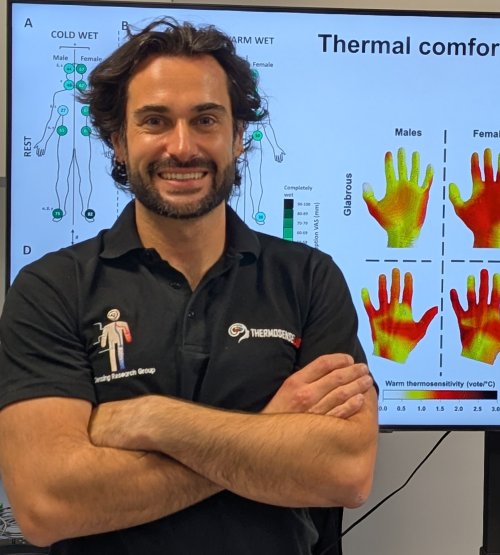
Heatwaves are becoming increasingly common and it’s more important than ever that we understand how to protect people most affected by extreme heat. For people living with MS, even small increases in temperature can trigger or worsen symptoms. We sat down with researchers Dr Nuno Koch Esteves and Professor Davide Filingeri from the University of Southampton to learn about their work on heat vulnerability.
Understanding heat vulnerability
Davide and Nuno’s research is part of a wider project called ETHOS (Extreme Temperature and Health OutcomeS), which focuses on climate change and its impact on vulnerable groups. They’re focusing on older adults and young people with MS.
We want to know how hot temperatures, like those experienced during a heatwave, affect these two populations.

Inside the heat chamber
To investigate this, Nuno and Davide invited people to visit their ‘heat chamber’, where temperature and humidity are controlled.
The chamber was set to 37°C with 40% humidity to mimic the upper limit of what you might experience indoors during a heatwave in a poorly insulated building in the UK.
People taking part rested in the chamber for 25 minutes, then did 10 minutes of light exercise to mimic day-to-day tasks, then rested for another 25 minutes. During the second rest, they had access to a handheld fan and a water spray bottle.
Measuring the need for cooling
Nuno and Davide have developed new, more accurate ways to measure cooling behaviour:
- The handheld fan was fitted with an accelerometer to measure how often and how vigorously someone was fanning.
- The water spray bottle was linked to a computer, tracking the number of sprays and amount of water used.
“This approach was key to turning the feelings of discomfort into a measurable need for cooling,” says Nuno.
To get a full picture of how heat was affecting people, they also measured skin and internal core temperature, heart rate, blood pressure, cognitive and motor performance, levels of discomfort, and fatigue.
Participants also returned for a second visit with the chamber set at 26°C, which is considered the safe upper indoor limit, to test whether this is indeed safe for heat-sensitive groups.
What they found
Although the study is still ongoing, early results show meaningful differences between the two groups.
Both young people with MS and the older adults showed a similar, small increase in core body temperature. But their experiences were dramatically different. “Young people with MS reported much higher levels of thermal discomfort than the older adults,” explains Nuno. “The older adults reported almost no change in fatigue, but people with MS showed an increase in both mental and physical fatigue which got worse with time.”
Cooling behaviours
This difference in how people felt about the heat, directly impacted how they behaved:
- Seven out of eight young people with MS used the fan, with some fanning continuously for the full 25 minutes.
- Only one out of nine older adults used the fan.
- People with MS also used the water spray bottle twice as often as the older adults.
Davide explains: “We’ve seen before that people with MS have a higher sensitivity to heat. But we’re now seeing that it translates into behaviour. These young people with MS have a greater need to seek that cooling.”
He adds this could also be about people’s expectations: “You know that heat is likely to worsen your symptoms, so you try to avoid it to protect yourself. Either way, it affects quality of life.”
Working with Professor Ian Galea, a Professor and consultant neurologist at the hospital in Southampton, the team also reviewed participants’ medical records to see if they had reported heat sensitivity to their neurologist. This helps connect the data gathered in their study with the participants’ long-term documented clinical reality.
What does this mean for people with MS?
The results of this study are important in several ways:
- Challenging our assumptions of vulnerability: Research like this helps increase awareness that age isn’t the only thing that puts someone at risk during heatwaves. The results should help make sure younger people with MS also receive support during hot weather. “This might include better access to cooling strategies, increased sick leave allowance, or shifting their working patterns so that they don't occur in the hottest part of the day,” says Davide.
- Looking at quality of life: Davide says: “The experience of feeling warm can trigger symptoms and make daily activities harder. Imagine getting out of bed already feeling exhausted before your day even begins. That has a real impact on quality of life.”
In a warming world, we’re showing that people with MS are disproportionately impacted by heatwaves. They’re living with this disease for a long time, so it could seriously impact their ability to stay in work, sustain themselves and maintain their quality of life.
This work is vital for giving us a more nuanced understanding of heat vulnerability. As we adapt to the realities of climate change, projects like this will help make sure the specific challenges faced by people with MS aren’t overlooked.
You may also be interested in