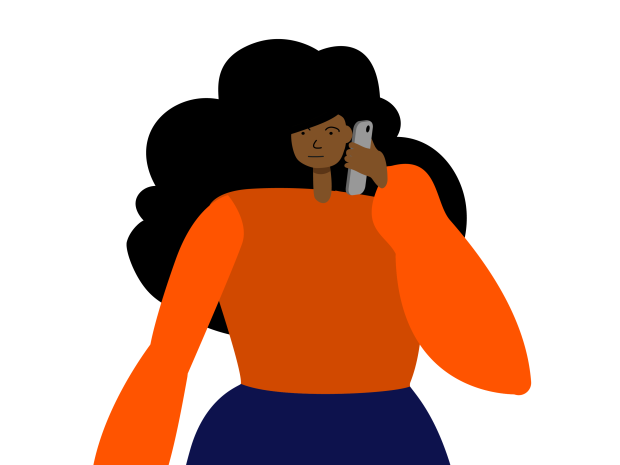
Getting help with emotional support
Living with a long-term condition isn't always easy. Help with emotional support is out there if and when you need it. You can turn to others in the same situation as you or to trained professionals.
What sort of emotional support could I get?
There’s lots of different emotional support out there. You might find counselling useful, or psychotherapy. These are two kinds of ‘talking therapies’ which people find helpful.
You could meet online or face to face with other people living with MS. That might be called 'peer support'. Some support is in groups, other options are one-to-one.
Unfortunately, not every option is available everywhere. But there’s online, local, regional and national support from the NHS, the MS Society and other charities.
Our MS Helpline offers information and support to anyone with MS, their families, friends and carers.
For urgent emotional support, the Samaritans are available 24 hours a day. You don’t need to feel suicidal to get in touch with them.
What are talking therapies?
Talking therapies include:
- Counselling: This allows you to talk about the difficulties you're facing without being interrupted. Counselling is completely confidential.
- Psychotherapy: Tries to help you understand why you feel the way you do, and what lies behind your responses to other people and things that happen to you.
- Cognitive behaviour therapy: Focuses on specific, practical problem-solving techniques.
- Self-help or peer support groups: These groups are usually for people who want to overcome a shared problem.
How can talking therapies help?
Talking therapies can help you come to terms with change, and overcome anxiety, depression and other emotional difficulties. They offer a chance to talk about the problems you face in a way that helps you to understand yourself and how you're feeling.
Using this understanding, you may be able to work out ways of taking positive and constructive steps towards improving the way you feel. You may also find you deal with situations in new ways that make them seem less stressful or difficult.
Talking therapies can also help you feel less alone when dealing with distressing symptoms.
Find the emotional help that’s out there
Your GP or MS nurse might be able to help you get access to talking therapies. Just ask them to refer you to a specialist. And there could be other ways to get health service support in your nation - sometimes by referring yourself.
Find NHS talking therapies in England
Find NHS support for mental health in Scotland
Find NHS support with counselling and other talking therapies in Wales
Finding a private therapist
If you can’t find you someone to talk to on the NHS, or the waiting time is too long, you might want to pay to see someone. Across the UK, you can find a counsellor or therapist on the British Association for Counselling and Psychotherapy website.
In Scotland, the professional body COSCA includes charities that offer counselling in its list of therapists and counsellors.
MS Society counselling support
Your local MS Society group might also have information on counselling services, or may run a group or offer discounted counselling.
And if you’re in Wales or Northern Ireland, counselling is available through the national MS Society services we list below.
We run online sessions where you can chat, share experiences and explore different ways to live well with MS.
Our virtual wellbeing sessions and information webinars are designed to connect you with other people affected by MS and to share information in a safe, anonymous space. They’re for people newly diagnosed and people living with MS for a while. Sessions include conversation, information and sharing wellbeing skills.
These national support groups offer a range of services for different communities across the UK.
MS Society groups
- Asian MS
- Mutual Support: Support for people affected by MS in the Armed Forces
Independent MS groups
- MS Together: Support for young people with MS
- Shane project: Support for African and Caribbean people affected by MS
- JEMS : Support group for Jewish people affected by MS
Lots of MS Society local groups have regular support group meetings. Many groups also have a fully trained MS support officer who can provide support and offer guidance about other local services available.
The Neuro Therapy Network also has regional therapy centres around the country which sometimes offer counselling.
In Scotland you and your family can get support online, over the phone and face to face.
The Wellbeing Hub NI can help you live well with MS and connect online with other people living with MS across Northern Ireland. Includes counselling and workshops on mood and living well with MS.
We offer free activities to you and your family, including:
- one-to-one counselling, and group acceptance and commitment therapy (ACT)
- Knit and natter, Men’s shed and Hen’s shed
- exercise including seated exercise to music and exercise led by a physiotherapist
- Tai chi, yoga and Pilates
- Creative writing
- bingo and quizzes
Mae cefnogi eich lles mor bwysig ein bod yn cynnig gweithgareddau am ddim i chi a'ch teulu.
Cwnsela (1-2-1), Therapi Derbyn ac Ymrwymo (grŵp ACT), Ymarfer corff ar eich eistedd i gerddoriaeth, Loga, Ymarfer corff dan arweiniad ffisiotherapyd.
Cryfder/Ymestyn ac ymlacio, Tai Chi, Pilates, Ysgrifennu creadigol, Bingo, Cwis, Gwau a sgwrsio, Sied Dynion, Sied Merched.


