How are treatments developed?
It takes time to go from a scientific idea to a new treatment. And there are lots of different steps to take.
Each step is very important to make sure new drugs are safe and effective for people with MS.
Watch our video From lab to pharmacy shelf to find out more about the different stages.
The development process
In the lab
All research projects start with an idea. Researchers will then need to apply for funding, which can come from charities, government research programmes or industry.
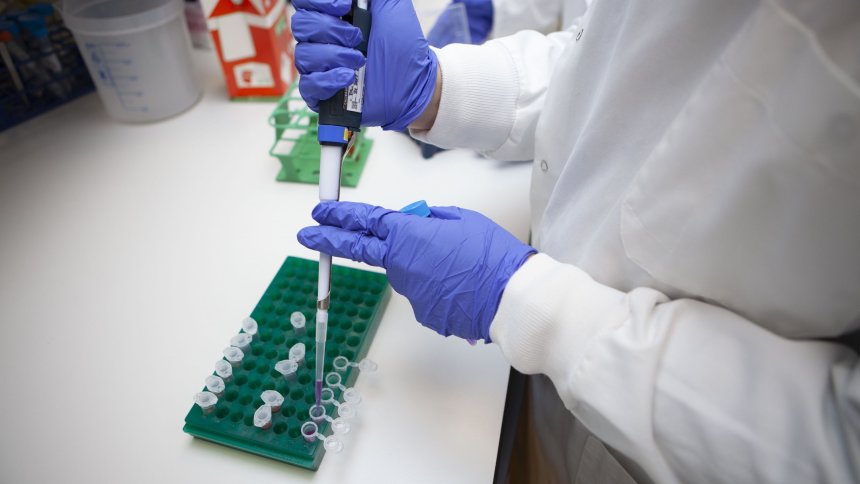
Then the real science begins. The research team will test the idea in the lab using cells and, if necessary, in animals such as mice and rats. Once they have enough data, they will report their results in a scientific journal.
If a treatment looks promising in the lab, it can then move into clinical trials.
Read our policy on animal research
Clinical trials
There are three phases of clinical trials. Each phase tests the safety and benefits in larger numbers of people.
Phase 1 trials
Phase 1 trials aim to:
- find a safe dosage
- decide how the treatment should be given
- check it's safe and measure side effects.
They don't need to involve people who have the condition being treated, as it's mainly about safety.
Phase 2 trials
Phase 2 trials aim to:
- test the benefits of the treatment for people with MS
- check it's safe and measure side effects
They will compare the treatment with a placebo.
Phase 3 trials
Phase 3 trials aim to:
- fully test the safety and benefits of the treatment
- compare the new treatment with the current standard.
Often researchers will run two phase 3 trials to make sure they fully understand the safety and the benefits of the treatment.
Read more about current late-stage trials of potential new MS treatments
Licensing
If a treatment has been shown to be safe and effective in phase 3 trials, it will be submitted for a licence.
Drugs can be licensed by the European Medicines Agency (EMA) or the Medicines and Healthcare products Regulatory Agency (MHRA) in the UK. They decide if the benefits of taking a particular drug outweigh the risks, and determine who should be allowed to take it.
If a treatment is licensed, it can be prescribed in the UK. But to be available on the NHS there is a final step.
Getting a treatment on the NHS
For a treatment to be available on the NHS it needs to be reviewed by the National Institute and Care Excellence (NICE) and the Scottish Medicines Consortium (SMC). They look mainly at cost effectiveness.
NICE typically start reviewing a treatment before it is licensed. But it can take around a year after licensing before a treatment is available on the NHS. Some treatments, like daclizumab (Zinbryta) were initially rejected by NICE, but were made available after an appeal.
Long term safety monitoring
Treatments are monitored for years even after they are licensed. This allows us to document side effects and to modify the treatment if serious side effects are observed.
That’s a really difficult question to answer! Going from the lab to having a treatment available takes years, and it will vary a lot depending on the drug. Some people say that it takes around 16 years, but that’s just a rough estimate.
Take alemtuzumab (Lemtrada) as an example. It was first tested in the early 1990s as a treatment for MS, and was eventually licensed in 2014. The process was quicker because alemtuzumab was already available to treat other conditions, and so didn’t need to be developed as a new treatment.
Controlled clinical trials are the best way to determine if a treatment has real benefits for people. They’re controlled in lots of different ways, and these help scientists to make sure that there are no biases.
Getting rid of bias:
- Randomise it – most trials have at least two groups: people taking the treatment and people taking the placebo. The best clinical trials will randomly assign people to one of these groups. If a trial isn’t randomised then there’s a chance the groups won’t be evenly matched, which could influence the results.
- Blind the trial – clinical trials are often referred to as ‘double blinded’. This simply means people involved in the trial (both the patients and the doctors) don’t know who is taking the placebo and who is on the active drug.
- Use a placebo – essentially a ‘fake’ treatment. Placebos look like the treatment being giving (a tablet, pill or infusion) but don’t contain any active ingredients.
Ever heard of the placebo effect? Research has shown that when people take a ‘dummy’ treatment that they think might work, some will experience an improvement in their condition. This improvement in symptoms is known as the placebo effect.
Scientists use a placebo because they want to know that any benefits of the treatment aren’t just due to the placebo effect.

